Elevate your local knowledge
Sign up for the iNFOnews newsletter today!
Sign up for the iNFOnews newsletter today!
Selecting your primary region ensures you get the stories that matter to you first.
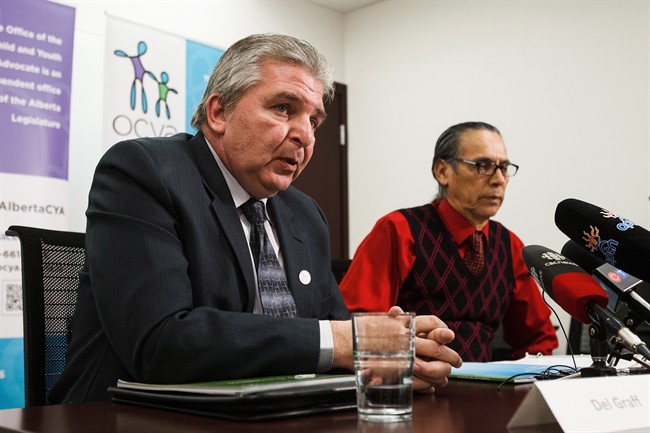
EDMONTON – Alberta’s child advocate is calling on the province to fund a suicide prevention strategy to tackle what he calls a “terrible trend of aboriginal youth suicide.”
Del Graff, who released a 99-page report Monday, said the plan must be led by communities and recognize aboriginal values and cultural practices.
Graff further suggested in a detailed list of 12 recommendations the development of school-based programs and better suicide intervention training for teachers, social workers and medical staff.
It’s time for change and action, he said.
“Albertans care about kids,” he told reporters. “While suicide is complex and is compounded for aboriginal young people because of their history and the legacies that continue to impact their lives, it is also preventable.
“The problem is not a lack of knowledge … What is required is a willingness to make this issue a priority.”
Graff said aboriginal young people are five to six times more likely to be affected by suicide than the general population.
Earlier this month, a state of emergency was declared on the remote Attawapiskat reserve in northern Ontario after a spate of suicide attempts among its young people.
The Pimicikamak Cree Nation in Manitoba, known as Cross Lake, also declared a state of emergency in March. Its chief has said 100 children are on a suicide watch list on the reserve.
Graff’s report looks at the lives of seven aboriginal teens involved with social services. They were from different Alberta communities, both off and on reserves, and killed themselves between June 2013 and December 2014.
Two of them were brothers, 15 and 18, who died four months apart.
The teens all experienced early childhood trauma from exposure to domestic violence, parental addictions or parental mental-health issues, the report said. Some had relatives commit suicide and some were moved several times.
All the youth were affected in some way by residential schools, said the report, which added the schools and the so-called ’60s Scoop left many ill-equipped to parent themselves and led to their passing onabuse, violence and dysfunction to new generations.
The report further lists poverty, poor housing, limited health services and unemployment as risk factors for suicide.
It said high-profile or multiple suicides in a community also tend to spawn more.
“In some communities, it is not uncommon for a youth suicide to be followed by another within a short time,” said the report. “When a community suffers from repeated losses, a sense of hopelessness can grow.”
Elder Francis Whiskeyjack, who helped with the report, said the suicide risk among aboriginal youth is like a cancer that will take many years of treatment
Alberta Human Services Minister Irfan Sabir said in a news release that the province will be reviewing the report and consult with the federal government to implement recommendations.
Health Minister David Eggen committed in the same release to implementing school-based suicide-prevention programs. “We will work to ensure students living on and off reserve are offered all the learning opportunities and support services they need,” he said.
Liberal Leader David Swann urged the province to implement all the recommendations without delay.
“They echo the calls of many previous reports,” he said. “How many more studies and reports need to happen before government finally acts?”
News from © The Canadian Press, . All rights reserved.
This material may not be published, broadcast, rewritten or redistributed.

This site is protected by reCAPTCHA and the Google Privacy Policy and Terms of Service apply.
Want to share your thoughts, add context, or connect with others in your community?
You must be logged in to post a comment.