Elevate your local knowledge
Sign up for the iNFOnews newsletter today!
Sign up for the iNFOnews newsletter today!
Selecting your primary region ensures you get the stories that matter to you first.
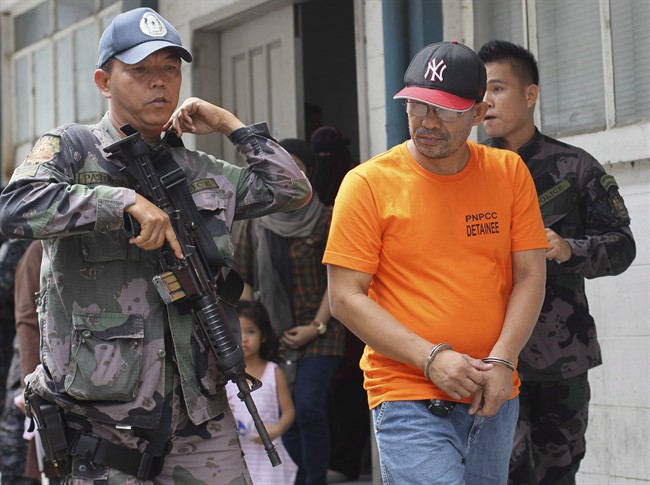
OTTAWA – Abu Sayyaf, the Philippines militant group responsible for killing a Canadian hostage on Monday, sprang up in the early 1990s as an offshoot of another, larger Islamic insurgent group.
The Canadian government, which considers Abu Sayyaf to be a terrorist organization, says its ostensible goal is the establishment of an Islamic state governed by sharia law in the southern portion of the Philippines archipelago.
In practice, though, it primarily uses terrorism for profit: kidnap-for-ransom, guerrilla warfare, mass-casualty bombings, and beheadings are favoured tactics. It claimed responsibility for bombing and sinking a passenger ferry, which killed more than 100 people in February 2004.
Abu Sayyaf is one of a handful of Muslim insurgent groups outside of a peace deal signed by the Philippine government with the main rebel group, the 11,000-strong Moro Islamic Liberation Front.
That agreement calls for the creation of a more powerful and potentially larger autonomous region for minority Muslims in the south of the largely Roman Catholic country.
Abu Sayyaf — the name means “bearer of the sword” in Arabic — has links to Al Qaida, the Canadian government says.
It is thought the group is relatively small, with about 400 fighters drawn from loosely-affiliated sub-groups, mostly organized along traditional clan and familial lines. Membership fluctuates in response to successful terror operations and pressure from the Philippines military.
The organization is also listed as a terrorist entity by the Philippines, the United States, Australia and Britain, among others.
News from © The Canadian Press, . All rights reserved.
This material may not be published, broadcast, rewritten or redistributed.

This site is protected by reCAPTCHA and the Google Privacy Policy and Terms of Service apply.
Want to share your thoughts, add context, or connect with others in your community?
You must be logged in to post a comment.