Elevate your local knowledge
Sign up for the iNFOnews newsletter today!
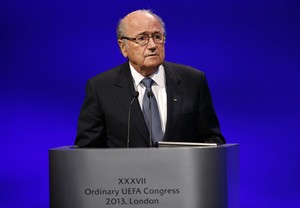
PORT LOUIS, Mauritius – FIFA’s willingness to heed criticism and complete its reform process will be tested at its annual congress this week, a meeting considered a landmark moment for football’s governing body in its efforts to finally put two years of scandals behind it.
FIFA President Sepp Blatter was set to report on the modernizing reforms already undertaken last year when he addressed Tuesday’s executive committee meeting. FIFA’s 209 member countries will then vote on more proposed changes for increased transparency and accountability at the main two-day congress, which opens Thursday.
“I look forward to further important decisions being passed at the congress in 2013 to complete the reform process and bring FIFA up to the highest standards of good governance, as befits an organization such as ours,” Blatter wrote in his introduction to the agenda.
The president also said in response to criticism that FIFA wasn’t taking the reform process seriously or wholeheartedly: “It’d be unfair to say we are not doing well.”
Still, advisers enlisted by FIFA during the two-year process — including Transparency International and members of an expert panel led by Swiss law professor Mark Pieth — have already said that the reforms were “neutered” and that Blatter’s mission has fallen short of those “highest standards.”
In one step accepted, the congress will elect a first permanent female member of the formerly men-only executive committee from four candidates, while the 77-year-old Blatter could give subtle indications of an intention to stand for another four-year term as leader beyond 2015 despite pledging when re-elected in 2011 that this would be his last. The Swiss has been in charge of FIFA since 1998, and could rally the congress to back him to see through the reforms, maybe gaining the beginnings of momentum in Mauritius to stand again for re-election in two years until 2019, when he will turn 83.
Also considered will be sterner punishments for racism in football after the recent re-emergence of the problem, especially in Italy, and the game’s ongoing battle with match-fixing, both of which are “high on the agenda,” Blatter said.
Brazil’s preparations for the 2014 World Cup will be examined at both the executive committee meeting and the congress. Setbacks at some of the stadiums will prompt closer scrutiny, notably the arena in Sao Paolo which was scheduled to open the tournament and may now miss its completion deadline.
FIFA also will make final plans for next month’s World Cup warm-up event in Brazil, the Confederations Cup, days after a small part of the roof collapsed at one of the stadiums set to host matches.
Meeting on an island famed for being the home of the extinct Dodo bird, FIFA’s sternest critics say the world game’s governing body desperately needs to evolve in Mauritius, too.
The body has made reforms to its ethics committee and introduced a new code of behaviour and vetting procedures since the scandal-ravaged year and congress in 2011. Then, Blatter was re-elected as president after the withdrawal of now disgraced former Asian football president Mohamed bin Hammam. There were also vote-rigging accusations surrounding the choosing of Russia and Qatar to host the 2018 and 2022 World Cups, respectively, with Blatter conceding that to award two World Cups at the same time was a mistake.
The congress will also formally adopt the resolution that future World Cup hosts will be decided by all member countries, and not the exclusive executive committee. However, the executive committee will decide on a shortlist before member associations pick one.
Some of the reform proposals to be voted on include age and term limits for FIFA places, including the presidency, while FIFA’s new watchdog Audit and Compliance Committee also met on Monday and will report after its first year of work.
While Blatter has talked of FIFA’s progress, the powerful body has been criticized by the independent reformers it brought in for its method of governance. In an interview with the FIFA website to start the week of the congress, Blatter still maintained his organization was on track and had “achieved a lot already.”
“In fact, we are exactly following the road map which was established at the FIFA Congress (in) 2011,” Blatter said. “Since then, we have been transparent on what was done and we have followed the majority of the recommendations made by the Independent Governance Committee in this two-year process.”
While FIFA’s 209 national associations will vote on a further 10 areas of reform at this year’s congress, Blatter made clear his opposition to one of them, age limits for FIFA positions, saying they could be “seen as discriminatory” — even though the IOC, of which Blatter is a member, has age limits.
“I’ve already said I was against the age limit as I believe it is not a relevant criteria, not everyone is the same at 60, 70, 80,” Blatter said. “Passion makes the difference.”
That opinion could instead open the way to another presidential campaign for the apparently evergreen septuagenarian, who will be closely watched through the week for any indications of his own future plans.
___
Follow Gerald Imray at www.twitter.com/GeraldImrayAP
News from © The Associated Press, . All rights reserved.
This material may not be published, broadcast, rewritten or redistributed.

This site is protected by reCAPTCHA and the Google Privacy Policy and Terms of Service apply.
Want to share your thoughts, add context, or connect with others in your community?
You must be logged in to post a comment.