Elevate your local knowledge
Sign up for the iNFOnews newsletter today!
Sign up for the iNFOnews newsletter today!
Selecting your primary region ensures you get the stories that matter to you first.

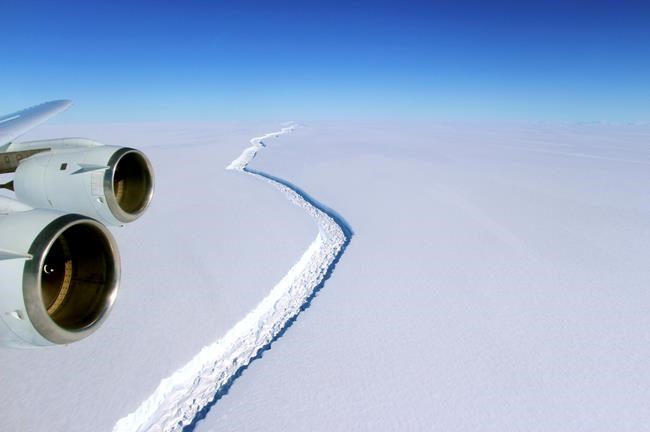
WASHINGTON – Scientists are watching, but not alarmed by, a growing crack at the edge of a key floating ice shelf in Antarctica.
New images show the long-watched rift in the Larsen C ice shelf grew 11 miles (18 kilometres) in the last few weeks. The crack is now about 60 miles long (97 kilometres) and about 300 feet wide (100 metres).
If it grows another dozen miles, a Delaware-sized iceberg could break off and float away.
University of Colorado scientist Ted Scambos said that could happen soon, likely in March, and would “cut deeper to the bone” of the ice shelf, changing its shape. Ice shelves — sheets of floating ice — wrap around three-quarters of the South Pole’s coastline. They provide protection and support for inland glaciers.
Scambos, who is about to travel to Antarctica for research, and other scientists said they don’t see other key signs that this growing crack would result in a catastrophic collapse of the entire shelf. A chunk of ice will break off, “But it’s not going to lead to a runaway disintegration,” he said Friday.
That’s what happened suddenly in 2002 to the smaller Larsen B shelf, allowing inland glaciers to shrink rapidly. NASA glaciologist Jay Zwally said there’s no rapid melting with ponds of water on top of the ice this time.
“By itself this calving is not a cause for alarm,” Zwally said.
Large icebergs do periodically break off from Antarctica naturally, Zwally said. “But the ice shelf has been thinning as other ice shelves have been thinning in the Antarctic peninsula,” he said.
There’s no evidence linking this crack to climate change, yet it fits the overall warming picture, said Adrian Luckman, a researcher at Swansea University in England, which has been monitoring the crack.
News from © The Associated Press, . All rights reserved.
This material may not be published, broadcast, rewritten or redistributed.

This site is protected by reCAPTCHA and the Google Privacy Policy and Terms of Service apply.
Want to share your thoughts, add context, or connect with others in your community?
You must be logged in to post a comment.