Elevate your local knowledge
Sign up for the iNFOnews newsletter today!
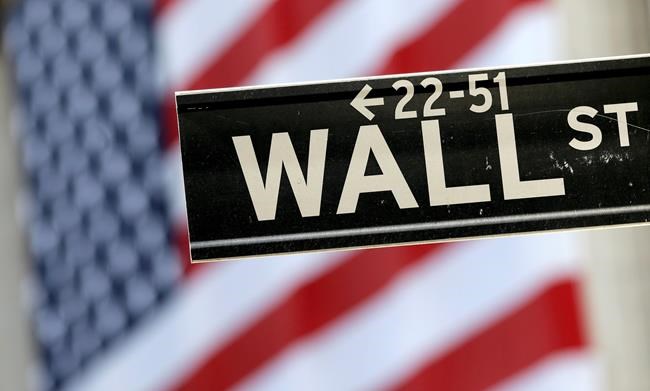
Investors capped a year of solid gains on Wall Street Friday in a selling mood, sending the major U.S. stock indexes modestly lower on the final trading day of 2016.
Technology and consumer-focused stocks led the broad slide, while real estate companies and banks eked out small gains. As it had been for much of the week, trading was subdued ahead of the New Year’s Day holiday.
Despite riding out the last week of the year with losses, halting the Dow Jones industrial average’s momentum as it neared the 20,000 mark, 2016 delivered a much better finish for stock investors than most would have anticipated.
All told, the Dow ended the year with a 13.4 per cent gain, while the Nasdaq composite gained 7.5 per cent.
The Standard & Poor’s 500 index, the broadest measure of the stock market, gained 9.5 per cent after an essentially flat finish in 2015. Including dividends, the total return was 11.96 per cent.
Small-company stocks fared the best, especially since the election. The Russell 2000 index closed out 2016 with a gain of 19.5 per cent.
“This was not just a market that did well, it did extremely well,” said Quincy Krosby, market strategist at Prudential Financial.
The stock market weathered repeated slumps in 2016, including the worst start to any year for stocks, the second correction for the market in five months and plummeting oil prices. A steadily improving U.S. economy and job market, as well as more stable oil prices and better company earnings growth helped turn the market around. More recently, investor optimism following the Republican election sweep in November kicked off a rally that sent the market to new heights.
Some of that enthusiasm evaporated in the final week of the year, as traders seized on the quiet period between the Christmas and New Year’s holidays to do some selling to lock in profits.
“So many times we look for a rally at the end of the year, particularly between Christmas and New Year’s,” said J.J. Kinahan, TD Ameritrade’s chief strategist. “But with the incredible up move we’ve had since the election, people are either hesitant to buy things heading into the new year or are taking a little bit of profit.”
On Friday, the Dow slid 57.18 points, or 0.3 per cent, to 19,762.60. The S&P 500 index fell 10.43 points, or 0.5 per cent, to 2,238.83. The Nasdaq composite gave up 48.97 points, or 0.9 per cent, to 5,383.12.
The Russell 2000 lost 6.05 points, or 0.4 per cent, to 1,357.13.
Bond prices rose. The yield on the 10-year Treasury note fell to 2.44 per cent from 2.48 per cent late Thursday.
Global stocks mostly rose on the year’s last day of trading.
Britain’s index rallied to hit another all-time high. The FTSE 100, which was trading for only a half day, rose 0.3 per cent. That left the index 14.4 per cent higher over 2016.
Elsewhere in Europe, Germany’s DAX rose 0.3 per cent, while France’s CAC 40 gained 0.5 per cent. Earlier in Asia, Japan’s Nikkei 225 fell 0.2 per cent, while Hong Kong’s Hang Seng index rose 1 per cent.
Benchmark U.S. crude fell 5 cents to close at $53.72 a barrel in New York. That translates into a 45 per cent gain for the year. Brent crude, used to price international oils, slipped 3 cents to close at $56.82 a barrel in London.
In other energy trading, wholesale gasoline dropped 2 cents to $1.67 a gallon and heating oil held steady at $1.70 a gallon. Natural gas futures fell 7.8 cents, or 2.1 per cent, to $3.72 per 1,000 cubic feet.
The price of gold fell $6.40 to $1,151.70 an ounce. Silver slid 23 cents to $15.99 an ounce. Copper rose 2 cents to $2.51 a pound.
In currency trading, the dollar strengthened to 116.78 yen from 116.65 yen late Thursday. The euro rose to $1.0531 from $1.0485.
News from © The Associated Press, . All rights reserved.
This material may not be published, broadcast, rewritten or redistributed.

This site is protected by reCAPTCHA and the Google Privacy Policy and Terms of Service apply.
Want to share your thoughts, add context, or connect with others in your community?
You must be logged in to post a comment.