Elevate your local knowledge
Sign up for the iNFOnews newsletter today!
Elevate your local knowledge
Sign up for the iNFOnews newsletter today!
Select Region
Selecting your primary region ensures you get the stories that matter to you first.
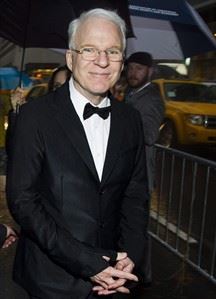
TORONTO – Even after his Grammy-certified self-reinvention as a banjo-plucker deeply rooted in roots music, Steve Martin is well aware that many people come to his gigs because of his resume as a beloved actor and comedian.
He doesn’t mind. He simply sees it as an opportunity to convert new fans and help bluegrass grow.
“A lot of people who would never go see a bluegrass concert come to my shows. I can just look out and see that I wouldn’t see them at the bluegrass festivals we go to,” the snowy-haired 67-year-old said in a telephone interview this week.
“But they seem to love it. Because the band (I play with), Steep Canyon Rangers, are a real bluegrass band. And I think the audiences, when they get there, they (realize) the musicianship is incredible and they do appreciate that. And the music is accessible and interesting enough to get serious lovers of music’s attention.
“And that’s why I’m not afraid to play the Toronto Jazz Festival.”
That gig comes this Saturday, to be held outdoors at Nathan Phillips Square outside City Hall. Martin says his outfit performed under parallel circumstances at the Montreal International Jazz Festival and “just loved it,” so he’s “expecting this to be similar in Torontonian standards.”
But Martin is effusively positive when discussing all aspects of his blossoming music career. He learned to play the banjo in the ’60s, and it became an occasional prop during his rise to oddball comedy icon status in the late ’70s, when his visionary, influential performance albums “Let’s Get Small” and “A Wild and Crazy Guy” racked up platinum sales and kick-started a film career that has included such well-loved gems as “The Jerk,” “All of Me” and “Roxanne.”
Over the last decade, the multi-talented Martin — also an author, playwright, film producer and art enthusiast — began to find diminishing returns in commercially successful but lightly regarded family fare, films including “Cheaper By the Dozen” (and its sequel), “Bringing Down the House,” “The Pink Panther” (also with a sequel) and “Looney Tunes: Back in Action.”
His last film role was 2011’s feather-light birdwatching caper “The Big Year.” In fact, Martin has largely turned his attention to his burgeoning career in bluegrass, beginning with 2009’s Grammy-winning “The Crow: New Songs for the 5-String Banjo” and continuing with 2011’s “Rare Bird Alert,” which featured Paul McCartney and the Dixie Chicks.
His latest, “Love Has Come For You,” was released last month. It’s a full-length collaboration with Edie Brickell, the Texas singer best-known for her 1988 smash “What I Am.” The two first started discussing the project at a party, and then gradually Martin would send her his compositions electronically while Brickell would listen on the opposite coast before writing and recording lyrics.
Since they were merely acquaintances before beginning the process, there were some awkward moments in the early-going.
“We knew each other, but I can’t say well — you know, we were social friends,” Martin said. “It’s just shy when you’re sort of: ‘Blah, I wrote this, what do you think?’ That’s how I felt, anyway. You’re always a little tense when you’re presenting something to the world — in this case, even one person can represent the world — for the first time.”
The record is a departure for both artists. Brickell — who will join Martin onstage for Saturday’s performance — has never tiptoed into the realm of bluegrass, while Martin was actually drawn a little outside its boundaries.
The record features piano, drums and even electronic elements rarely included in bluegrass recordings.
“When I do hear pure bluegrass on the radio, I think: ‘Oh, we did really step outside that,’” Martin said. “There are some cuts on the record that qualify as bluegrass, but you know, time (changes) everything. Even what you’d call modern hardcore bluegrass is very different from what you’d call traditional hardcore bluegrass. So it has changed even though I think sometimes the bluegrass community is not so aware of it.
“I’m not too concerned about it,” he added. “I just like making the music that we make. And we just can’t worry about that too much.”
Martin has a professorial air when discussing this particular strain of American folk music. Where his prior records featured the sort of furiously plucked banjo workouts that many associate with the instrument, his playing on “Love Has Come For You” is significantly more restrained and evokes different emotions.
Asked about the stylistic shift, Martin enthusiastically provides a short history of recent banjo styles, from Pete Seeger’s “strum-picking” to three-finger Scruggs style to clawhammer to two-finger and even an “anything goes style.”
“And all of that stuck in my head,” he adds. “But this sound, this sort of mountain sound, stuck in my head forever. And I knew the banjo had drifted away from what I would call its own inherent melancholy. And that’s what I felt I was able to reach back for on this album.”
It’s clear the duo has enjoyed collaborating. Martin says they’ve written 15 songs together for a musical that’s still about 18 months from completion. They’re performing dates together all summer, and Brickell radiates enthusiasm when discussing Martin even as she’s reached during a nightmare travel day where she’s stuck indefinitely at a New York airport (to which Martin sighs: “Planes, trains and automobiles.”)
“I’m just absolutely thrilled to have Steve at the helm,” says Brickell, who’s married to expert singer/songwriter Paul Simon. “It’s the first time I’ve been completely relaxed as a performer onstage because I know that the ultimate guy is in charge. And he’s going to make the show great no matter what. So it’s just the best.”
“He makes everything fun,” she added. “He has the energy of a kid. I’ve never seen anything like it.”
Martin returns the compliment, saying Brickell has “integrated beautifully” into a stage show he’s been polishing for years with the Steep Canyon Rangers.
Indeed, the absurdist funnyman takes his performances extremely seriously, saying he thinks about the show “very hard every day.”
“It’s like partially comedy, it’s partially serious music, it’s partially fun music, and that’s kind of where we’re at now. It’s getting more and more fun to do every night as we get a little bit more smooth with it,” he says, before closing with a flash of his winking wit.
“By the time we get to Toronto, it’s flawless.”
News from © The Canadian Press, . All rights reserved.
This material may not be published, broadcast, rewritten or redistributed.

This site is protected by reCAPTCHA and the Google Privacy Policy and Terms of Service apply.
Want to share your thoughts, add context, or connect with others in your community?
You must be logged in to post a comment.