Elevate your local knowledge
Sign up for the iNFOnews newsletter today!
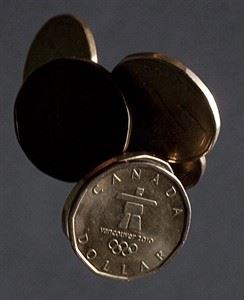
TORONTO – The Canadian dollar was slightly lower amid sliding gold prices and new figures that showed that the economy grew modestly during April.
The loonie slipped 0.06 of a cent to 95.41 cents US as Statistics Canada reported that gross domestic product grew by 0.1 per cent, which was in line with expectations.
Year-over-year, the Canadian economy grew at an annualized rate of 1.4 per cent — slightly below the Bank of Canada’s most recent estimate for the full year and well short of some private sector estimates for 2013 growth.
Most commentaries expect Canadian economic growth will pick up in the second half of the year but the loonie, gold and base metal prices have retreated as the U.S. dollar strengthens along with the American economy.
Commodity prices were mixed with the August crude contract on the New York Mercantile Exchange up 24 cents to US$97.29 a barrel.
September copper was unchanged at US$3.06 a pound. But the August bullion contract on the Nymex was down $15.20 to US$1,196.40 an ounce. Continued speculation about when the U.S. Federal Reserve may ease up on its monthly bond purchases has pushed bullion prices to three-year lows. Gold prices have deteriorated steadily this year as the precious metal loses its appeal as a hedge against inflation and deteriorating currencies.
The main U.S. economic data later will be a manufacturing survey around the Chicago region and the University of Michigan’s latest assessment of consumer confidence around the country.
The Canadian currency has had a volatile week, reflecting market speculation about when the U.S. Federal Reserve might start winding up a key element of economic stimulus. It sank as low as 94.75 cents US, its lowest level since October, 2011.
Fed chairman Ben Bernanke indicated June 19 that the central bank could start tapering its purchase of US$85 billion worth of bonds every month that is aimed at keeping long-term rates low.
But a level of calm has settled on markets due to a number of factors, including solid U.S. economic data and a seeming attempt by the U.S. Federal Reserve to ease investor concerns over the pace of any reduction in its monetary stimulus. The so-called tapering of the purchases raised fears because the stimulus has also been one of the drivers for stocks over recent years.
Also spooking traders was a spike in bond yields with the benchmark 10-year Treasury surging from 2.25 per cent before Bernanke’s comments to as high as around 2.6 per cent. But yields backed off Thursday after three Fed officials said markets are unrealistic in their anticipation of rate hikes down the road.
Jerome Powell, a member of the Fed board in Washington, said the spike in bond yields over the past month is “larger” than would be justified by any “reasonable reassessment” of the path of Fed policy. On Friday morning, the 10-year bond yielded 2.47 per cent.
News from © The Canadian Press, . All rights reserved.
This material may not be published, broadcast, rewritten or redistributed.

This site is protected by reCAPTCHA and the Google Privacy Policy and Terms of Service apply.
Want to share your thoughts, add context, or connect with others in your community?
You must be logged in to post a comment.