Elevate your local knowledge
Sign up for the iNFOnews newsletter today!
Sign up for the iNFOnews newsletter today!
Selecting your primary region ensures you get the stories that matter to you first.
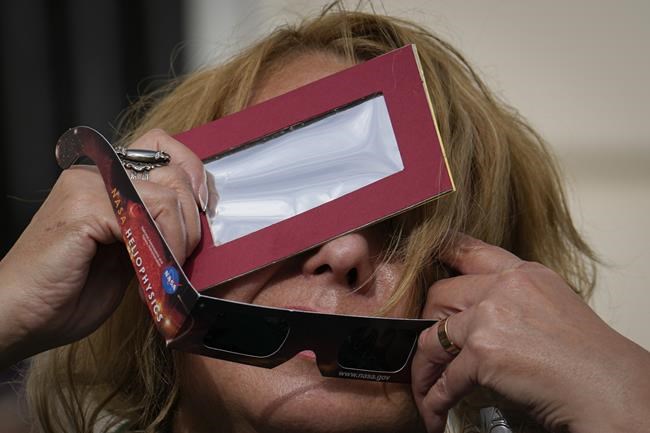
Much of Europe and parts of Africa and Asia saw the moon take a bite out of the sun during the second and last solar eclipse of the year.
The partial eclipse took about four hours. At its peak, the eclipse covered more than 80% of the sun.
A solar eclipse happens when the moon’s path crosses in between the Earth and the sun, blocking out the sun’s light. In a partial eclipse, the three aren’t perfectly aligned — so a crescent of the sun still peeks out.
The next solar eclipse is in April — a rare hybrid kind that will appear as a total eclipse across parts of Australia and Asia.
———
The Associated Press Health and Science Department receives support from the Howard Hughes Medical Institute’s Department of Science Education. The AP is solely responsible for all content.
News from © iNFOnews.ca, . All rights reserved.
This material may not be published, broadcast, rewritten or redistributed.

This site is protected by reCAPTCHA and the Google Privacy Policy and Terms of Service apply.
Want to share your thoughts, add context, or connect with others in your community?
You must be logged in to post a comment.