Elevate your local knowledge
Sign up for the iNFOnews newsletter today!
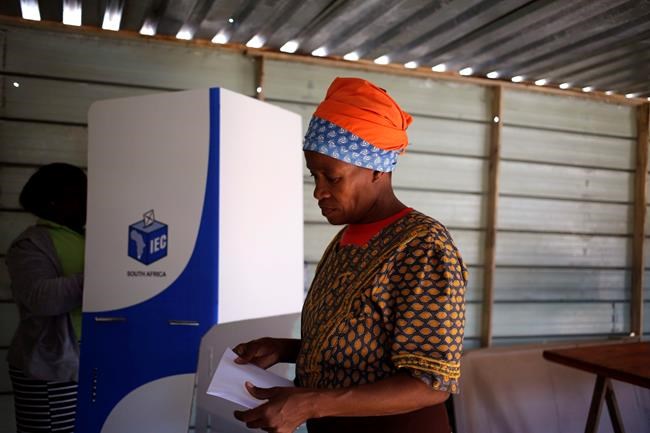
JOHANNESBURG – South Africa’s ruling party faces a robust challenge in municipal elections on Wednesday from opposition groups seeking to capitalize on scandals linked to President Jacob Zuma.
Early voting began Monday for the elderly, disabled and others unable to vote at their polling stations on election day.
The ruling African National Congress, formerly the main anti-apartheid movement, has dominated South African politics since the first all-race elections in 1994. However, it has seen some erosion of support from South Africans who say their hopes for jobs and other opportunities have not been fulfilled since the end of white minority rule. The South African economy has stagnated since the global financial crisis in 2008.
“The ANC is in danger of losing big cities” and has increasingly been falling back on rural support, said Daryl Glaser, an associate professor of politics at Wits University in Johannesburg. He anticipated, however, that opposition parties might not win majorities even if they do well, forcing them to decide whether to form ruling coalitions despite differences that are extreme in some cases.
The opposition Democratic Alliance party, whose roots lie in white liberal opposition to apartheid decades ago, hopes to make gains in key metropolitan areas controlled by the ruling party, including Johannesburg, Tshwane, which is the greater metropolitan area of the capital, Pretoria, and Nelson Mandela Bay, a municipality on South Africa’s east coast. The Democratic Alliance already runs the city of Cape Town.
A more radical opposition party, the Economic Freedom Fighters, advocates the nationalization of industry and other measures that it says would help the poor. It is contesting the local elections for the first time. On Sunday, a convoy of vehicles carrying noisy EFF supporters drove past restaurants serving affluent, mostly white clients in the Johannesburg suburb of Parkhurst, reinforcing the party’s message that South Africa’s white minority should relinquish its hold on economic power.
Lawmakers of the Economic Freedom Fighters have disrupted parliamentary sessions several times to protest a scandal over state upgrades to Zuma’s private home. The case went to the constitutional Court, which said Zuma had violated the constitution and instructed the president to reimburse the state for $507,000.
Many South Africans are also concerned over allegations that Zuma is heavily influenced by the Guptas, a wealthy business family of immigrants from India. The president has denied any wrongdoing.
A large crowd of ruling party supporters gathered Sunday at a stadium rally in Johannesburg, where Zuma touted his party’s record in leading the country for more than two decades. He cited data showing that 95 per cent of South Africans have access to clean, piped water, compared to just over 50 per cent of households in 1994.
“In the past, our people lived in dirty, dusty townships and villages, and many still do,” Zuma said. “The future entails the creation of viable small towns and vibrant metro cities where our people can earn a living.”
___
Follow Christopher Torchia on Twitter at www.twitter.com/torchiachris
News from © The Associated Press, . All rights reserved.
This material may not be published, broadcast, rewritten or redistributed.

This site is protected by reCAPTCHA and the Google Privacy Policy and Terms of Service apply.
Want to share your thoughts, add context, or connect with others in your community?
You must be logged in to post a comment.