Elevate your local knowledge
Sign up for the iNFOnews newsletter today!
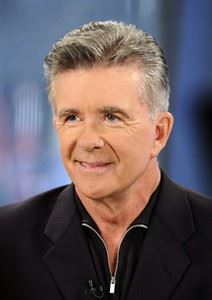
TORONTO – Alan Thicke calls amid the first week of taping his new semi-reality show, “Unusually Thicke,” and his California home has already crossed over firmly into the realm of the surreal.
He’s sought shelter in his office for a telephone interview — conducted over what was supposed to be his lunch break — while action continues furiously all around him. He describes the show as a “reality sitcom” hybrid and a “cross between Larry David and the Kardashians.” Following Thicke, his wife Tanya and teenage son Carter, the series — due on Slice in spring 2014 — is unscripted but nevertheless incorporates pre-planned plotlines that will distinguish the program from your typical reality fare.
“It’s what life in the Seaver household might be really like,” says the 66-year-old Thicke, referencing his best-known on-screen credit, the wholesome ’80s sitcom “Growing Pains.” “We’ve been offered reality shows over the years, but we weren’t terribly comfortable with the notion of tipping over tables and throwing wine at each other and doing all the things that are staples of that.
“We’re layering it with plot and twists and turns,” he added. “It’s not just having a camera … following you around 24-7.”
So, the Ontario-reared jack-of-all-trades hasn’t had to defend against an invasion of his privacy?
“It’s kind of an invasion, but it’s not a surprise invasion. Nobody’s sneaking up from behind. They just encroach on your real life.”
Of course, Thicke’s idea of real life might be different than yours.
The list of celebrities who have already booked cameos on his fledgling show proves Thicke knows more stars than an astronomer. Jay Leno, Bob Saget, the entire casts of “How I Met Your Mother” and “Growing Pains” and even NBA stars Michael Jordan and Magic Johnson had all paid Thicke’s home a visit to shoot quick appearances for the show at the time of this interview. At the very moment he’s chatting, in fact, Oscar nominee Minnie Driver is downstairs waiting to shoot a bit.
“The great irony right now is that the hottest star in show business is my son,” Thicke said, referencing his crooner offspring Robin, whose humidity-cranking hit “Blurred Lines” ruled the summer.
“If I can get him to return my call, we’ll have a nice cameo for him.”
He’s kidding, of course (Thicke says he talks to his R&B singer son every day).
The stars have similarly come out to support Thicke’s entry into Canada’s Walk of Fame, which will be made official Saturday when he’ll be honoured at an awards gala in Toronto alongside other new entrants including music producer Bob Ezrin, actor Victor Garber, soccer star Christine Sinclair and, posthumously, icons Terry Fox and Oscar Peterson. Presenters include Mike Myers and Martin Short, while Carly Rae Jepsen will perform at the gala, which will be televised on Global on Oct. 27.
Thicke says he tasked many of the same stars appearing on his show with recording tributes for the gala, along with the likes of Leonardo DiCaprio, Gordon Lightfoot, Norman Lear and Anne Murray.
“A lot of people stepped up and agreed to try to find something nice to say about me,” he jokes.
The honour means something to the “tickled” Thicke, who’s still extremely proud of the early work he did as a multi-hyphenate talent in Canadian TV.
He recalls his formative years at the CBC, when he held multiple jobs — including a radio show with Alex Trebek, a writing gig for “The Tommy Hunter Show” and behind-the-scenes work on “That’s Show Biz,” an early variety show conceived by future “Saturday Night Live” mastermind Lorne Michaels — as being crucial in setting him on his decidedly non-linear career path.
“When I started at the CBC, they paid so lousy you had to do a lot of things to make a living,” he quips.
When he eventually headed to Hollywood, he said his multi-disciplinary aptitude set him apart in a land of specialists.
He wrote musical material for “The Bobby Darin Show.” He penned monologues for “The Glen Campbell Goodtime Hour.” He composed the catchy theme songs for dozens of shows, including “Diff’rent Strokes,” “The Facts of Life” and “Wheel of Fortune.”
“The fun of your career becomes the variety of it,” he says. “You’re doing something different every day. I’ve been very blessed that way.”
He looks back with particular pride upon the shows he staged in Canada. He wrote and produced a CBC-TV variety show built around the talents of Quebec pop singer René Simard, produced six of Murray’s TV specials and hosted the chatfest “The Alan Thicke Show” (and, later, the shorter-lived “Thicke of the Night” for American TV).
He recalls that the homegrown entertainment industry at the time was under-developed.
“When I was doing my talk show in Canada in Vancouver years ago, we had to beg, borrow and steal to get anybody in town. There was no production in town. There were no movies being made in Vancouver,” he says. “We got (big guests) up because we threw great parties.
“We’d tape 10 hour-long shows on a weekend, which means we had all of the guests in town on the same floor of the same hotel over the weekend. Everybody had a good time. We had a good reputation for that. Whether it was sex, drugs, rock and roll, I don’t know what they were into, I could only turn one blind eye, but I know they were all having a good time and they came back and we had good word of mouth in the booking industry.”
Thicke says he consistently championed Canadian talent, insisting upon not only the importance of spotlighting prominent Canuck stars but helping to build an entertainment infrastructure here — “it was about the lighting guys, the producers, the writers, the grips, the crew,” he says.
Now, as he prepares to quite literally cement his place in Canadian entertainment lore, he feels he did play a role in helping his home country evolve into a mainstay of television and film production. And he hopes more follow in his footsteps.
“I do take a little pride in feeling that I made a contribution as a bit of a pioneer in some ways,” he said.
“I hope somewhere before I’m gone, as part of the Walk of Fame, part of that will be what I’m remembered for. Because I was a proponent of Canadian talent and of the rules that insisted that we encourage the infrastructure of the entertainment industry.”
News from © The Canadian Press, . All rights reserved.
This material may not be published, broadcast, rewritten or redistributed.

This site is protected by reCAPTCHA and the Google Privacy Policy and Terms of Service apply.
Want to share your thoughts, add context, or connect with others in your community?
You must be logged in to post a comment.