Elevate your local knowledge
Sign up for the iNFOnews newsletter today!
Sign up for the iNFOnews newsletter today!
Selecting your primary region ensures you get the stories that matter to you first.
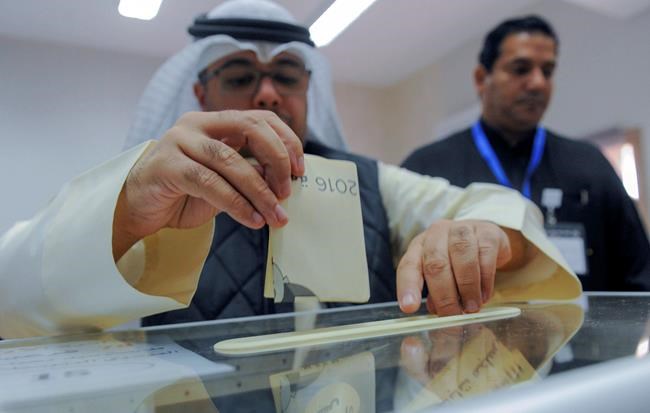
KUWAIT CITY – Kuwaitis voted Saturday for representatives in the tiny, oil-rich country’s parliament as the Gulf nation struggles to cope with a slump in oil prices that is straining public finances.
The snap elections were triggered by the emir’s order to dissolve the previous legislature in October following cuts to welfare benefits and a hike in state-subsidized gasoline prices.
Western-allied Kuwait has the most freewheeling political system among the wealthy Gulf Arab states, though power ultimately rests with the hereditary emir. The 50-member parliament has legislative powers and the authority to question ministers, including members of the ruling family.
But a government crackdown on political dissent, including the shuttering of opposition media, the jailing of prominent opposition figures, and changes to the electoral law, have undermined Kuwaitis’ confidence that their votes will make much difference.
“There is nothing that drives me to cast my vote,” says Nasser al-Dawood, a 26-year old marketer. “We boycotted the previous elections for a number of reasons. Those reasons are still valid … our participation will only give legitimacy to this cat-and-mouse game between cabinet and parliament.”
Only a few of the 293 candidates running Saturday are seasoned politicians. Opposition members boycotted the last polls in December 2012 and many now have either retired from politics or belong to groups that are seen as fractured and ineffectual.
One of the most prominent opposition leaders, Musallam al-Barrack, is behind bars serving a two-year sentence for a political speech deemed offensive to the emir, Sheikh Sabah Al Ahmad Al Sabah.
Meanwhile, a schism within the ruling family has never been more pronounced, with the government filing lawsuits against a number of ruling family members, including the emir’s nephew for allegations of corruption in Kuwait’s sports.
Slightly smaller than the U.S. state of New Jersey and with only 1.4 million citizens, Kuwait has the world’s sixth largest proven oil reserves and enjoyed more than 15 years of budget surpluses until the price of oil collapsed in 2014.
Since then, the government has pushed through a program of economic reform that included reductions in subsidies on electricity, water and gasoline. It has also moved to trim massive public-sector labour costs.
The emir pointed to “regional circumstances” and “security challenges” in his decision to dissolve parliament. Kuwait’s northern neighbour, Iraq, is fighting to drive Islamic State militants from the northern city of Mosul.
In June 2015, normally peaceful Kuwait was stunned when an Islamic State-claimed suicide bombing at a Shiite mosque in Kuwait City killed 27 people and wounded scores. In October of this year, an Egyptian who allegedly was an Islamic State supporter rammed a garbage truck into a vehicle carrying U.S. soldiers, wounding only himself.
Those concerns, coupled with 87-year-old Sheikh Sabah’s advancing age, have raised questions about Kuwait’s future. Still, economic issues including a critical shortage of housing for citizens and the prospect of further belt-tightening are foremost in voters’ minds.
Vote results are expected Sunday.
___
Associated Press writer Adam Schreck in Dubai, United Arab Emirates, contributed to this report.
News from © The Associated Press, . All rights reserved.
This material may not be published, broadcast, rewritten or redistributed.

This site is protected by reCAPTCHA and the Google Privacy Policy and Terms of Service apply.
Want to share your thoughts, add context, or connect with others in your community?
You must be logged in to post a comment.