Elevate your local knowledge
Sign up for the iNFOnews newsletter today!
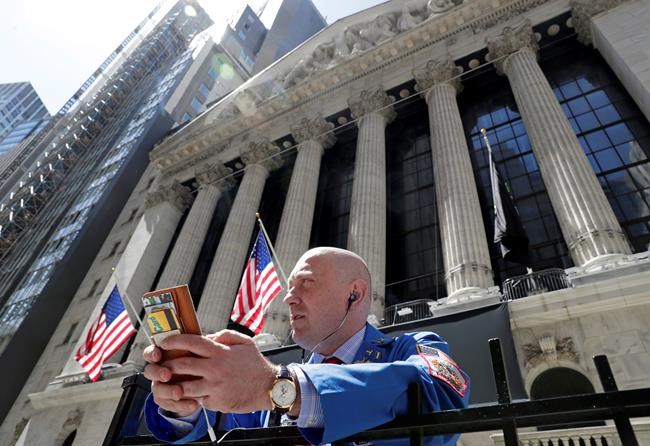
NEW YORK – U.S. stocks fell with other markets on Friday after the Trump administration stepped up the trade dispute between the world’s two biggest economies by announcing tariffs on $50 billion of imports from China.
China almost immediately promised to retaliate with its own tariffs of the same scale, raising the possibility of an escalating trade war that could leave the global economy as collateral damage. Barriers to trade could result in higher prices at stores for all kinds of products, weaker profits for companies and slower growth around the world.
Many economists see free trade as a boon for the global economy, making it more efficient and allowing companies to earn bigger profits, which in turn leads to higher stock prices. President Donald Trump, though, has railed against the deficits that the United States has with other countries as unfair.
Investors have been closely following the United States’ trade disputes with its partners, and many had expected Trump to announce tariffs against Chinese imports. The hope is that they are merely a negotiating tool, used to craft sweeping trade deals rather than as ends in themselves.
“It’s something that could hurt the economy if followed through on, but for now, markets seem to be assessing this as just a negotiation that is out there for everyone to see,” said Matthew Miskin, markets strategist with John Hancock Investments.
KEEPING SCORE: The S&P 500 was down nearly 12 points, or 0.4 per cent, at 2,771, as of 2 p.m. Eastern time. If it holds there, the index will have lost all its gains for the week and lock in its first weekly loss in a month. Energy stocks had the biggest losses, hurt by a sharp drop in the price of oil.
The Dow Jones industrial average dropped 214 points, or 0.9 per cent, to 24,961, and the Nasdaq composite sank 24, or 0.3 per cent, to 7,736.
A BUSY WEEK: Friday’s tariff announcement caps a whirlwind week full of encouraging reports on the U.S. economy and policy announcements from the world’s biggest central banks. So while the trade dispute hurt stocks on Friday, it wasn’t the only thing moving markets.
Attention is focused on central banks because they’re in various stages of pulling away from the emergency stimulus they put in place following the Great Recession. The Bank of Japan decided on Friday to keep its stimulus program on track, for example. A day earlier, the European Central Bank said it would halt its bond-buying program after the end of the year, though it also pledged to hold off on rate increases through the summer of 2019.
The Federal Reserve is further along on this path. On Wednesday, it raised its benchmark rate for the fourth time in the last year and indicated two more increases may be on the way in 2018, which was more aggressive than some investors expected. It’s making the moves because of the stronger economy, and that may mean something counterintuitive for the lay investor.
“Stocks and the economy might go separate ways,” Miskin said. “The economy might actually feel good for the first time in a decade, but the problem is that those tend to be the periods at the end of the cycle.”
OIL SLIDE: Benchmark U.S. crude fell $1.91 to $64.98 per barrel. Brent crude, the international standard, lost $2.52 to $73.42.
That helped drag energy in the S&P 500 down 1.9 per cent for the largest loss among the 11 sectors that make up the index.
Marathon Oil had the biggest loss in the S&P 500, down 4.8 per cent to $20.11. Anadarko Petroleum dropped 3.7 per cent to $68.40, and Newfield Exploration fell 3.4 per cent to $28.20.
WORLD MARKETS: Stock markets in Europe and Asia were mostly down.
The DAX in Germany lost 0.7 per cent, and the CAC 40 in France dipped 0.5 per cent. In London, the FTSE 100 lost 1.7 per cent. In Asia, South Korea’s Kospi shed 0.8 per cent, and the Hang Seng in Hong Kong fell 0.4 per cent. Japan’s Nikkei 225 index was an outlier and rose 0.5 per cent.
YIELDS: Treasury yields fell for a second straight day, and the yield on the 10-year Treasury sank to 2.91 per cent from 2.94 per cent late Thursday.
COMMODITIES: Gold dropped $27.50 to $1,280.80 per ounce, and silver fell 75 cents to $16.51 per ounce. The price of copper, which often moves with expectations for the strength of the economy, lost 8 cents, or 2.5 per cent, to $3.14 per pound.
CURRENCIES: The dollar dipped to 110.55 Japanese yen from 110.57 yen late Thursday. The euro rose to $1.1610 from $1.1591, and the British pound rose to $1.3283 from $1.3281.
___
AP Business Writer Youkyung Lee contributed from Seoul, South Korea.
News from © iNFOnews.ca, . All rights reserved.
This material may not be published, broadcast, rewritten or redistributed.

This site is protected by reCAPTCHA and the Google Privacy Policy and Terms of Service apply.
Want to share your thoughts, add context, or connect with others in your community?
You must be logged in to post a comment.