Elevate your local knowledge
Sign up for the iNFOnews newsletter today!
Sign up for the iNFOnews newsletter today!
Selecting your primary region ensures you get the stories that matter to you first.
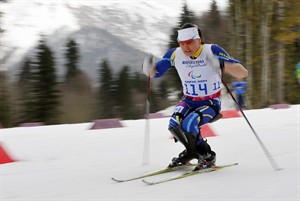
SOCHI, Russia – From a court room in Pretoria to the snow and ice more than 7,000 miles away in Sochi, the Oscar Pistorius trial looms large over the Paralympic world.
As the fate of the icon of disability sport is determined, some of the athletes who aspire to match the global recognition of the “Blade Runner” hang on the verdict.
“I’m absolutely watching,” Alana Nichols, who won silver for the U.S. in downhill sitting skiing on Saturday, told The Associated Press. “There is no way around talking about Oscar and what’s going on in the trial.”
Pistorius went from inspiring the world as the first amputee to run in the Olympics in the summer of 2012 to being accused of murder in February 2013.
“Of course we follow it, we are interested in the destiny of any athlete who has been through such a situation like me,” Lyudmyla Pavlenko, who won gold for Ukraine in cross-country sitting skiing, said Monday through a translator.
“We treat him like our friend and we respect him as someone who still strives for (sporting) success despite all their problems.”
Pistorius admits to killing Reeva Steenkamp, but denies the premeditated murder charge, maintaining he thought his girlfriend was a dangerous intruder when he shot her through the door of a toilet cubicle in his home. Before the trial in South Africa entered its second week, the Winter Paralympics began in Russia over the weekend.
“It’s interesting the timing of it all,” Nichols, who was hospitalized following a crash on Monday, said in an earlier interview. “And unfortunately the crisis in Ukraine and Oscar Pistorius court case are both really negative things that are taking the light from what is really positive about the Paralympic Games and us. I don’t appreciate either of those things for that reason.”
Pistorius is being knocked off some front pages by the Winter Paralympians. That was the case in Britain after Jade Etherington won silver in the visually impaired downhill. And compatriots Kelly Gallagher and Charlotte Evans hope their gold medal triumph in Monday’s Super-G also takes the Paralympic focus off the accused murderer.
“It’s really great to be part of a happy news story at the moment,” Gallagher said, with Evans adding: “This is the positive side.”
Indeed the global interest in Pistorius’ sprinting debut at the Olympics in London generated unprecedented coverage of the subsequent Paralympics and encouraged some broadcasters to invest more time and resources on the Sochi Games.
The International Paralympic Committee doesn’t hide its appreciation of Pistorius’ contribution to raising its profile.
“The movement hasn’t moved on and forgotten about Oscar,” IPC President Philip Craven said. “Oscar was, and is a great athlete and he has done wonderful things for the Paralympic movement. But now many more people have joined with Oscar doing that job. It’s not a job, it’s a love.”
The outcome of the trial, though, could have a big bearing on how the IPC’s work.
“It’s something that we are noting and observing and we are looking to further the Paralympic movement,” Craven said. “I would say the verdict; we will be taking very close consideration of what that is.”
To some Paralympians, the case has shown that they are as fallible as anyone else.
“A lot of people might think Paralympic athletes are associated with that kind of behaviour,” Nichols said. “The bottom line is he’s human, disabled or not.”
___
Rob Harris can be followed at www.twitter.com/RobHarris
News from © The Associated Press, . All rights reserved.
This material may not be published, broadcast, rewritten or redistributed.

This site is protected by reCAPTCHA and the Google Privacy Policy and Terms of Service apply.
Want to share your thoughts, add context, or connect with others in your community?
You must be logged in to post a comment.