Elevate your local knowledge
Sign up for the iNFOnews newsletter today!
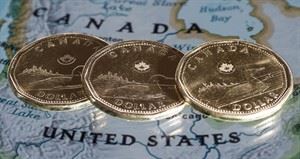
TORONTO – The Canadian dollar was higher Monday as risk aversion faded and traders looked to see how the U.S. and the European Union will follow through on imposing sanctions against Russia after Crimea voted to leave Ukraine and join its neighbour.
The loonie rose 0.38 of a cent to 90.51 cents US.
The 28-nation EU is expected to have agreed by late Monday on a full list of individual Russians to target for asset freezes and travel bans.
British Foreign Secretary William Hague hinted more measures against Russia could be taken at a summit of EU leaders starting Thursday. The United States is also prepared to impose additional penalties on Russia.
On the economic front, Statistics Canada said that Canadians added $2.3 billion of foreign securities to their holdings in January. It was the fourth straight month of such investment.
At the same time, foreign investors acquired $1.1 billion of Canadian securities, mainly in equities. As a result, the agency said that cross-border transactions in securities generated a net outflow of funds for a second consecutive month.
On the commodity markets, copper was on the rise Monday morning after a string of negative data from China sent prices sharply lower last week.
The May copper contract in New York rose two cents to US$2.97 a pound.
April crude dipped 42 cents to US$98.47 a barrel.
Gold prices edged lower after nervous investors seeking safety pushed prices ahead last week. The May contract in New York declined 90 cents to US$1,378.10 an ounce.
Traders also looked ahead to Wednesday afternoon when the U.S. Federal Reserve makes its next interest rate announcement, followed by a news conference with new Fed chair Janet Yellen.
Traders will be looking for any change in a gauge the Fed is using for interest rate guidance — the jobless rate. Generally, markets aren’t expecting a rate hike from the Fed until the middle of next year at the earliest.
Also, the Fed will likely send the message that the economy is strong enough to carry on with its program of cutting back on its bond purchases, the stimulus program that kept long term rates low and encouraged a strong rally on stock markets.
Markets expect the Fed to cut its monthly bond purchases by another $10 billion to $55 billion a month.
Meanwhile, Chinese officials announced on the weekend that exchange rate controls would be modestly eased. It was the latest step in an eventual plan to let the yuan float freely.
The yuan has reversed course recently after strengthening steadily for years. Analysts believe the central bank is guiding the exchange rate lower against the U.S. dollar in an effort to discourage speculators from moving money into the country to profit from the yuan’s rise.
News from © The Canadian Press, . All rights reserved.
This material may not be published, broadcast, rewritten or redistributed.

This site is protected by reCAPTCHA and the Google Privacy Policy and Terms of Service apply.
Want to share your thoughts, add context, or connect with others in your community?
You must be logged in to post a comment.