Elevate your local knowledge
Sign up for the iNFOnews newsletter today!
Sign up for the iNFOnews newsletter today!
Selecting your primary region ensures you get the stories that matter to you first.
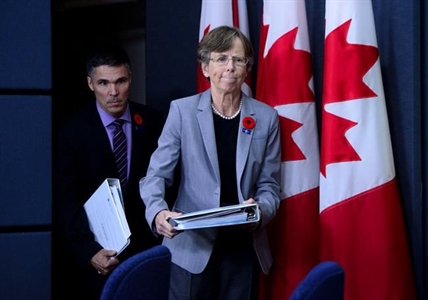
OTTAWA – Fatigue is prevalent in rail, marine and air transportation, the Transportation Safety Board reported on Monday, and it called for "profound change" including to views held by management and workers.
The federal agency responsible for investigating transportation incidents said Monday that fatigue poses dangers for freight-train, marine and air operations as it released its annual safety report.
Transportation crews often work long and irregular hours, frequently in multiple time zones and challenging conditions, the TSB says.
The agency has found fatigue to be a risk or contributing factor in more than 90 investigations since 1992 and in its new report it says the U.S. National Transportation Safety Board cited pilot fatigue as a reason why an Air Canada plane nearly landed on a taxiway in San Francisco in July 2017.
Transport Canada, operators, unions, and employees all need to work together to prevent and manage exhaustion at work, said TSB chair Kathy Fox.
"This also calls for a profound change in attitudes and behaviours, both at the management and operational levels," she said in a statement.
Change will only be possible through awareness training and new fatigue-management plans that encourage employers and employees alike to ensure no one "becomes a casualty of fatigue," the agency's report says.
For example, there is a risk crews will work when they're overtired if marine operators are not required to implement fatigue-management plans, the TSB said, noting the increased likelihood of mistakes when workers are weary.
Managing worker exhaustion in the rail industry has been on the TSB's list of key concerns since 2016 but the worry has now been extended to include marine and air operations.
Transport Minister Marc Garneau said Monday he is eager to move ahead on new pilot-fatigue rules. Proposed new regulations will be released soon and a consultation period will follow, he said.
Garneau's department has also published a notice of intent to change work hours and develop regulations reflecting current science to manage fatigue in the rail industry.
The TSB's watch list also flags the "disturbing safety record" of the fishing industry. It had 17 workers killed in 2018, an all-time high.
Safety gaps put fish harvesters lives' at risk, the TSB said, noting challenges will exist until co-ordinated actions by federal and provincial authorities, industry players and safety advocates influence behavioural and attitude changes.
"Developing and sustaining a strong safety culture is required to foster greater compliance with regulations, in particular with respect to vessel stability and the use of life-saving equipment," the report says.
—Follow @kkirkup on Twitter
News from © iNFOnews.ca, . All rights reserved.
This material may not be published, broadcast, rewritten or redistributed.

This site is protected by reCAPTCHA and the Google Privacy Policy and Terms of Service apply.
Want to share your thoughts, add context, or connect with others in your community?
You must be logged in to post a comment.