Elevate your local knowledge
Sign up for the iNFOnews newsletter today!
Sign up for the iNFOnews newsletter today!
Selecting your primary region ensures you get the stories that matter to you first.
THE HAGUE, Netherlands – The defence lawyer of an 87-year-old Rwandan genocide suspect arrested in France has appealed to an international court not to send him to Tanzania to face trial, but instead to transfer him to the Netherlands for health reasons, according to a written request filed Monday.
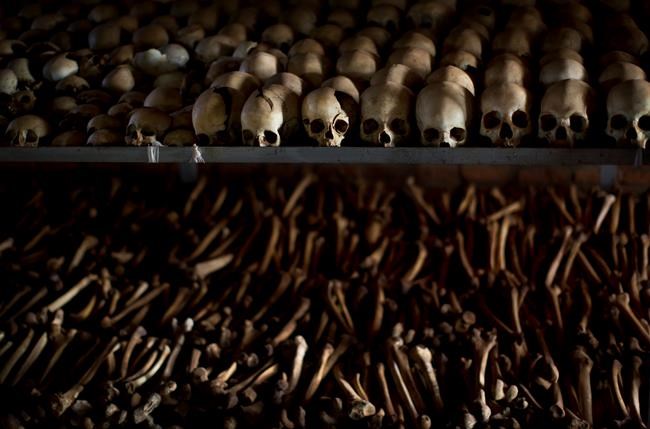
Félicien Kabuga, one of the most wanted fugitives in Rwanda’s 1994 genocide, was arrested outside Paris in May after 25 years on the run. He is accused of genocide and crimes against humanity for equipping militias that killed more than 800,000 ethnic Tutsis and moderate Hutus who tried to protect them.
Kabuga has denied involvement in the massacre.
A court Paris last week approved Kabuga’s extradition to a special international court in Arusha, Tanzania. Citing health grounds including fears he could contract COVID-19 in Tanzania, his French lawyer says Kabuga should instead be sent to The Hague, Netherlands.
Lawyer Emmanuel Altit put his request in writing to the president of the U.N.’s International Residual Mechanism for Criminal Tribunals, which had sought Kabuga’s arrest since 2013.
The mechanism deals with cases remaining from now-closed U.N. tribunals that prosecuted atrocities committed during the Balkan wars of the 1990s and the Rwandan genocide. The mechanism has branches in The Hague and Arusha.
Altit said Kabuga’s health could be badly affected by a flight from Paris to Arusha and warned that he could also contract COVID-19 in Tanzania. He added that a transfer to Tanzania also would separate Kabuga from his family.
Tanzania’s president, John Magufuli, has claimed his country is free of the coronavirus because of the power of prayer — but his government stopped publicly updating virus data at the end of April, with just 509 confirmed cases.
Altit wrote that if Kabuga is sent to Tanzania and contracts COVID-19, “he could not be adequately treated since the Tanzanian authorities deny the very presence of the virus on their soil.”
It wasn’t immediately clear how long the mechanism’s president would take to issue a ruling.
News from © iNFOnews.ca, . All rights reserved.
This material may not be published, broadcast, rewritten or redistributed.

This site is protected by reCAPTCHA and the Google Privacy Policy and Terms of Service apply.
Want to share your thoughts, add context, or connect with others in your community?
You must be logged in to post a comment.