Elevate your local knowledge
Sign up for the iNFOnews newsletter today!
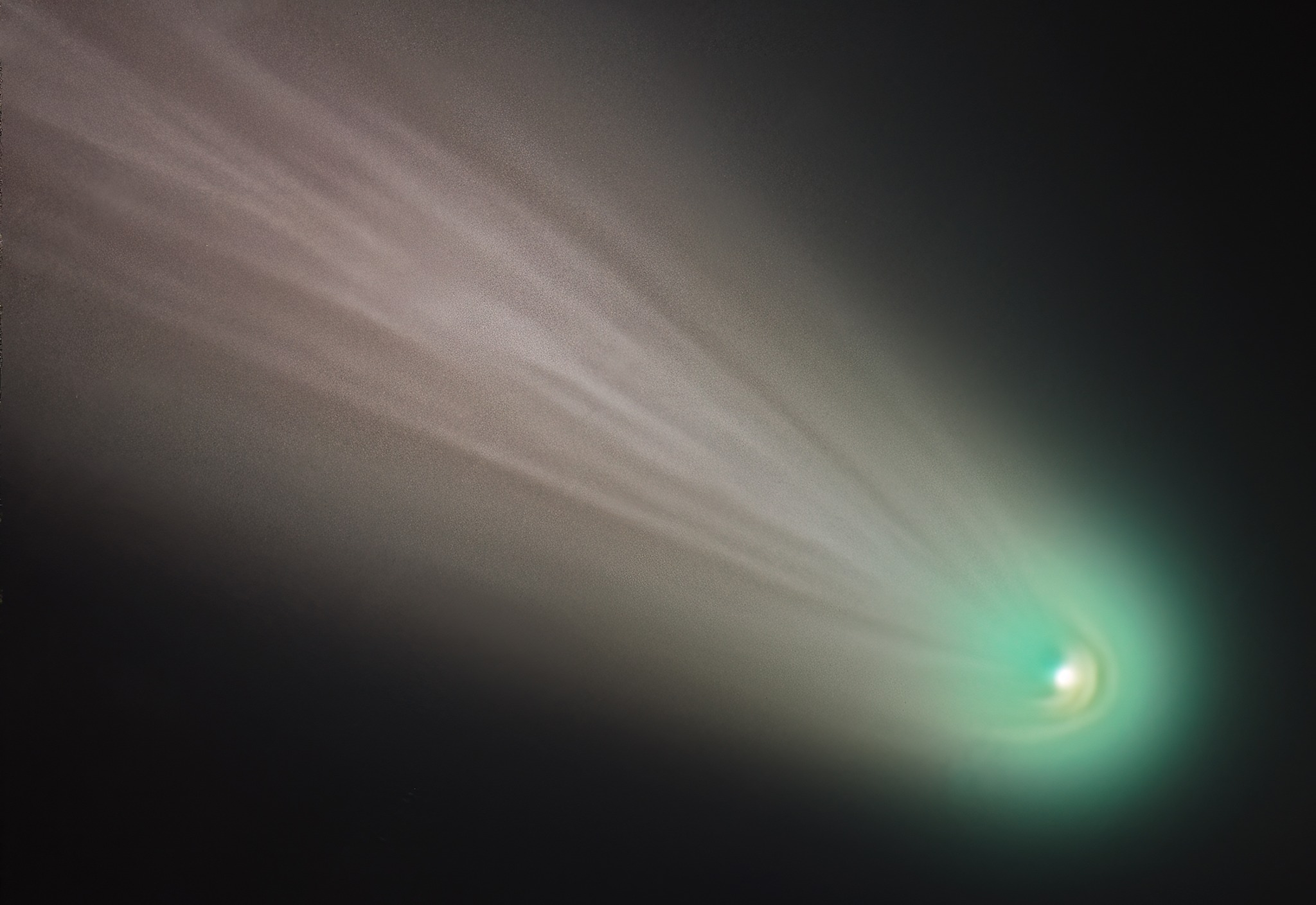
The green hue and long glowing tail of a rare comet was photographed blazing through the night sky in the South Okanagan recently, and it won’t be seen from Earth for another 1,396 years.
Debra Ceravolo is an amateur astronomer and astrophotographer in Osoyoos who has been observing Comet A6 Lemmon for the past couple of weeks.
“I started looking out for it from my observatory in early October, I knew it was starting to get brighter,” she said. “It’s coming towards the sun right now, getting brighter and brighter.”
The comet was first discovered through a telescope on Mt. Lemmon in Arizona at beginning of January. It came closest to Earth on Oct. 21 and is growing brighter as it approaches the sun, according to EarthSky.org.
Ceravolo said Comet A6 Lemmon is one of numerous comets having long orbits, but happens to be a particularly visible and photogenic one.
“It’s a big occasion in the way this one is bright enough to capture it, often they look like tiny green fuzz balls,” she said. “For one moment before the moon brightened, I could see it with my eyes, but I live under dark skies. You can see it easily with binoculars and of course telescopes and cameras pick it up better.”
The comet is seen glowing green with a long pinkish brownish tail with white glowing streaks in it. Comets are made of rock, dust and ice from the solar system that heat up as they near the sun.
“A lot of the material is being blown off the head of the comet by the solar wind making all the ice evaporate off it which makes it glow,” Ceravolo said. “There’s a lot of gas in it that causes the green colour, it’s very splashy looking right now.
“The tail is mostly dust. This one has white streaks made of gasses the sun is magnetizing. It looks great in photographs.”
Comet A6 Lemmon will get nearest to the sun on its 1,396-year orbit on Nov. 8 and then fade away. With the moon waxing to full this week, the brightness of the comet is getting washed out by the light.
“It’s constantly changing positions in the sky, it’s moving so fast it won’t be in the same place you saw it the night before,” Ceravolo said. “It’s also getting closer to the horizon which makes it harder to see.
“I was able to capture the head of it, it’s such a dynamic and photogenic comet.”
News from © iNFOnews.ca, . All rights reserved.
This material may not be published, broadcast, rewritten or redistributed.

This site is protected by reCAPTCHA and the Google Privacy Policy and Terms of Service apply.
Want to share your thoughts, add context, or connect with others in your community?
You must be logged in to post a comment.