Elevate your local knowledge
Sign up for the iNFOnews newsletter today!
Elevate your local knowledge
Sign up for the iNFOnews newsletter today!
Select Region
Selecting your primary region ensures you get the stories that matter to you first.
OTTAWA — Prime Minister Mark Carney met Wednesday with chiefs representing Treaties 6, 7 and 8 on Parliament Hill, who expressed openness to the idea of pipeline ownership days after Carney signed a memorandum of understanding with Alberta that opens the door to get one to B.C.’s coast.
Piikani Nation Chief Troy Knowlton, speaking to reporters outside the door where he and other chiefs met with Carney, said First Nations need a stake in any project proposed on their lands.
“We’re not against economic growth or benefits to the region, to our people, to the greater population,” Knowlton said.
What he is against is harms to the environment and potential health impacts caused by destruction of the waterways.
“But if we’re real co-owners, then the concerns we have, we can ensure that we’re addressing those concerns: environmental health and safety, employment and recognition of the area’s First Nations ancestral places,” said the chief representing a First Nation in southern Alberta.
The agreement between Ottawa and Alberta commits the two governments to working toward building an oil pipeline to the West Coast — and opens the door to changes to the coastal tanker ban.
It says Ottawa’s commitment is contingent on the pipeline being approved as a project of national interest, and on the project providing “opportunities for Indigenous co-ownership and shared economic benefits.”
Despite that vague promise of Indigenous co-ownership, no First Nations leaders were consulted on what the memorandum of understanding would look like — not even those like Knowlton who are open to the idea of one.
The meeting between Carney and chiefs came a day after chiefs at the Assembly of First Nations’ special assembly voted unanimously to reject the agreement, and to press the federal government to uphold the coastal tanker ban.
Alberta does not have a regional representative at the Assembly of First Nations, and not all chiefs in the province participate in the advocacy body’s functions.
Chiefs in B.C. are generally united in their opposition to the removal of the tanker ban, which was passed in legislation in 2019, putting legal teeth behind a non-binding moratorium that had been in place in the region since the 1970s. It bars oil tankers carrying more than 12,500 tonnes of crude oil from stopping or unloading at ports from the northern tip of Vancouver Island to the Alaska border.
Carney addressed the Assembly of First Nations gathering on Tuesday, where he tried to quell concerns from chiefs about the agreement with Alberta and his government’s major projects agenda.
Energy and Natural Resources Minister Tim Hodgson was scheduled to speak in front of the Assembly of First Nations Thursday, but was pulled from the agenda Wednesday along with National Defence Minister David McGuinty.
Hodgson found himself in hot water last week when he brushed off concerns from Coastal First Nations about failing to meet with them before the pipeline agreement was signed with Alberta.
“It’s called Zoom,” Hodgson quipped on CBC’s “Power and Politics” when asked about Coastal First Nations president Marilyn Slett’s inability to make the trip to Vancouver on short notice for a meeting.
He apologized for those remarks, saying on social media it was a “poor choice of words” and offering to meet with the First Nations “at their convenience.”
Carney vowed on Tuesday to meet with Coastal First Nations as soon as possible. Chiefs from that province were not invited to meet with Carney on Wednesday.
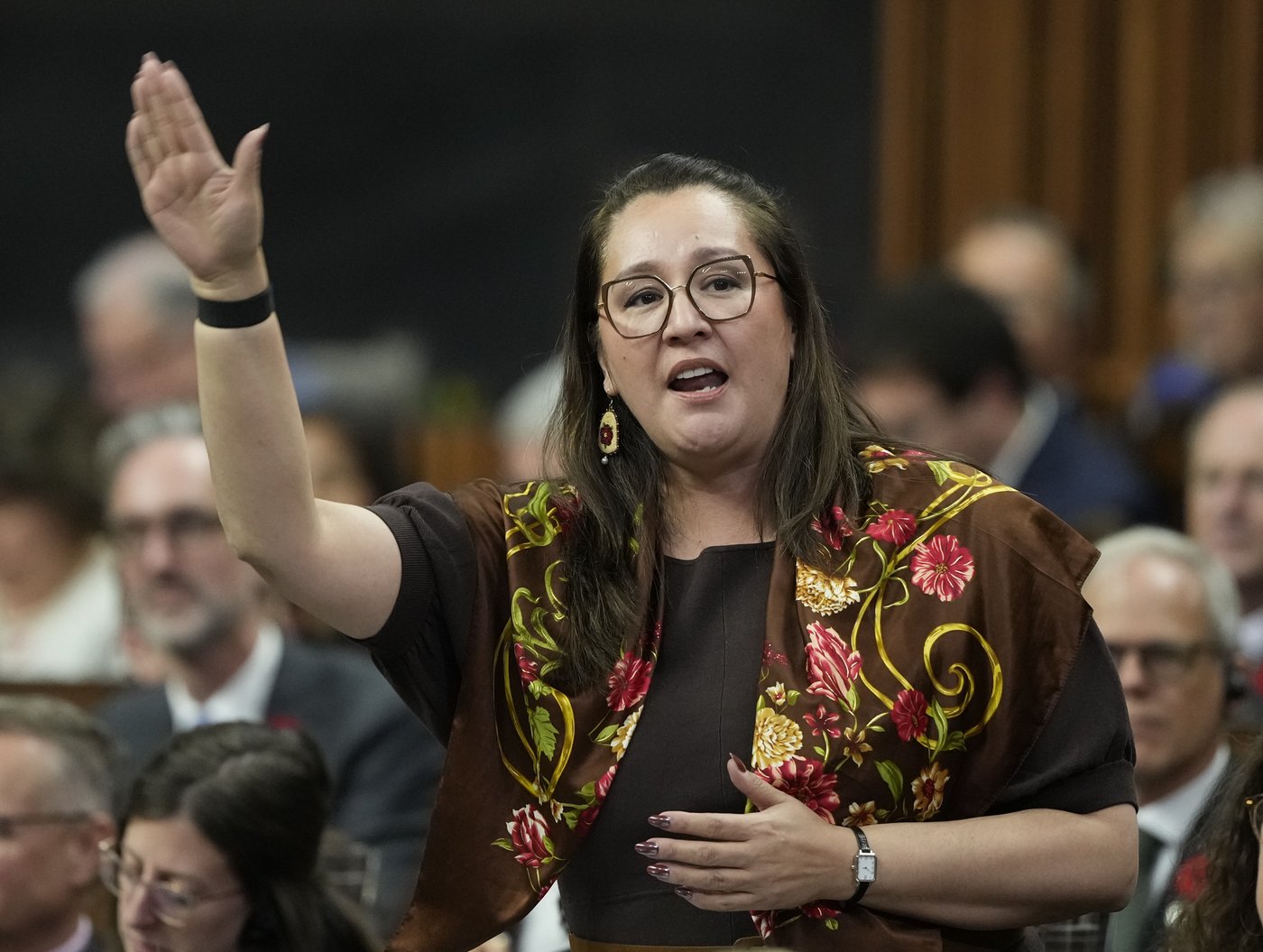
Indigenous Services Minister Mandy Gull-Masty addressed chiefs Wednesday, during a panel on a Senate bill.
Gull-Masty told chiefs she is committed to reforming First Nations status under the Indian Act — but she doesn’t agree with changes made by senators to a piece of legislation she once backed.
She said she’s in a unique position as a Cree woman administering a piece of legislation that gives the federal government control over the lives of First Nations peoples, and that she understands the concerns chiefs have with the law in its current form.
Bill S-2, introduced in the Senate with support from the Liberal government, was drafted to eliminate some gender inequities in the Indian Act and allow about 6,000 people to become eligible for First Nations status.
Some senators and Indigenous community leaders said the bill didn’t go far enough.
Senators changed the legislation last month to eliminate what is known as the “second-generation cutoff,” where status can’t be handed down after more than two generations where only one parent has status.
The amended opted instead for a one-parent rule that would allow First Nations status to be transferred to a child if one of their parents is enrolled.
Gull-Masty said she believes “a one-parent solution is one part of the process” of ending discrimination under the Indian Act.
“But it is not one that reflects the uniqueness of who we all are as First Nations here in Canada,” she added.
“I’m also here to express very clearly that I must do the work to offer you more than one solution. I’m here to work with you in community to define that pathway for you — to define and clearly to develop the tools that you need.”
Sen. Paul Prosper, who helped amend the legislation in the Senate’s Indigenous Peoples committee, told the assembled chiefs earlier in the day the witnesses his colleagues heard from as they studied the legislation were almost unanimous on the need to repeal the second-generation cutoff.
He said some politicians see changes to status eligibility as more of a financial concern than anything else, since per capita funding in First Nations would need to increase if more members are recognized by the federal government.
“There is a notion of justice that is deep within our hearts that we must fulfil, not for ourselves, but for our future generations, our communities and our nations,” he said. “Please write, lobby, speak to your local MPs, to the relevant ministers and let them know we will not take this anymore, that we need change and we need change now.”
In a separate media event, a group of Ontario chiefs said Wednesday the federal government should immediately reintroduce the clean drinking water legislation that failed to pass before the election was called last spring.
Prime Minister Mark Carney told the chiefs in Ottawa on Tuesday that new drinking water legislation would be introduced in the spring.
Anishinabek Nation Grand Chief Linda Debassige said delaying it until then is “not acceptable.”
“First Nations have waited too long,” she told a press conference on Parliament Hill.
Gull-Masty said last summer a new water bill would come this fall.
The last version of the clean water bill, C-61, passed second reading and cleared the committee stage in the House of Commons but was not debated at third reading before the 44th Parliament ended for the election. All bills not yet passed when an election is called die on the order paper.
C-61 would have affirmed the inherent right of First Nations to jurisdiction over water — including drinking water and wastewater — set minimum national standards for drinking water and wastewater services on First Nations, and provide funding to meet the minimum requirements set by a drinking water class action settlement reached in 2021.
Debassige, who said she was involved in the development of Bill C-61, added chiefs have heard the government is looking at removing certain protections that were in the former bill.
The federal government was reporting 38 active long term boil-water advisories on First Nations as of Oct. 15. Twenty-seven of those advisories are in Ontario; the boil water advisory in Neskantaga First Nation has been in place for 30 years.
Neskantaga Chief Gary Quisess said that while the provincial government looks to advance the Ring of Fire mining project on Neskantaga land, people in his community have been for decades using 1.5 litre bottles of water to drink, cook and bathe.
“We don’t have to live like this,” Quisess said. “A lot of developments get benefit from our lands. And here we are suffering for water.”
This report by The Canadian Press was first published Dec. 3, 2025.
— With files from Nick Murray
News from © The Canadian Press, . All rights reserved.
This material may not be published, broadcast, rewritten or redistributed.

This site is protected by reCAPTCHA and the Google Privacy Policy and Terms of Service apply.
Want to share your thoughts, add context, or connect with others in your community?
You must be logged in to post a comment.