Elevate your local knowledge
Sign up for the iNFOnews newsletter today!
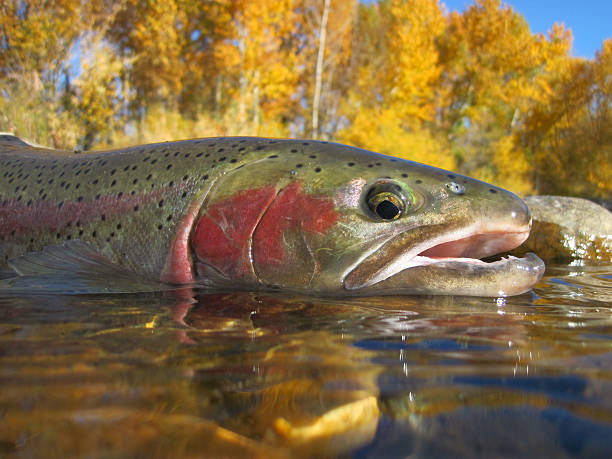
Years ago, Interior steelhead trout travelled by the thousands through the Fraser canyon, drawing in anglers from around the world, but now steelhead populations are at the brink of extinction.
“Travelling through the canyon is a feat unto its own, these fish are big and unbelievably strong which is what drew so many people to fish here,” said Jesse Zeman with the BC Wildlife Federation.
“They’re different from salmon in that after they spawn the first time they don’t die. They go back to the ocean and come back and lay eggs again. These fish were literally known all over the globe.”
Not one steelhead was captured this year in the main test fishery on the lower Fraser that collects data to forecast the numbers of spawners there will be next spring, the federation said. It is the lowest catch result in more than four decades.
The spawning population forecast for the Thompson watershed is fewer than 19 steelhead, and fewer than nine in the Chilcotin watershed.
Zeman said the news is not unexpected, and is largely due to the fish getting caught through non-selective fisheries, something numerous environmental groups have been complaining about for decades.
“One of the challenges with steelhead is that they co-migrate with other fish that are in demand,” Zeman said. “They’ll come back into the Fraser with sockeye, pink salmon and chum. There are a number of non-selective fisheries along the way and the steelhead get caught as bycatch.”
In 2018, a body of independent scientists called the Committee on the Status of Endangered Wildlife in Canada did an emergency assessment and found the steelhead to be at imminent risk of extinction.
“It tripped a federal process where they do peer reviewed independent science and it’s turned into a report that goes to the federal cabinet to decide whether the fish will be listed under the species at risk act,” Zeman said.
During that process, the federation discovered through a number of access to information applications, or ATIPS, that something fishy was going on.
“There were people inside the federal government interfering with the independent science process,” Zeman said. “Ultimately, the federal cabinet decided not to list these fish under the species at risk act.
“The act is a heavy hammer to use. It wraps up a thing called critical habitat where we identify places that are critical habitat and remove human-made environmental impacts. Canada won’t enforce it if the animal is bigger than a snail.”
Instead, a Canada BC Steelhead Action Plan was created.
“The action plan meant a lot of paper, talk and writing, but not much action,” Zeman said. “We ended up here because no one really cares about the fish.”
While Zeman points to non-selective fisheries as the main cause of the steelhead fish crisis, another factor is the fish survival rates in the ocean have gone down due to increases in sea lion and seal populations.
When asked whether climate change is a factor, Zeman said it could be part of it, however river monitoring data on the Thompson and Chilcotin doesn’t suggest the freshwater environment is a big factor compared to the other ones.
Zeman said without intervention, there is little hope of rescuing the Interior Fraser steelhead.
According to an article by the Watershed Watch Salmon Society, the loss of the steelhead was foreseeable and a result of the federal government corrupting the protection process for species-at-risk.
“We could have finally gotten serious about shutting down un-selective salmon fisheries that use gill nets and kill significant numbers of fish from non-target species, and opening new fisheries using selective types of gear that allow non-target fish to be released alive and healthy,” the article reads.
A once-famous recreational catch and release fishery in Spences Bridge closed in 2018 and hurt the local economy.
Steven Rice has lived in Spences Bridge for four decades and is a member of the Steelhead Society of BC and former director for TNRD. He has been a loud advocate for the survival of steelhead trout over the years, including heading an initiative to restore spawning beds on Nicola River that were damaged by floods in 2021.
“Sadly, this is a classic case of a reactive government response, starting a couple of decades ago, as opposed to the needed proactive response to an issue in crisis,” Rice said in a message to iNFOnews.ca.
“I had many UBCM meetings with the minister making my case for the steelhead, but none of my concerns were ever addressed. Many other passionate folks put time and effort into this magnificent fishery, considered Best in Class in the world.”
News from © iNFOnews.ca, . All rights reserved.
This material may not be published, broadcast, rewritten or redistributed.

This site is protected by reCAPTCHA and the Google Privacy Policy and Terms of Service apply.
Want to share your thoughts, add context, or connect with others in your community?
You must be logged in to post a comment.