Elevate your local knowledge
Sign up for the iNFOnews newsletter today!
Sign up for the iNFOnews newsletter today!
Selecting your primary region ensures you get the stories that matter to you first.
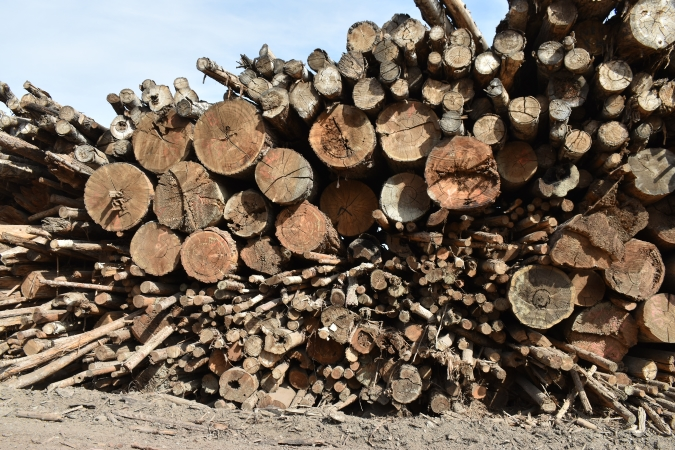
A Peachland environmental activist says logging companies use fire mitigation for profit while continuing practices that make fires worse as the industry struggles.
Taryn Skalbania is the co-founder of the Peachland Watershed Protection Alliance, and she said the logging industry’s participation in fire mitigation is more about profit than reducing the impact of wildfires.
“The minute you’re going in with machines and pulling out trees and pretending to be firescaping, what you’re doing is logging. It’s just a Trojan horse and it’s a cash grab,” she said.
The BC Wildfire Service said working with the logging and forestry sector is an essential part of fire mitigation.
“Working with the forest sector is one of the most effective ways to tackle wildfire risk to BC communities at scale. Building wildfire resilience in BC would not, and will not, be possible without working with the sector as a partner,” the wildfire service said in an emailed statement.
Skalbania said that there is a conflict of interest with the logging industry’s input on community safety since the industry is struggling and any reason to harvest more wood is a welcome one.
“They are a business to cut down trees. So it would be like trusting Coca-Cola for dental advice, or Benson and Hedges for lung health advice,” she said. “They need their jobs, and they need to protect the reputation of those jobs.”
It’s no secret the logging industry is struggling right now with multiple mill closures in recent weeks, like the Domtar mill that shut down on Vancouver Island affecting at least 350 people.
Skalbania said that as the industry is struggling it has been finding ways to harvest more timber, including in the name of fire mitigation. She said numerous logging practices still make fires worse like clear cutting, leaving debris on the forest floor to become fire fuel, creating roads deeper into the woods for humans to access and cause fires, and so on.
“The minute you change the canopy of a forest, it makes things drier and so much easier to burn down,” she said.
President Donald Trump’s tariffs are just the latest problem the forestry industry said is causing its decline. Skalbania said it’s just an excuse.
“Donald Trump’s tariffs or the pine beetle, or it’s wildfires, before it was environmentalists, and sometimes it’s red tape. They have more excuses than the Pope, honestly. It’s maddening,” she said.
There are critics like Skalbania out there but the BC Wildfire Service said loggers and the forestry industry are important on the ground and in the planning process for tackling disasters.
“At a boots-on-the-ground level, forestry contractors frequently support wildfire response operations – as machine operators, line locators and fallers,” the wildfire service said. “Away from the front lines, a joint panel between the BC Wildfire Service and the Forest Professionals of BC is collaborating on developing guidance and standards for forest professionals to integrate wildfire management into forest planning and practices.”
News from © iNFOnews.ca, . All rights reserved.
This material may not be published, broadcast, rewritten or redistributed.

This site is protected by reCAPTCHA and the Google Privacy Policy and Terms of Service apply.
Want to share your thoughts, add context, or connect with others in your community?
You must be logged in to post a comment.










2 responses
Shortly after Lytton burned to the ground our inventory branch( office of chief forester) ventured above the fire to sample some long term plots. While driving into these samples we criss crossed through the Lytton fire north of the bridge and up the steep slope. The whole burn in this steep and unstable area was being laid out for salvage logging. My immediate thoughts were,, this area is too steep, too unstable and ravaged from the effects of the fire to go in and harvest because the ground won’t handle logging without some serious damage to the terrain which could end in catastrophic losses. Why does common sense sometimes fly out the door to salvage timber after fire? Where is the accountability in BC? It dosen’t exist because stupidity prevails in the face of logging.
i hate activists, but they are 100% correct here.
following the lytton fire that spread everywhere, across the coquihalla, up to cherry creek, etc, they were preparing a plan for going into those affected areas to log the burned wood, while it was still salvageable. and the logging industry was happy, because logging has been taking a huge hit every year.
BUT, someone had warned about the tricks that the logging companies use. they are given access into those burned areas, but they’ll go in and pull out all the live trees they can as well. of course, what that is then doing, is compounding the losses from the fires. those areas of live trees are now more important than ever, for ground stabilization, animal habitat, etc, etc.
so, i started to pay attention, after having read this person’s warning. and sure enough, logging trucks were hauling load after load after load of live trees out of those fire areas. in fact, it’s hard to find just where they did take any of the burned trees out of.