Elevate your local knowledge
Sign up for the iNFOnews newsletter today!
Elevate your local knowledge
Sign up for the iNFOnews newsletter today!
Select Region
Selecting your primary region ensures you get the stories that matter to you first.

MONTREAL — Montrealers and others across the country paused to pay tribute Saturday to the 14 women who were murdered at Polytechnique Montréal 36 years ago simply because they were women.
The prime minister acknowledged there was much left to do.
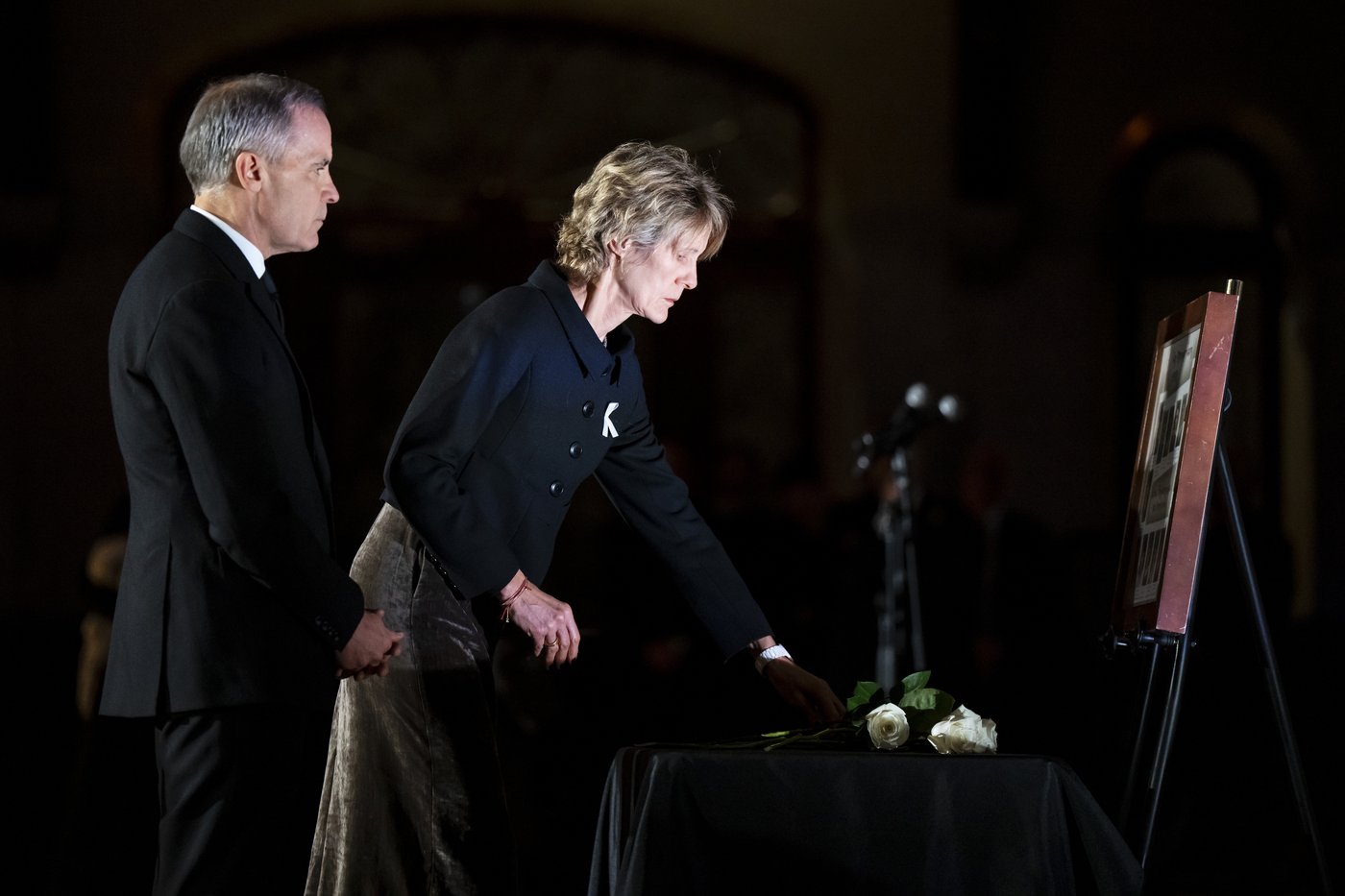
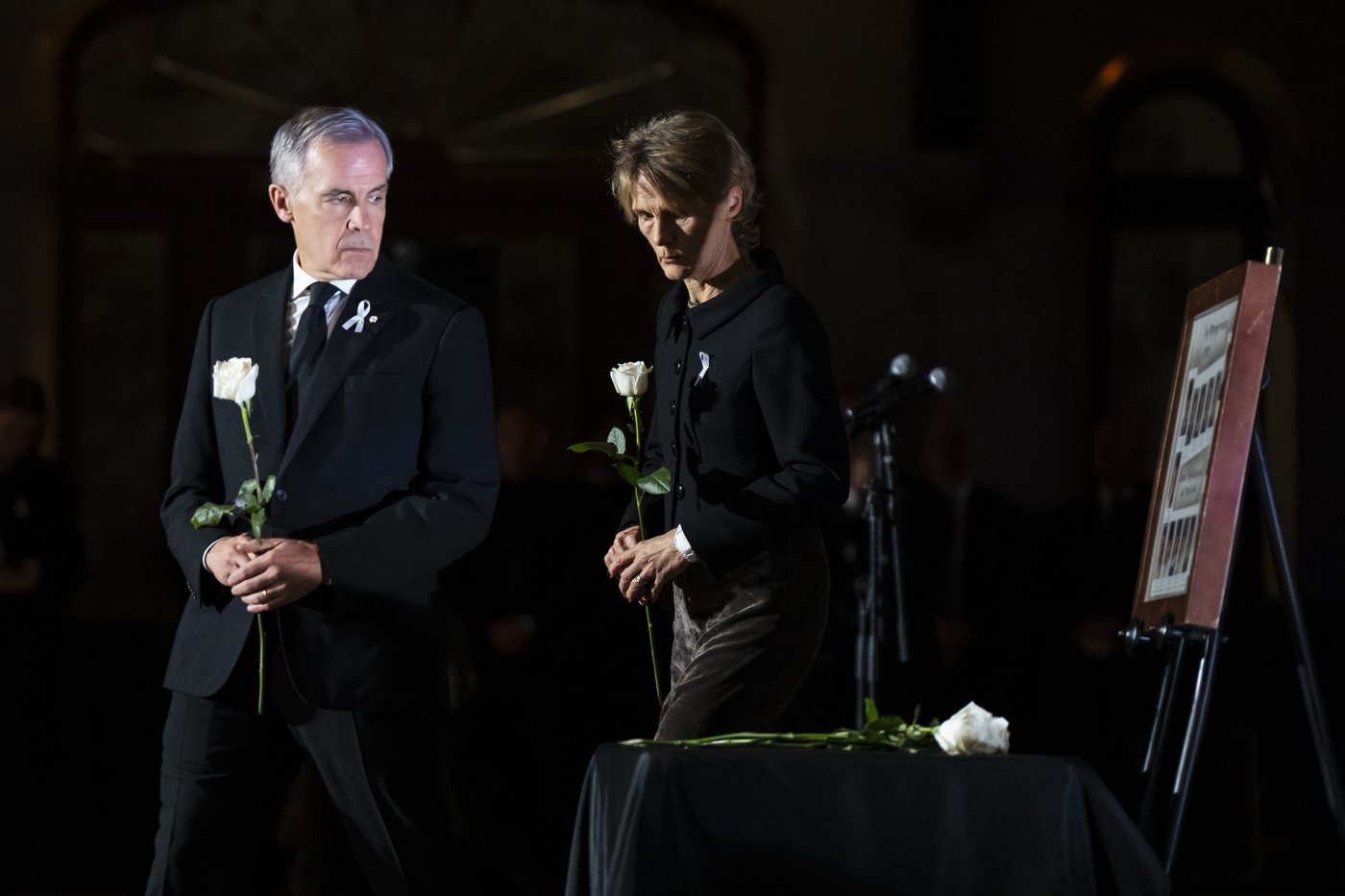
Mark Carney made the comment as he attended a commemoration in Montreal Saturday night honouring the 14 women. Earlier, he’d paid tribute to the victims, calling the massacre a “solemn reminder of the devastating toll of gender-based violence.”
“Yes, we’ve made progress, we’ve made progress on gun control, we’ve made progress in other respects, but we haven’t made enough,” Carney said.
“I recognize that my government recognizes that we have to do more with respect, not just to the control of guns — there’s always new assault rifles and others coming into place — but also in enforcing (laws).”
Carney said that means legislation calling for tougher conditions when it comes to bail in cases of intimate partner violence, something his government intends to move on.
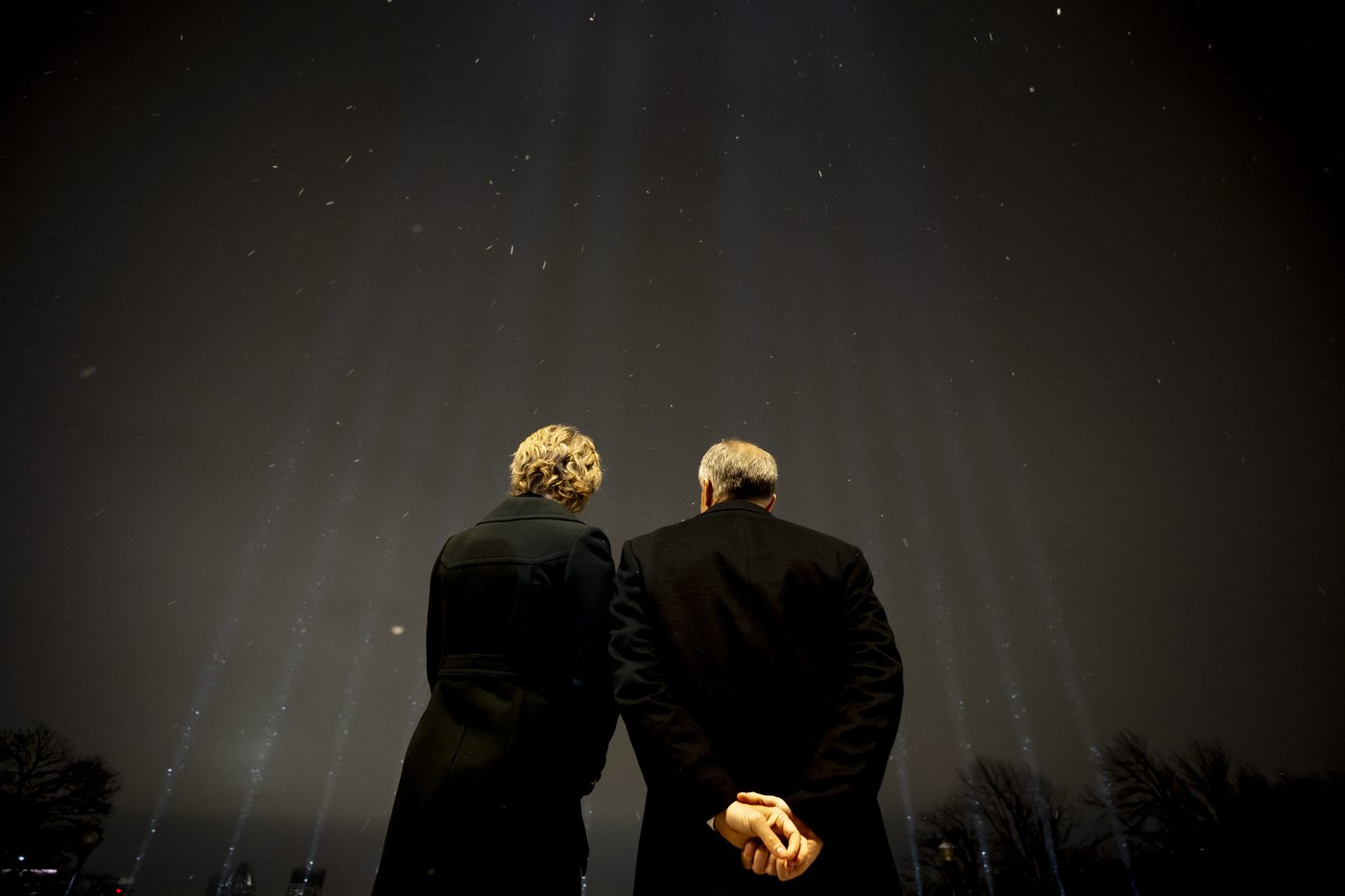
During the evening event, 15 beams of light illuminated the night sky above Mount Royal, lit one-by-one as the names of the 14 women were read out. The 15th light, added for a second year in a row, was for all victims of femicide.
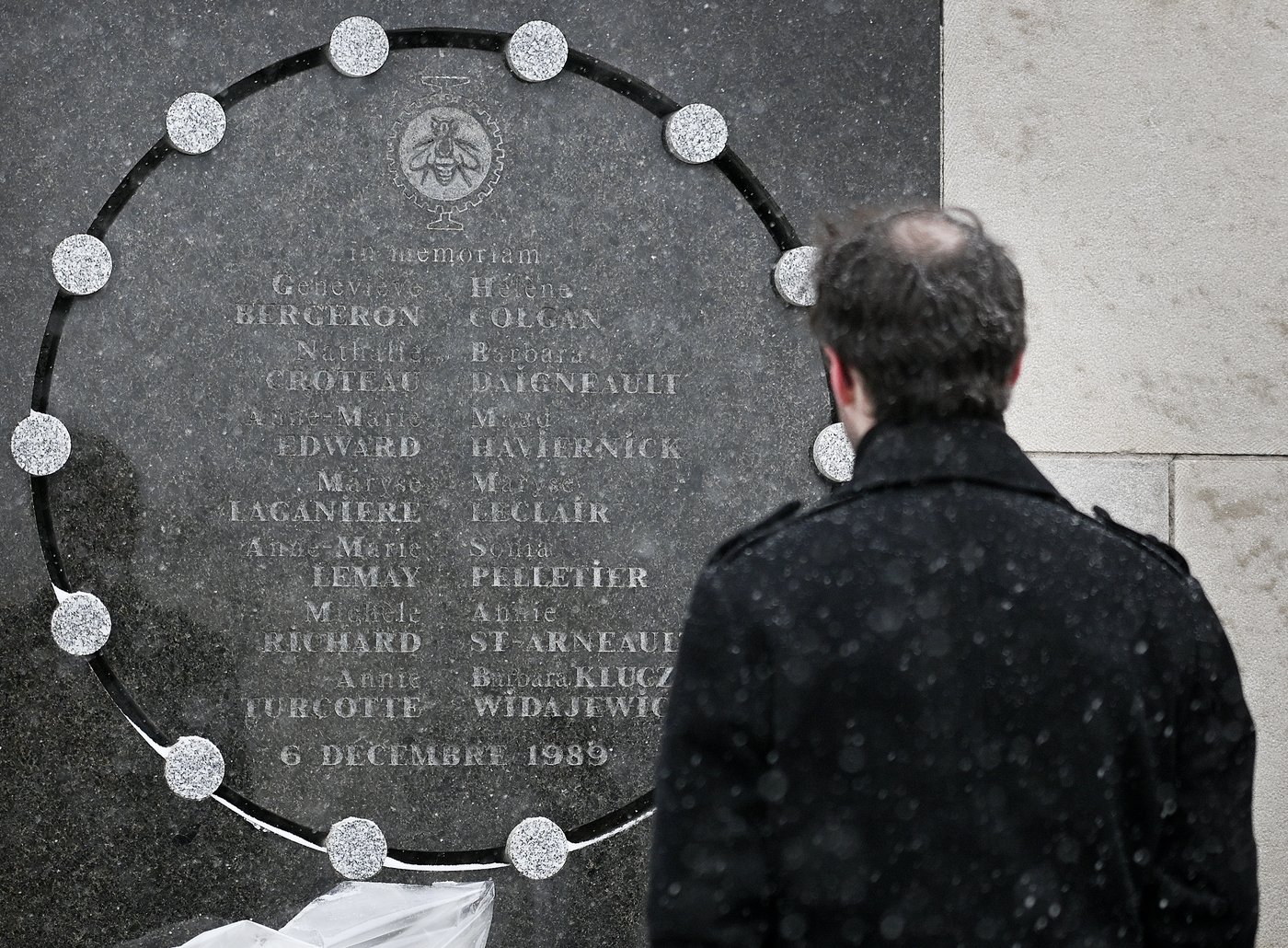
The 14 women murdered in 1989 were Geneviève Bergeron, Hélène Colgan, Nathalie Croteau, Barbara Daigneault, Anne-Marie Edward, Maud Haviernick, Maryse Laganière, Maryse Leclair, Anne-Marie Lemay, Sonia Pelletier, Michèle Richard, Annie St-Arneault, Annie Turcotte and Barbara Klucznik-Widajewicz.
Thirteen others were injured in the anti-feminist attack perpetrated by Marc Lépine, who took his own life. He had ranted about feminists ruining his life.
“Thirty-six years later, we are still here thinking of her, talking about her, and asking ourselves, ‘Why? How?’ Thirty-six years later, we see how far we’ve come,” said Catherine Bergeron, whose sister Geneviève Bergeron, was killed.
“The duty to remember remains as relevant as ever, despite the passing of time. Thirty-six years. And we are still here to remind, to inspire action, to support, to offer solace if possible.”
Quebec Premier François Legault called for the population to speak out against violence against women and to act.
“Today, we have a duty to remember, but we also have a duty, each of us as citizens, when we know a woman is being assaulted, to report the perpetrator,” Legault said. “That’s how we’ll prevent all the tragedies, the femicides we see, because every woman in Quebec has the right to live her life, to live her life without violence.”
The National Day of Remembrance and Action on Violence Against Women, informally known as White Ribbon Day, falls on Dec. 6. to mark the anniversary of the Polytechnique massacre.
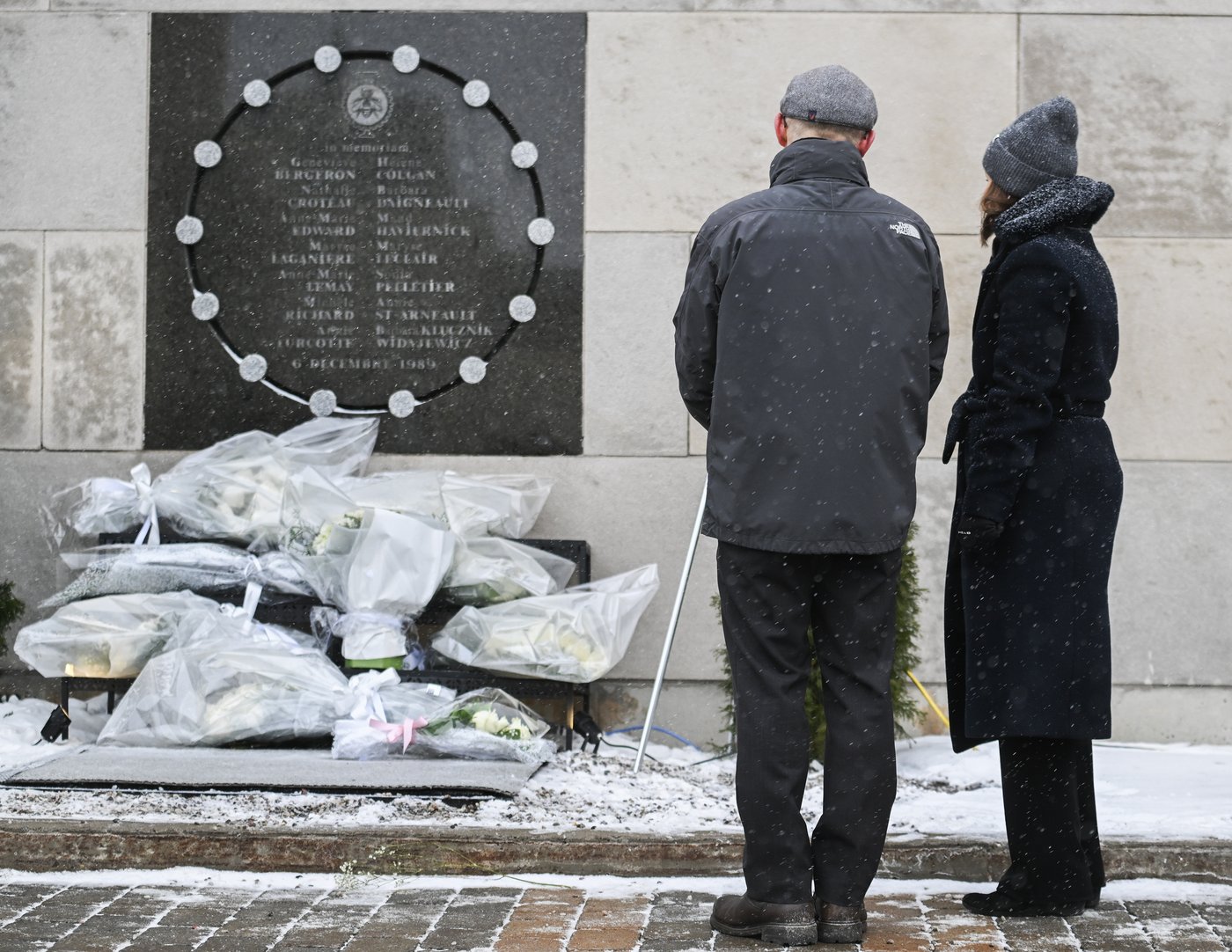
Earlier Saturday during a windswept morning ceremony at the Montreal school with students and staff, wreaths and bouquets of white roses were laid in front of a commemorative plaque at Polytechnique’s main building.
“It’s a time to commemorate the events, what happened, and to remember these young women, their dreams, and what they ultimately wanted to do: become engineers,” Polytechnique Montréal president Maud Cohen said.
“But for us, it’s also a time to look to the future and see how, as a university, we can ensure we make a difference for women in engineering.”
Across the country, numerous other tributes took place.
Engineering students at the University of Toronto, most of them women, held a vigil to mark the anniversary of the tragic murders. Each year, a group of female engineering students construct a memorial for the commemoration, and this year the group’s wooden and glass monument was decorated with white roses to symbolize the innocence and futures the women never had.
A commemorative plaque and the monument will remain on the front steps of the Galbraith Building for the week.
Kaija Mikes, one of the students on the team, said the memorial holds deep meaning for her and she is grateful for the community who showed up.
“There’s still a constant fear, not just for myself, but for other women in engineering, for non-binary and gender-diverse people in engineering that this undertone of discrimination and gender-based violence persists even to this day,” Mikes said.
Elsewhere, Conservative Leader Pierre Poilievre said in a statement that the “fight against violence toward women is a moral imperative.”
“This is not just a time to remember their names. It is a time to fight for our country’s promise: that every woman — regardless of background, profession, or circumstance — can live safely, with dignity and free from fear.”
Montreal Mayor Soraya Martinez-Ferrada said in a statement that 36 years after the tragedy, women have a right to live without fear and to realize their dreams. She called on values of respect and equality to be passed down to future generations.
It is owed to the Polytechnique victims and those who need protections today, she said.
“This anti-feminist act, fuelled by hatred, is a stark reminder that violence against women remains intolerable,” Martinez-Ferrada said. “In Montreal, we must continue the fight for equality, equity, and safety for all women and girls.”
This report by The Canadian Press was first published Dec. 6, 2025.
— with files from Anja Conton in Montreal and Fatima Raza in Toronto.
News from © The Canadian Press, . All rights reserved.
This material may not be published, broadcast, rewritten or redistributed.

This site is protected by reCAPTCHA and the Google Privacy Policy and Terms of Service apply.
Want to share your thoughts, add context, or connect with others in your community?
You must be logged in to post a comment.