Elevate your local knowledge
Sign up for the iNFOnews newsletter today!
Sign up for the iNFOnews newsletter today!
Selecting your primary region ensures you get the stories that matter to you first.


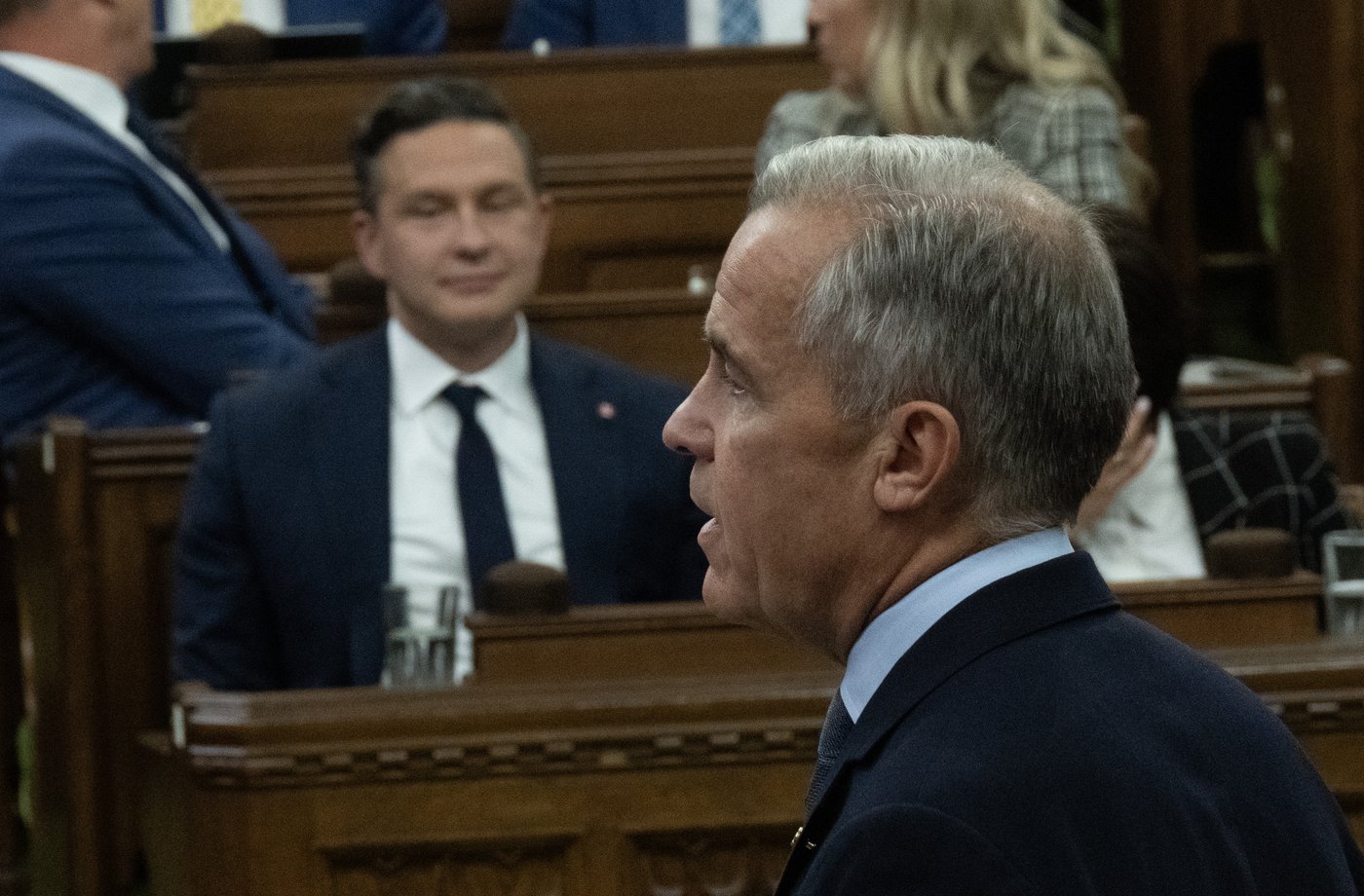
OTTAWA — Liberal government and Official Opposition MPs accused one another of playing political games Tuesday as the House of Commons debated a Conservative motion aimed at pinning down the Liberals on whether they support building a pipeline to the B.C. coast.
The motion, which was put forward by Conservative Leader Pierre Poilievre, states that MPs support construction of a pipeline to carry Alberta bitumen to the coast, along with an “appropriate amendment” to the legislation that bans most oil tankers from the area off the northern coast of British Columbia.
The motion is a more pointed version of the memorandum of understanding Alberta Premier Danielle Smith and Prime Minister Mark Carney signed last month.
That deal, however, speaks of amending the tanker ban “if necessary” and cites environmental actions Alberta has to agree to take in order to get approval for a pipeline project.
Poilievre said he wanted to force the Liberals to take a clear position on a pipeline.
“We need this pipeline because it will make for stronger take-home pay, it will make for affordable living, and it will make for a sovereign, self-reliant economy,” he said in the House of Commons on Tuesday afternoon.
On that point, at least, the government seems to agree.
“I will say now and I will say clearly on behalf of our government, we support a pipeline. We support the (memorandum of understanding), we support the entirety of the MOU,” said Alberta Liberal MP Corey Hogan.
But Hogan argued there was a risk to even having the debate and told reporters the motion was “a trap” set for the Liberals.
A yes vote, he said, “looks like we are undermining the rights of Indigenous Peoples, it looks like we’re undermining conversations with B.C.,” while a no vote is “designed to look like we don’t support the pipeline.”
He argued a no vote also could send a negative signal to potential investors. The Alberta agreement stipulates that any pipeline should be financed and built by the private sector; no proponent has come forward publicly with a proposal yet.
Speaking to the Edmonton Chamber of Commerce on Tuesday morning, the Alberta premier downplayed concerns about which way the vote may go.
“Whichever way those votes turn out, just know that the prime minister and I remain committed to implementing the terms of the MOU,” said Smith.
“There’s always politics that happens in legislatures, so I wouldn’t take whatever outcome there is as any indication other than some politics that are happening.”
Energy and Natural Resources Minister Tim Hodgson called Poilievre’s motion “a cheap political stunt” and a cynical ploy to divide the Liberal caucus. He also denied there were divisions in caucus on the matter.

Later in the afternoon, the Conservatives amended the motion in an effort to push the Liberals to support it.
The amendment added three clauses pulled from the Alberta deal, including an agreement for the province to pursue the world’s largest carbon capture, utilization and storage project.
It also added phrases that would commit Ottawa to meaningful consultation with Indigenous Peoples and engagement with the government of B.C.
Carney brushed off the amendments in question period, suggesting Poilievre and his caucus could put the entire Alberta deal into a motion and vote in favour of that instead.
On Tuesday morning, Indigenous Services Minister Mandy Gull Masty said Poilievre’s motion was “clearly an insult towards Indigenous Peoples.”
Across the aisle, Conservative MP Ellis Ross said he’s tired of the government “lecturing us on Aboriginal issues.”
His caucus colleague Billy Morin said the Liberals “play games with Indigenous communities and exploit First Nations as a political tool. They talk endlessly about reconciliation but what do Indigenous communities actually get?”
Haida Nation President Jason Alsop, who is also known as Gaagwiis, said it’s not a game to him. He and Christine Smith-Martin, CEO of Coastal First Nations, flew to Ottawa to witness the debate in Parliament.
“A lot of this is just politics, but why we’re here today is because this is our home. Any of these conversations happening out here in Ottawa without us being part of it, we take it very seriously,” he said.
Tuesday’s vote on the Conservative motion is non-binding. The government has agreed to consult with Indigenous leadership on any possible pipeline project.
The Coastal First Nations — a group representing First Nations on the North Pacific coast including Haida, Gitxaała and Nuxalk that advocates for sustainable jobs and the protection of the Great Bear Rainforest — has said it’s opposed to any pipeline and any changes to the tanker ban.
“This tanker ban and variations of it have been in existence for over 50 years, and that’s got to say volumes,” Smith-Martin said.
She also said her group is in discussions with the government on having Carney and cabinet ministers visit their communities.
This report by The Canadian Press was first published Dec. 9, 2025.
— With files from Lisa Johnson in Edmonton
News from © The Canadian Press, . All rights reserved.
This material may not be published, broadcast, rewritten or redistributed.

Want to share your thoughts, add context, or connect with others in your community?
You must be logged in to post a comment.