Elevate your local knowledge
Sign up for the iNFOnews newsletter today!
Sign up for the iNFOnews newsletter today!
Selecting your primary region ensures you get the stories that matter to you first.
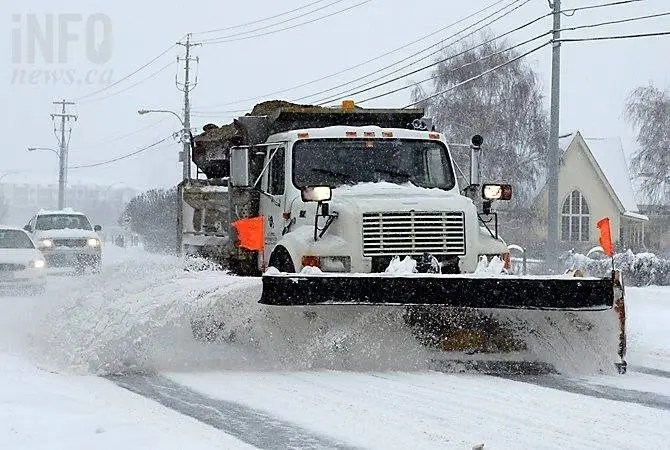
The Okanagan has seen a balmy start to the winter, but newcomers shouldn’t think they won’t need a snow shovel.
Whether it’s having winter tires, proper shovels and scrapers, or an emergency kit in your car in case you get stranded on a mountain pass, it’s important to stay prepared for winter in the Okanagan despite a potentially green Christmas.
Glenn Freer, the foreman at Superior Snow and Ice Control based in West Kelowna, told iNFOnews.ca winters often start slow, but then they pick up with more snowfall and cold snaps.
“It’s very unpredictable,” Freer said. “It’ll come probably in January and February.”
Kelowna typically gets around a metre of snow per winter, but at higher elevations like on the Coquihalla or Okanagan Connector you can expect some more extreme snowfall and in some cases up to 10 centimetres per hour.
While the Okanagan has a more mild winter than most places in Canada, Freer said it’s the amount of winter he was looking for when he left his hometown on Vancouver Island.
“I got tired of the rain on the Island, so that’s why I left. I wanted somewhere with four seasons and I definitely got it when I came here,” he said.
He has seen people move to the Okanagan who underestimate the winters here.
“Quite often they’re running to Home Depot to get their shovels because they forget that we do get winter here,” he said.
Cities at the valley bottoms like Kelowna see on average a metre of snow per year. Penticton further south sees a bit less and Vernon to the north sees a bit more. A short drive to the ski hills near those cities, Big White Ski Resort, Apex Mountain Resort and SilverStar Mountain Resort, and the average snowfall goes up to five to seven metres.
The City of Kelowna’s road operations manager Andrew Schwerdtfeger said he had to get used to the change in temperature at different elevations when he moved to the Okanagan, especially when it comes to ice on the roads.
“The Okanagan is unique because of the elevation change. BC in general is unique because of that. I’m from Ontario,“ he said. “My advice to newcomers to the Okanagan would be to make sure you have good winter tires on your vehicle because we do get a lot of freeze-thaw conditions where we get black ice.“
Environment Canada meteorologist Brian Proctor said the Okanagan typically gets a warm winter because of the way its mountains are positioned related to weather patterns coming from the coast.
“What it tends to be is as the flow comes across the coastal mountains, it subsides over the Thompson-Okanagan area. And as it subsides, it warms. So we get these valley bottoms warming up fairly significantly compared to the mountains around them,” Proctor said.
This winter is supposed to be a weak La Nina and the Okanagan is right on the edge of a polar vortex that the Weather Network expects to bring more snow and colder temperatures.
Proctor said it’s still looking like a tough winter in the new year, but the current forecast is leaning towards a green Christmas.
“It’s got a pretty good chance of being trending that way at this point in time,” he said.
News from © iNFOnews.ca, . All rights reserved.
This material may not be published, broadcast, rewritten or redistributed.

This site is protected by reCAPTCHA and the Google Privacy Policy and Terms of Service apply.
Want to share your thoughts, add context, or connect with others in your community?
You must be logged in to post a comment.












One response
Oh a little snow on the grass only would be nice for Christmas 🎄