Elevate your local knowledge
Sign up for the iNFOnews newsletter today!
Elevate your local knowledge
Sign up for the iNFOnews newsletter today!
Select Region
Selecting your primary region ensures you get the stories that matter to you first.
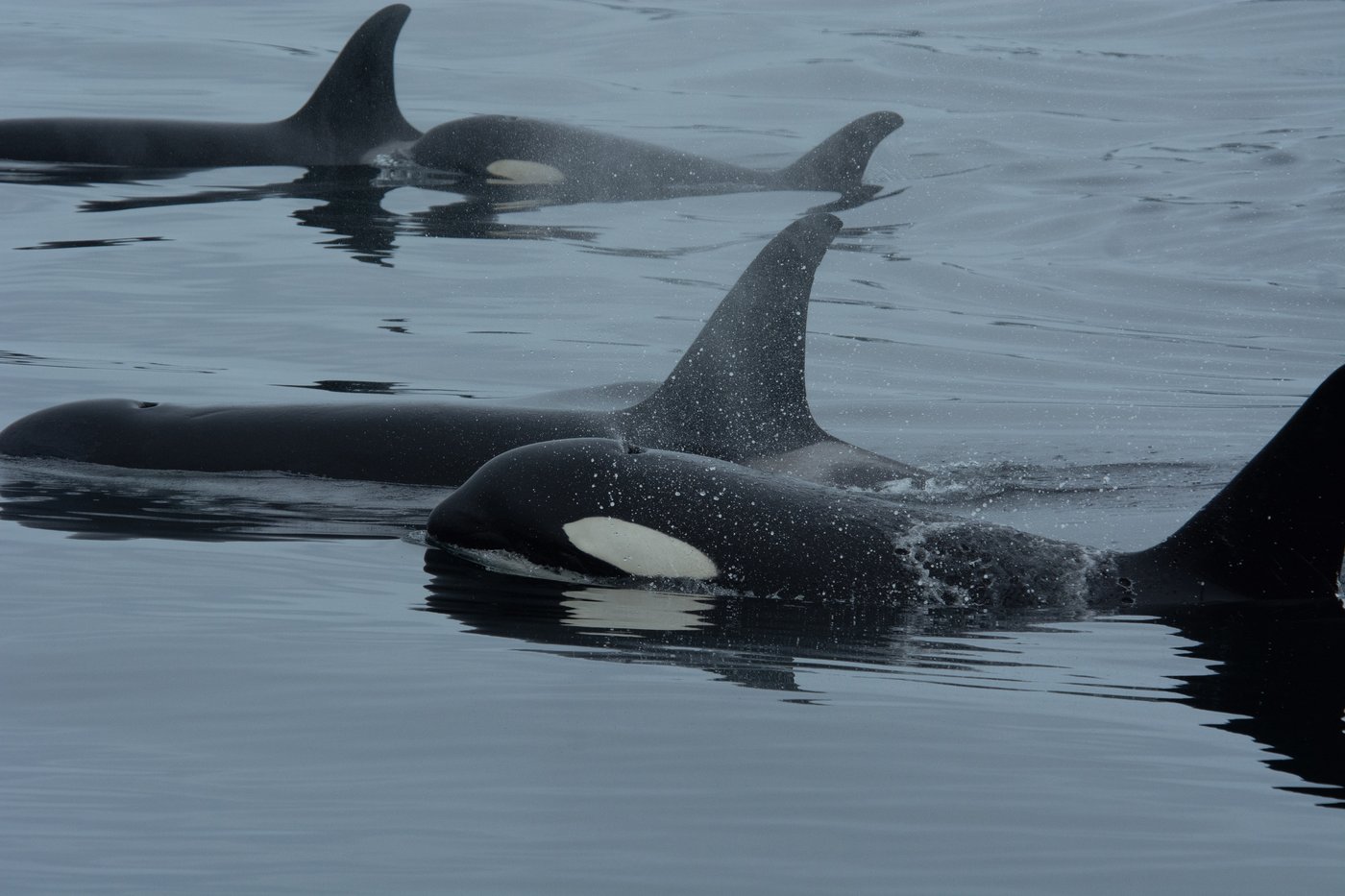
HALIFAX — Scientists have found evidence that two unlikely collaborators — killer whales and dolphins — may be helping each other find and feast on salmon off the coast of British Columbia.
Sarah Fortune, an assistant professor in oceanography at Halifax’s Dalhousie University said it would appear the massive fish-eating whales may be working with Pacific white-sided dolphins, which have been spotted eating the salmon chunks the killer whales produce.
She is a co-author of a paper published Thursday in Scientific Reports that found the two species appear to be working together while they forage.
Recordings picked up “this audible crunch as the whale bites down, then you see these fragments of fish that are released,” and then dolphins swim in to eat the pieces, Fortune said.
“You could interpret that maybe the dolphins are pesky freeloaders, just trying to get a free lunch,” she said in a recent interview.
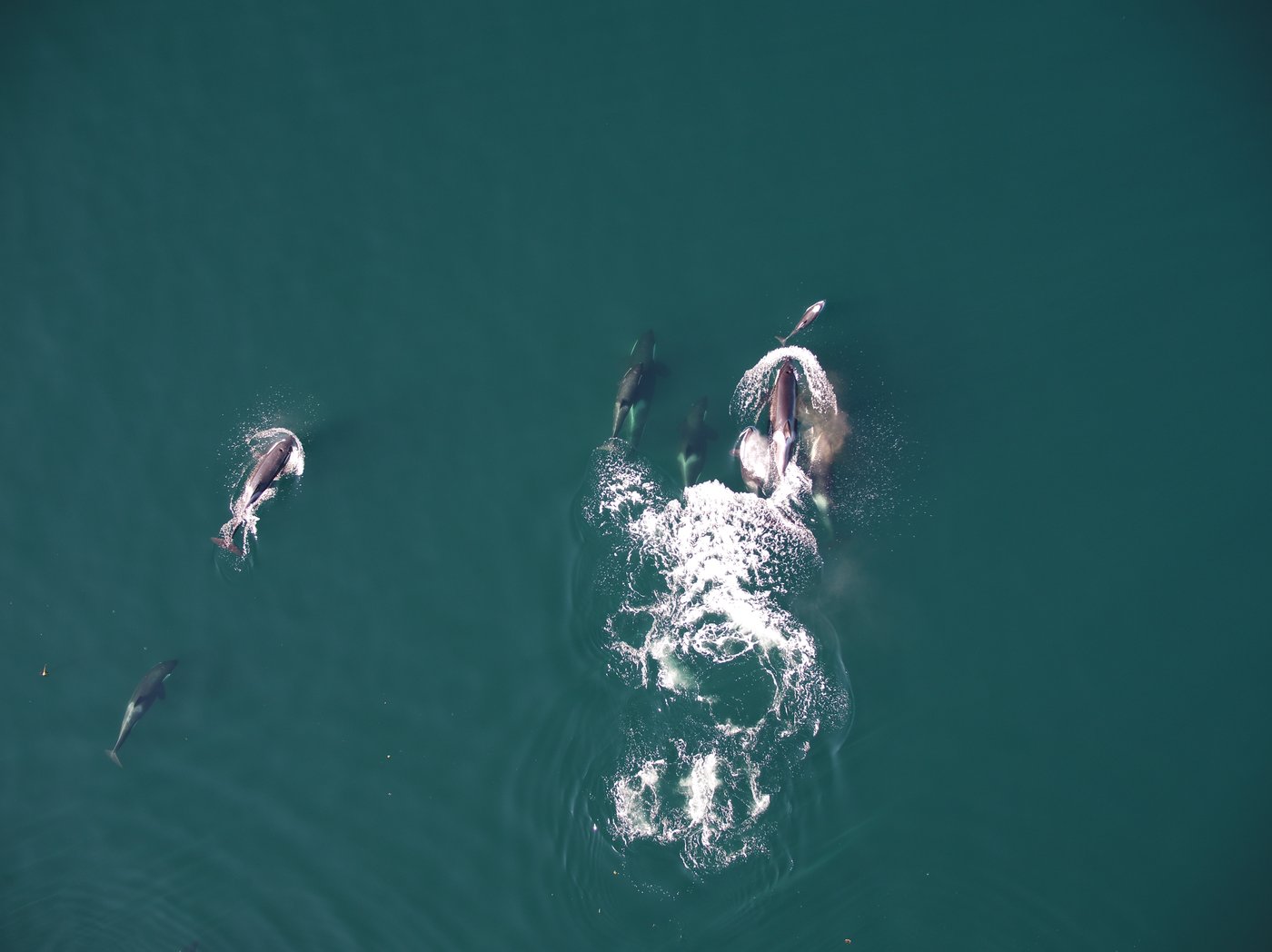
But co-author and drone operator, Keith Holmes with the Hakai Institute, noticed that the killer whales were “orienting” themselves to where the dolphins were.
“And then we look at the underwater footage, we see that when the killer whales are starting their foraging dives, they’re actually following the dolphins… so when the dolphins start diving, the killer whales start diving,” Fortune said.
This population of killer whales is after one thing to eat: Chinook salmon, Fortune said, whereas these dolphins are “generalist” predators who will eat what they find.
Chinook salmon are far too big for these dolphins to capture and swallow whole, and the whales are leaving them with manageable pieces.
“We wanted to make sure that the dolphins weren’t being a pest and that the killer whales weren’t disturbed by their presence,” Fortune said.
The research was based on aerial and underwater video footage. The researchers used electronic tags equipped with video, acoustic and inertial sensors to capture some of the footage.
A review of drone footage didn’t reveal any clear examples of antagonistic behaviour — which could have looked like the whales charging at the dolphins or biting at their flippers.
In fact, scientists observed that killer whales were uninterrupted when they would occasionally share salmon halves with whales in their family line by dropping it for another whale to grab.
“We did not have instances of the dolphins going and trying to intercept that fish or steal that part of the fish,” Fortune said.
The dolphins appeared to sit back and wait for the crumbs to come their way.
Instead of taking opportunities to rob the killer whales, Fortune said dolphins appeared to be exerting extra time and energy by guiding killer whales on these foraging dives.
“And I think it is interesting that the dolphins presumably can recognize that these resident fish-eating killer whales don’t present a threat to them and perhaps present an opportunity to access a high quality prey, ” Fortune said.
Fortune, who is also the Canadian Wildfire Federation’s chair of large whale conservation, said there are many questions about how and if this relationship is benefiting either species.
“We’d like to do future studies where we can figure out whether killer whales are better hunters when dolphins are helping them out,” and to see if certain family lines of this resident whale are more likely to co-operate with dolphins, she said.
“Are those killer whales in better body condition or have improved reproductive success compared to matrilines that don’t co-operatively forage with dolphins? These are kind of the future considerations and bigger questions.”
This report by The Canadian Press was first published Dec. 11, 2025.

News from © The Canadian Press, . All rights reserved.
This material may not be published, broadcast, rewritten or redistributed.

This site is protected by reCAPTCHA and the Google Privacy Policy and Terms of Service apply.
Want to share your thoughts, add context, or connect with others in your community?
You must be logged in to post a comment.