Elevate your local knowledge
Sign up for the iNFOnews newsletter today!
Sign up for the iNFOnews newsletter today!
Selecting your primary region ensures you get the stories that matter to you first.
Canada’s food safety agency doubts it could adequately protect the food supply in the next two years if the country is hit with several concurrent emergencies, such as animal disease outbreaks or food safety recalls. The problem is exacerbated by climate change, with the agency warning the crisis could impact its infrastructure while boosting the risk of disease and pest outbreaks.
The warning is laid out in a 2024-2027 corporate risk assessment the Canadian Food Inspection Agency (CFIA) completed last year and was obtained by Canada’s National Observer through an access to information request. Failures in the agency’s aging infrastructure, and the inability to meet inspection standards or stay financially viable are also listed as top concerns.
The threats are significant enough senior officials assigned each so-called “critical risk” its own vice president within the agency, and emphasized that “every [CFIA] employee has a role to play.”
“The CFIA is increasingly worried about being able to handle multiple situations at once at precisely the moment when they can be expected to have multiple situations to handle,” said Lawrence Goodridge, director of the Canadian Research Institute for Food Safety and professor at the University of Guelph.
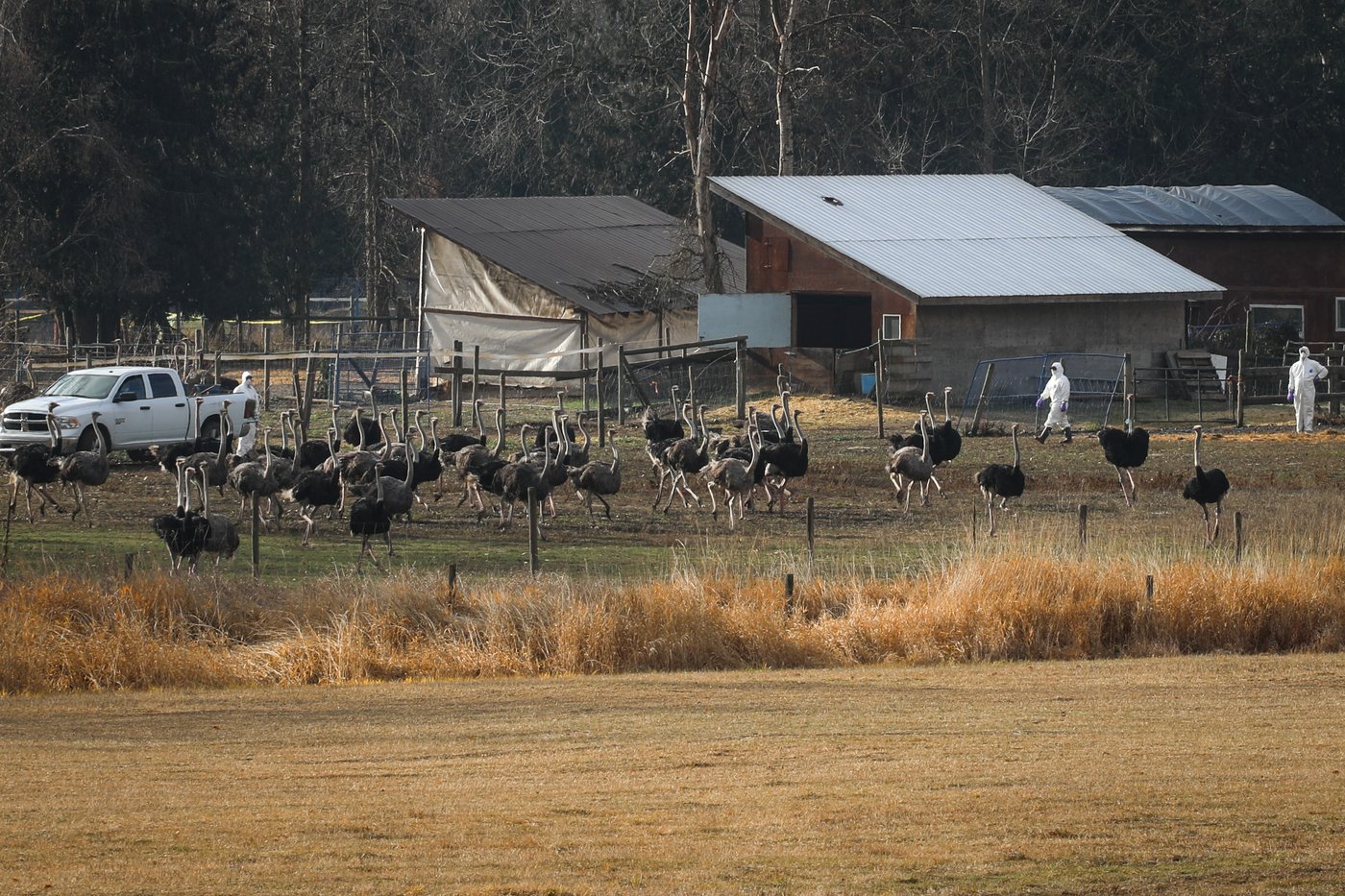
This year alone, the agency has been dealt a Salmonella crisis on Iranian pistachios that required extensive testing and import limits, and a months-long battle to cull a herd of ostriches in BC which culminated in a lengthy, police-protected takeover of the farm. Last year, the agency scrambled to contain a listeriosis outbreak in plant-based beverages that sent 15 people to hospital and killed three.
The risk assessment notes the CFIA is facing about $200 million in deferred maintenance costs and “lacks sufficient funding to replace or modernize its infrastructure.” These costs are on top of inflation, supply chain disruptions and a suite of other rising costs which, taken together, make it likely the agency will run out of money before 2027.
“When governments are cutting back funding and personnel but our disease risks are going up, and the expectations internationally for what we do are going up, it’s not a good combination,” said Scott Weese, professor at the Ontario Veterinary College at the University of Guelph and director of the Centre for Public Health and Zoonoses.
“Where it gets even worse is when you get an emerging disease, because the playbook isn’t there.”
When a new zoonotic disease appears, it’s important to take a proactive approach to figure out what the problems might be. But being proactive is expensive, and “if you’re barely able to keep up with the stuff you’re regularly doing, something’s going to drop,” Weese said. That includes aggressively containing diseases like avian flu, which has a roughly 52 per cent mortality rate when it spreads to humans.
“It’s hard to handle multiple situations at once, and it’s very hard to handle an emerging situation where you really have to try to figure out what’s going on while you’re already dealing with a problem.”
Take this year’s ostrich saga, where CFIA officials spent months trying to cull a herd of BC ostriches that were infected with avian flu last December: the agency needed to figure out how to apply its avian flu protocols — which are designed for commercial poultry — on over 300 potentially deadly ostriches. And it also had to deal with unprecedented public scrutiny, a storm of disinformation and hate stoked by far-right influencers supporting the farm and a months-long protest camp.
Threats are also wafting across the US border. Since President Donald Trump’s inauguration, his administration has hacked away critical staff protecting the country’s food supply. Because Canada relies heavily on American farmers and processors for its food supply, those cuts will impact Canada’s food safety, Goodridge said.
“We don’t think of food security as a national security issue, but it is,” he said. The agency is worried enough about the threat that it created a dedicated taskforce to deal with it earlier this year.
The threats come as Ottawa is on a mission to cut the public service by up to 15 per cent in the coming years, with the CFIA predicting it will reduce costs by about $44.8 million by 2027, according to a ministerial transition booklet.
The 2026 federal budget requires the agency to reduce redundancies, including by reducing lab facilities and staff, while allocating about $118 million to the agency over the next five years to integrate AI into its work to increase international trade.
As the agency cuts back, the risks it’s facing aren’t going anywhere.
“In a growing world, there are more mouths to feed, there are more animals out there, there’s more movement, there are climate stresses or ecological stresses or emerging diseases, but the things that we’re dealing with right now, some of them didn’t exist, or we didn’t know about them 30 years ago,” Weese said.
“We haven’t dropped many things off the agenda, but we’re continually adding things.”
— This article was originally published by Canada’s National Observer
News from © iNFOnews.ca, . All rights reserved.
This material may not be published, broadcast, rewritten or redistributed.

This site is protected by reCAPTCHA and the Google Privacy Policy and Terms of Service apply.
Want to share your thoughts, add context, or connect with others in your community?
You must be logged in to post a comment.