Elevate your local knowledge
Sign up for the iNFOnews newsletter today!
Sign up for the iNFOnews newsletter today!
Selecting your primary region ensures you get the stories that matter to you first.
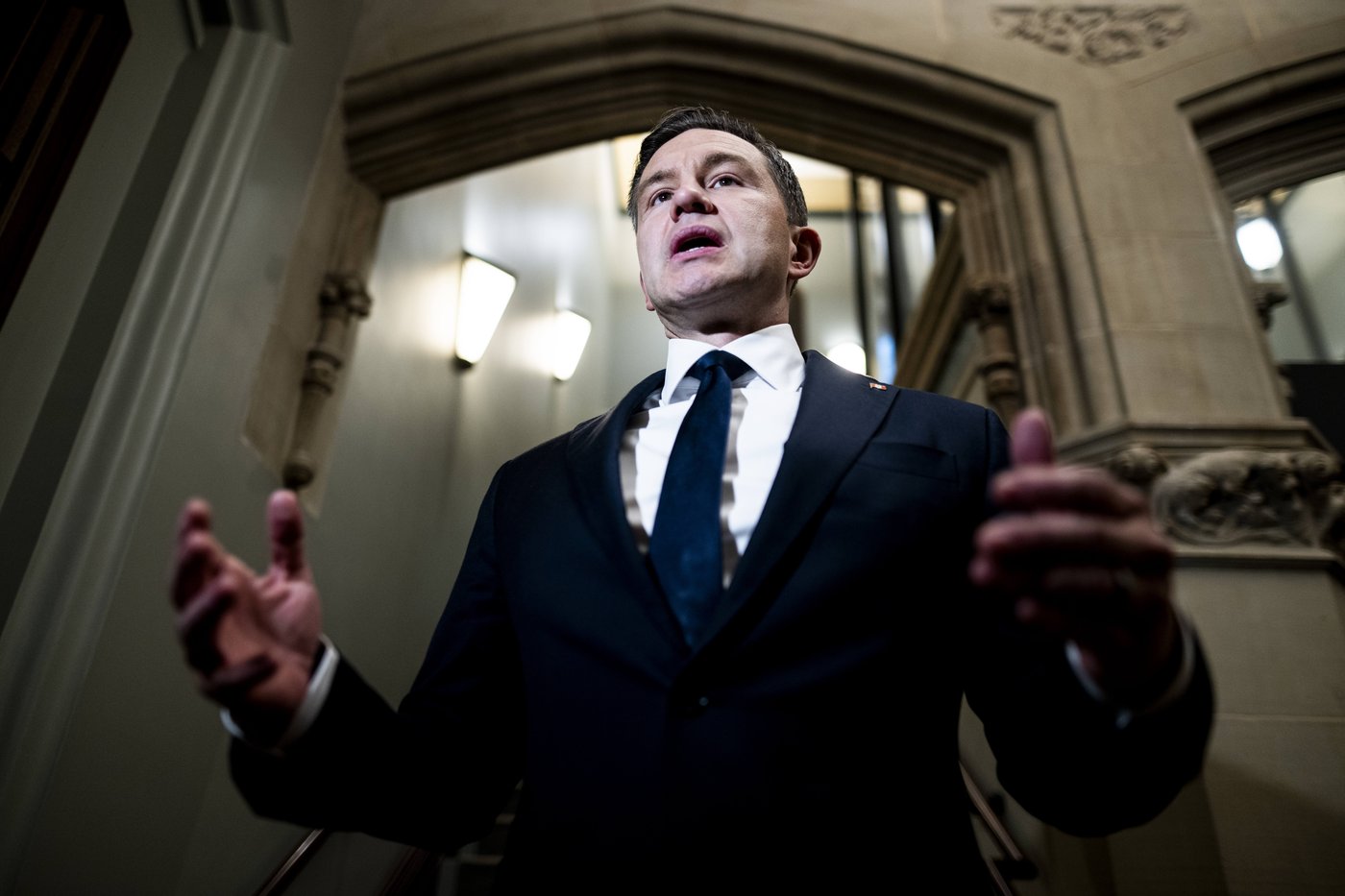
OTTAWA — One year ago, Pierre Poilievre appeared to be on the cusp of achieving two things he’d wanted for a long time: the end of Justin Trudeau’s political career, and a majority Conservative government with himself at the helm.
National polls put the Conservatives some 25 points ahead of the Liberals, who were being dragged down by their unpopular leader.
In the House of Commons, the Tories were taunting Trudeau to step down, stalling Parliament with procedural shenanigans and threatening to topple the minority government.
The plan for the next four years was all but set. Conservatives were publicly calling Poilievre “the next prime minister.”
Ian Brodie, a political scientist at the University of Calgary and former chief of staff to Prime Minister Stephen Harper, said there was “probably a bit of arrogance creeping into the political style of the party” at the time.
“We thought we were going to win the election a year ago,” said Ben Woodfinden, who was the Conservative leader’s director of communications until the April election.
Instead, the world changed — irrevocably, Woodfinden said — when Donald Trump returned to the White House in January. Trudeau announced his plan to resign that same month.
“It feels like a lifetime ago,” said Kate Harrison, a Conservative strategist and vice-chair of Summa Strategies in Ottawa.
The Liberal party found a new leader in March. Prime Minister Mark Carney quickly sent the country into an election — but not before taking away the second-most-popular Conservative talking point by ending the consumer carbon price.
Poilievre tried to claim that Carney would never truly “axe the tax” and broadened his own pledge to end the industrial carbon price.
But Trump’s trade war and his threats to somehow annex Canada captured the attention of voters, turning the election into a two-party race focused almost entirely on who was best suited to handle the disruptive U.S. president.
“Every day, everything would get blown up on a whim by something he would say or tweet,” Woodfinden said.
The April 28 election delivered two shocks: a Liberal win at the national level and a Liberal win in Poilievre’s riding in Carleton.
In hindsight, there’s a lot to unpack.
“It feels like you were very badly outplayed because, in a certain sense, you were,” Brodie said.
Harrison said that Poilievre and the Conservatives made a mistake by attacking the NDP in the fall — weakening the party going into a general election campaign and robbing Conservatives of vote-splitting on the left.
She also said much of what happened in the campaign was beyond the Conservatives’ control.
“Mark Carney did a lot of things right at the exact right moment,” she said.
Woodfinden, who is now a senior adviser at Meredith Boessenkool and Phillips, said the Conservatives did try to pivot in response to Trump, despite what critics said during and after the campaign.
Poilievre made his postelection comeback in August, winning a byelection in Alberta and returning to lead the party with his trademark style in the House of Commons. For a while, the party appeared to have some of its swagger back — at least until the defections.
Two Conservative MPs have left caucus for the government benches over the past six weeks, while a third announced plans to quit politics.
Both Chris d’Entremont and Michael Ma suggested Poilievre’s leadership style was at least part of the reason why they left his caucus.
Woodfinden said he thinks Poilievre has learned some important lessons lately. He knows he needs to “talk to everyone,” he said — to show up to interviews with mainstream media outlets “even if it’s a hostile environment, something like CBC.”
Poilievre did a year-end interview with The Canadian Press this year for the first time since becoming leader in 2022.
What he won’t do is change who he is.
Poilievre is polarizing. His personal poll numbers today track well behind those of the party he leads — much the way Trudeau’s were a year ago.
“He’s not universally beloved, but the people that are there for Poilievre really have his back,” Harrison said.
Woodfinden said he thinks Poilievre “still has a pretty good shot” at becoming prime minister.
“If he ever does, it will be because he’s relentlessly focused on issues that actually matter in a lot of people’s day-to-day lives,” he said.
He said the election exposed a generational split in the electorate and Poilievre needs to “double down” on the things that were working for him.
“There’s a divide in the electorate now that’s only getting worse, between the kind of people for whom this country works and people for whom it doesn’t,” Woodfinden said.
Harrison agreed the Conservatives should stay focused on the issues that earned them the support of some 41 per cent of voters: crime, immigration, housing.
“If we are fighting about how fast or slow something the government is acting on, that is not effective. We need to be drawing attention to what the Liberals are not doing,” she said.
Brodie said the Conservatives also need to showcase more of the talent within their party, beyond the leader.
Poilievre himself agreed that’s a good strategy.
“I think if you look at this session of Parliament, our team was on display,” he said last Friday.
“Our Conservative MPs led the charge on affordability, on safety and on unifying our country. And that’s a very hopeful development.”
For the next several weeks at least, it’s likely the party will keep Poilievre front-and-centre as he prepares for a mandatory leadership review at the party’s convention in Calgary at the end of January.
Poilievre has tapped Hamish Marshall, a former staffer to Stephen Harper and campaign manager to Andrew Scheer, to lead efforts to bolster support among delegates attending the convention, and he’s widely expected to get a majority of their votes.
After the “terrible disappointment” of 2025, Brodie said, the real test of Poilievre’s future will be in how quickly the next election arrives.
If the Liberals decide to go back to the polls in 2026, he said, that’s good news for the Tory leader.
But if Carney — whether by recruiting more Conservative MPs and getting a majority, or by making his minority work for him — keeps this Parliament going for a couple of years, Brodie said, Poilievre’s challenge will become more difficult.
“Time in government moves very quickly. Time in opposition moves very slowly. Every day seems like an eternity in opposition,” he said.
This report by The Canadian Press was first published Dec. 18, 2025.
News from © The Canadian Press, . All rights reserved.
This material may not be published, broadcast, rewritten or redistributed.

This site is protected by reCAPTCHA and the Google Privacy Policy and Terms of Service apply.
Want to share your thoughts, add context, or connect with others in your community?
You must be logged in to post a comment.