Elevate your local knowledge
Sign up for the iNFOnews newsletter today!
OTTAWA — At the Paris AI Action Summit in February, then-prime minister Justin Trudeau and other world leaders watched as U.S. Vice President JD Vance took the stage to rail against AI regulation.
Vance’s speech — delivered with his face projected on a large screen between the intricately-carved pillars lining the stage at the historic Grand Palais — marked the beginning of a global shift in governments’ attitudes toward AI governance.
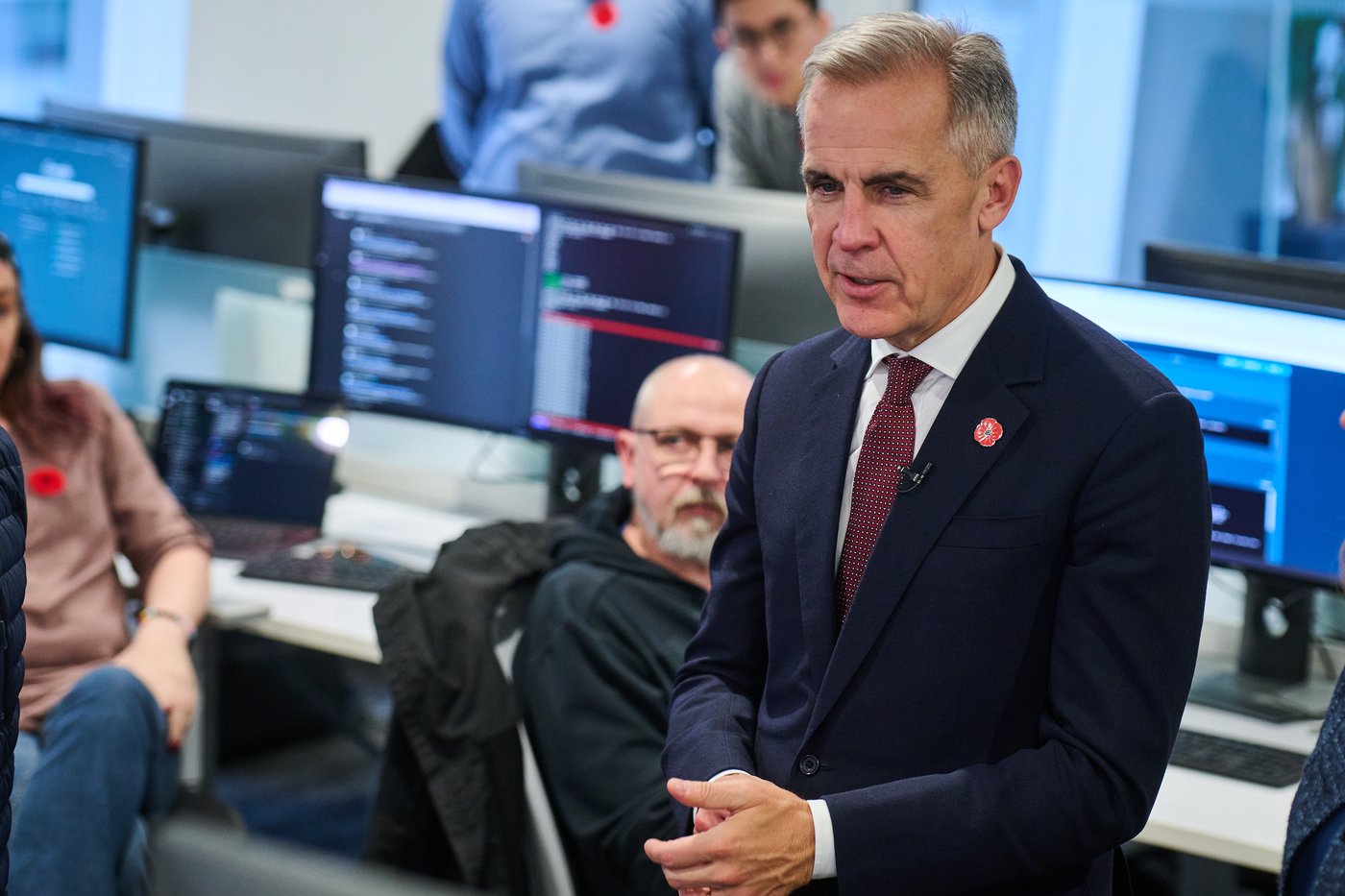
That shift hit Canada a month later, when Mark Carney replaced Trudeau as prime minister and signalled a new approach to artificial intelligence in this country.
Under the Trudeau Liberals, then-industry minister François-Philippe Champagne could boast about the possibility of Canada being the first country to introduce AI regulation legislation.
But Carney’s new Artificial Intelligence Minister Evan Solomon came to office vowing that the government wouldn’t “over-index” on AI regulation. If the United States and China weren’t interested in AI governance, Solomon said, Canada wouldn’t go it alone.
In less than a year, the federal government’s focus shifted from fencing in AI development to chasing the economic opportunities offered by the transformative technology, and to increased adoption, especially in the federal public service.
As the year came to a close, Solomon announced new agreements on AI with Germany, the U.K., and the EU at the G7 industry, digital and technology ministers’ meeting in Montreal. He maintained Canada’s approach hadn’t changed, despite the decision to sign memorandums of understanding with pro-regulation Europe.
“Our position is exactly where we have been,” Solomon said in an interview with The Canadian Press at the meeting earlier this month.
“What I’ve said since the moment I became the minister was there is a sweet spot here between what I thought was over-regulation by the EU, constraining innovation, and in the United States and China.”
Henna Virkkunen, executive vice-president of the European Commission for technological sovereignty, security and democracy, said that as both Canada and the European Union pursue AI development, humans — not machines — must be in the driver’s seat.
“It has to be based on our democratic values and we have that human-centric approach. So I think we have quite similar ideas on that, how we want to develop technologies and that’s why it’s important that we are now working together,” Virkkunen said.
Virkkunen noted the EU has taken criticism about overregulation seriously. While it continues to strongly support its current approach and its AI Act, she said, it also wants to implement that policy in an innovation-friendly manner and cut red tape and bureaucracy.
In their interviews with The Canadian Press, both Solomon and Virkkunen insisted that U.S. opposition to AI regulation was nuanced — that efforts to regulate AI continued at the state level. Just days after, however, U.S. President Donald Trump signed an executive order to block U.S. states from regulating AI.
So how does Canada fit into the dynamic between the U.S. and Europe?
“I think Canada will, of course, decide in the coming months … what kind of rules Canada would like to set,” Virkkunen said.
Solomon said he plans to introduce a new privacy bill when the House of Commons comes back from holiday break. When he was industry minister, Champagne tabled Bill C-27, which would have updated Canada’s private sector privacy laws and introduced new obligations for “high-impact” AI systems.
Solomon plans to bring back the privacy part of that legislation, but not the wide-ranging AI regulation elements.
“This is not going to be the exact same piece of legislation as C-27 was, which … had a much more all-encompassing attempt to regulate AI,” he said.
He said the bill will include measures to protect children and fight deepfakes.
Solomon has said he was considering including in the legislation age restrictions on access to chatbots and the right to delete deepfakes. In his early December interview with The Canadian Press, he declined to offer details of what will be included.
“We want some ways to protect citizens. We also want ways to have some enforcement,” he said.
Given the attitude of the Trump administration, “passing regulation is going to be more challenging (in) this political environment,” said Heidi Tworek, a professor of history and public policy at the University of British Columbia.
“But also, this government doesn’t seem to be as focused on doing that because it’s much more concerned about the sort of innovation piece.”
Under Carney, the government has prioritized AI and “placed it within a frame that is prioritizing the commercial applications of AI,” Tworek said.
She said that focus is evident in the composition of the “task force” Solomon put together to guide him on updating the national AI strategy. That group has been accused of being too weighted toward industry voices.
Carney is also emphasizing the pursuit of “sovereign AI” — a strategy for developing and controlling AI within a nation’s borders — which ties into his focus on major projects and national infrastructure, Tworek added.
Paul Samson, president of the Centre for International Governance Innovation, said Carney is looking to AI for ways to goose Canada’s productivity growth.
“He needs economic growth and productivity growth, and AI is an area that can deliver some of that, which is hard to come by these days,” he said. “So I think he’s very interested in it.”
Mark Daley, professor and chief AI officer at Western University, said it was “absolutely essential” for the government to appoint an AI minister.
The move sends a signal globally that AI is a “priority for us, and it also sends the right signals internally within Canada and internally within the federal government,” Daley said.
He added the government “has a deep understanding that AI and compute are nation-building infrastructure platforms. This is the railroad of the twenty first century.”
But Carney has yet to invest significant amounts of public money in his AI vision.
Under Trudeau, the 2024 budget allocated $2.4 billion to AI development. Most of the money was earmarked for building access to computational power and developing sovereign AI infrastructure.
When Carney introduced his first budget in the fall of 2025, it included $925.6 million for sovereign AI infrastructure to increase AI compute availability. But only a small portion of that was new money; $800 million came from funds that had already been allocated.
Carney also has spoken about building a “sovereign cloud” — a cloud computing setup restricted to a nation’s borders and guided by that nation’s laws — in the context of his push for major national projects. The government cited a sovereign cloud as one of its goals — but none of the major projects it has announced so far are focused on building one.
Whether Carney’s funding approach will change once Solomon’s updated national AI strategy is unveiled in the new year remains to be seen.
Samson said a lot of countries would be happy to see Canada take on a more active role in pursuing international AI governance — on barring AI from access to nuclear weapons, for example.
“Canada’s a little bit shy to stick its head out there too much because of the Trump factor and the U.S. factor of big tech,” he said.
Samson said he’s had conversations with representatives from other countries and major international organizations who would like to see Canada do more, but who can’t say so publicly. They includes representatives of non-G7 countries which are looking for a “catalyst that’s a little more plugged in, like a G7 country” to start the conversation.
“There’s not many countries that can kind of facilitate some of these international conversations,” he said.
This report by The Canadian Press was first published Dec. 20, 2025.
News from © The Canadian Press, . All rights reserved.
This material may not be published, broadcast, rewritten or redistributed.

This site is protected by reCAPTCHA and the Google Privacy Policy and Terms of Service apply.
Want to share your thoughts, add context, or connect with others in your community?
You must be logged in to post a comment.