Elevate your local knowledge
Sign up for the iNFOnews newsletter today!
Sign up for the iNFOnews newsletter today!
Selecting your primary region ensures you get the stories that matter to you first.
OTTAWA — The federal government is planning to release a strategy on men’s and boys’ health in the new year, something advocates have long called for to address issues that prevent men from getting the care they need.
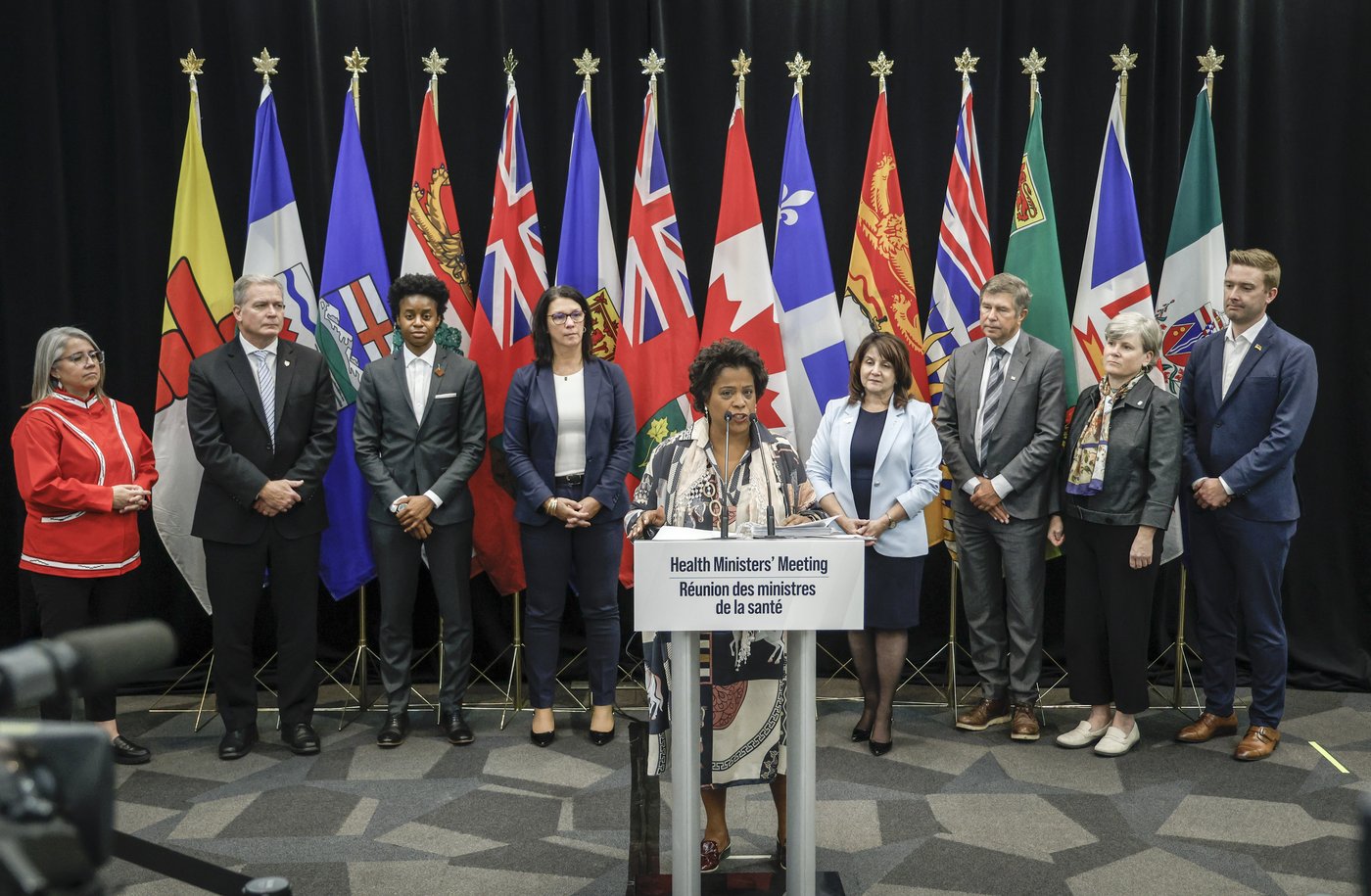
Health Minister Marjorie Michel said she heard about the need for such a strategy from provincial and territorial counterparts while touring the country.
“In particular, what was mentioned to me is the challenge that men and boys are facing, not (getting) the services,” she said in a year-end interview with The Canadian Press.
The advocacy group Movember Institute of Men’s Health and researchers from the University of British Columbia released a report last summer that called on the federal government to create a men’s health strategy.
The report found that 75,000 Canadian men died prematurely in 2023, and many of their deaths were from preventable causes.
Men are about three times more likely than women to die by suicide, the report noted. It also found there are significant barriers to accessing care.
Men who took part in polls commissioned by Movember found that more than half of men delayed seeking care for symptoms for more than six days, and nearly one in 10 men said they waited more than two years.
When they did seek help, nearly half of the men reported feeling that they were not listened to by health care providers.
The researchers also found that informal caregiving responsibilities for men with health challenges fall disproportionately to the women in their lives, a burden that had a negative effect on their own mental and physical health.
Justin Trottier, the founder and executive director of the Canadian Centre for Men and Families, said he’s grateful and excited to hear that a strategy is in the works.
He said organizations like his have been pointing out the fact that there is no federal ministry or organization dedicated to men and boys, similar to the minister for women and gender equality.
“It’s important, obviously, to continue to have a priority on women’s health and increased services for women and girls. This is not opposed to that, in fact, this is complementary to it. We can do both,” Trottier said.
The Canadian Centre for Men and Families has been involved in co-ordinating the launch of the first men’s and boys’ health caucus, a multi-partisan group of 25 senators and members of Parliament led by Sen. Patrick Brazeau and Sen. René Cormier.
Trottier said it’s a parallel effort to begin a conversation at the national level that will help address issues including homelessness, domestic violence, workplace injuries, suicide and mental health.
“We really do need some unifying initiative that would bring together researchers, social service sector agencies and policy-makers to systematically tackle these life-and-death issues and then come at it from a holistic perspective,” he said.
He said he hopes the strategy begins a frank conversation, in particular about suicide prevention.
“We need to be willing to ask difficult, challenging questions about the way society does not always provide the supports that men and boys need,” he said.
Michel said the strategy will encourage collaboration on issues including mental health, addiction and public safety in an effort to address the challenges upfront. She said her work includes discussions with the ministers for Veterans Affairs, Women and Gender Equality and Indigenous Services to break down silos within the federal government.
“We have to change our language, it’s a change of culture,” she said.
This report by The Canadian Press was first published Dec. 23, 2025.
News from © The Canadian Press, . All rights reserved.
This material may not be published, broadcast, rewritten or redistributed.

This site is protected by reCAPTCHA and the Google Privacy Policy and Terms of Service apply.
Want to share your thoughts, add context, or connect with others in your community?
You must be logged in to post a comment.