Elevate your local knowledge
Sign up for the iNFOnews newsletter today!
Elevate your local knowledge
Sign up for the iNFOnews newsletter today!
Select Region
Selecting your primary region ensures you get the stories that matter to you first.
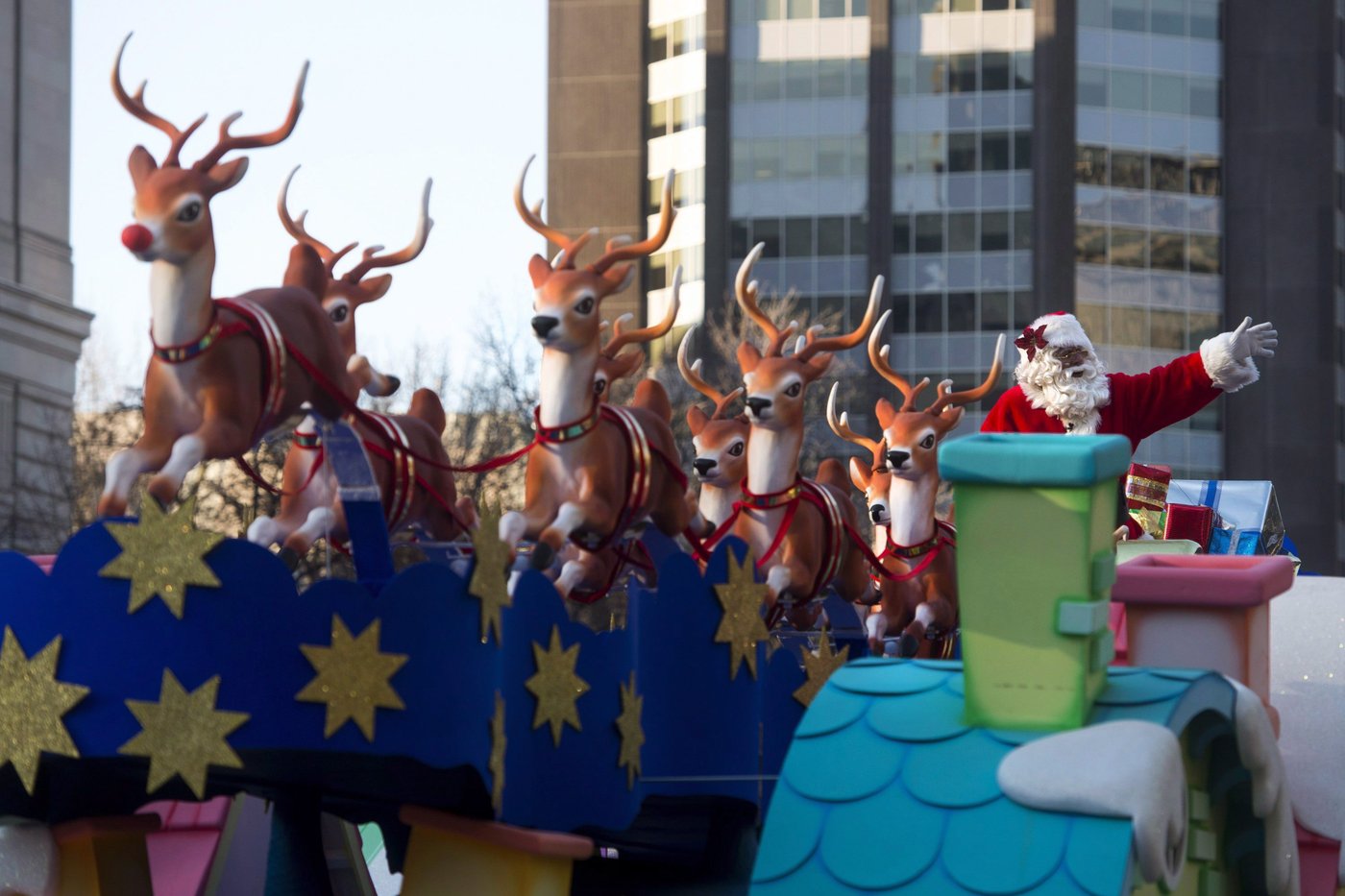
Canada says Santa Claus is a Canadian citizen, and it claims Canadian sovereignty extends to his North Pole residence and workshop. While the federal government did proclaim Santa’s Canadian citizenship in 2008, its sovereignty over the North Pole is contested, and the United Nations has yet to rule on Canada’s claims to extend its Arctic reach. Other countries, including Finland and Denmark, claim Santa Claus lives and works within their borders.
THE CLAIM
Each year, Canada Post receives more than a million letters addressed to Santa Claus, the legendary figure known for delivering presents to children around the world in his red and white suit. Perhaps those colours are a symbol of St. Nick’s Canadian pride, because according to his mailing address, he resides in Canada.
THE FACTS
Canada Post lists Santa’s address as the North Pole, Canada, with the postal code H0H 0H0. And in 2008 Jason Kenney, then minister of citizenship, immigration and multiculturalism, declared Santa a Canadian citizen.
“The government of Canada wishes Santa the very best in his Christmas Eve duties and wants to let him know that, as a Canadian citizen, he has the automatic right to re-enter Canada once his trip around the world is complete,” the Times Colonist reported Kenney as saying.
In 2010, Kenney once again affirmed Santa’s status as a Canadian and said the jolly old elf took part in a special citizenship ceremony along with 100 others. The press release about the ceremony included remarks about Canada’s commitment to “invest in measures that exercise Canada’s sovereignty and create more economic opportunities in the North.”
Then, in 2013, Canada issued Santa and Mrs. Claus ePassports and said the pair planned to use them for a Florida vacation after the completion of their Christmas duties.
But not everyone agrees on his official residence.
CANADA CLAIMS SOVEREIGNTY OVER THE NORTH POLE
A few weeks before Kenney first declared Santa’s Canadian citizenship, the federal government announced legislation expanding Canada’s claim of sovereignty over Arctic waters.
The amendment to the “Arctic Waters Pollution Prevention Act” changed the definition of Arctic waters from 100 nautical miles to 200 nautical miles. While partially made to prevent pollution from ships in Canadian waters, the change helped bolster Canada’s sovereignty claims to the area.
Canada declares sovereignty over the waters of the Arctic Archipelago, which consists of thousands of mostly uninhabited islands, and includes the channels making up the Northwest Passage.
“Canada’s Arctic sovereignty encompasses land, sea and ice. It extends without interruption to the seaward-facing coasts of the Arctic islands and beyond,” reads a document on Canada’s Arctic foreign policy.
The area claimed by Canada includes the North Pole, Santa Claus’s purported residence.
Under international law, no country owns the North Pole or the waters surrounding it. However, the United Nations Convention on the Law of the Sea affords Canada and other Arctic countries sovereign rights to an “exclusive economic zone” of 200 nautical miles off their coasts.
Under United Nations law, Canada and other countries can extend their territory beyond the 200 nautical miles if they can show their continental shelf — the part of a continent that lies under the ocean — stretches beyond that point.
In 2022, Canada filed to extend the continental shelf claim it submitted to the United Nations in 2019, where it laid claim to an additional 1.2 million square kilometres beyond the country’s existing mass.
Notably, Canada claimed Lomonosov Ridge — an undersea mountain range that reaches the North Pole — as its own. However, Russia, Denmark and its territory Greenland made similar claims.
The UN has not issued a decision on Canada’s claim, so it’s more accurate to describe Santa’s North Pole abode as lying in international waters.
OTHER COUNTRIES CLAIM SANTA AS RESIDENT
St. Nicholas, the Christian saint believed to be the inspiration for modern-day Santa Claus, lived in the area now known as Turkey and had no connection to Canada.
There is also disagreement over whether Santa’s residence is actually at the North Pole.
The city of Rovaniemi in northern Finland calls itself “the official hometown of Santa Claus” and says it acts as Santa’s “office,” while his original home lies in the Korvatunturi “fell,” or mountain.
Many Danes and Greenlanders believe Santa Claus lives in Uummannaq, Greenland because of a children’s television show. The town has a giant red mailbox that receives letters to Santa. Canada, however, seems to be the only country to have given him citizenship.
Fortunately, it does not appear that issues of Santa’s residency and citizenship will impede his Dec. 24 delivery plans.
This report by The Canadian Press was first published Dec. 23, 2025.
News from © The Canadian Press, . All rights reserved.
This material may not be published, broadcast, rewritten or redistributed.

This site is protected by reCAPTCHA and the Google Privacy Policy and Terms of Service apply.
Want to share your thoughts, add context, or connect with others in your community?
You must be logged in to post a comment.