Elevate your local knowledge
Sign up for the iNFOnews newsletter today!
Sign up for the iNFOnews newsletter today!
Selecting your primary region ensures you get the stories that matter to you first.
Mary Borrowman says she’ll never forget the moment she and her husband, Jim, watched the northern lights shimmer across the sky on the morning of Jan. 1, 2025, from their home in Telegraph Cove, B.C.
“When we looked out our window, and we looked over the water, everywhere you could see in the sky were the most beautiful dancing red and green, and purple northern lights that we have ever seen,” said Borrowman.
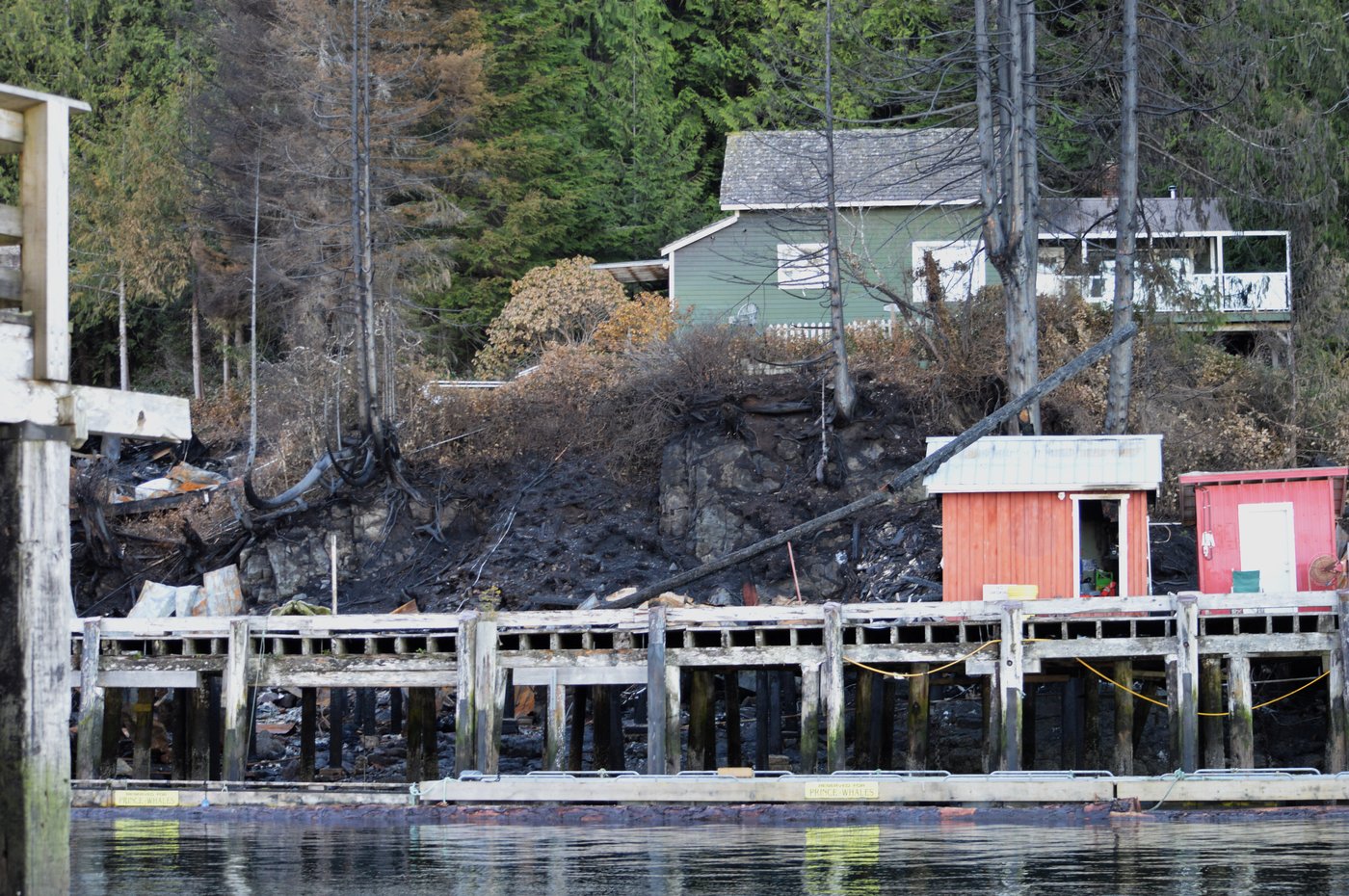
A day earlier, a massive New Year’s Eve fire in the quaint tourist resort on northeastern Vancouver Island had destroyed the Whale Interpretive Centre that she and her husband founded, the local pub and restaurant and the office of the Prince of Whales whale-watching firm.
“I said to Jim, if that’s not a sign from above that we’re meant to carry on, then I don’t know what is,” said Borrowman, 73, recalling the aurora flickering above.
Her husband replied, “Let’s start a fundraiser,” she remembered with a chuckle.
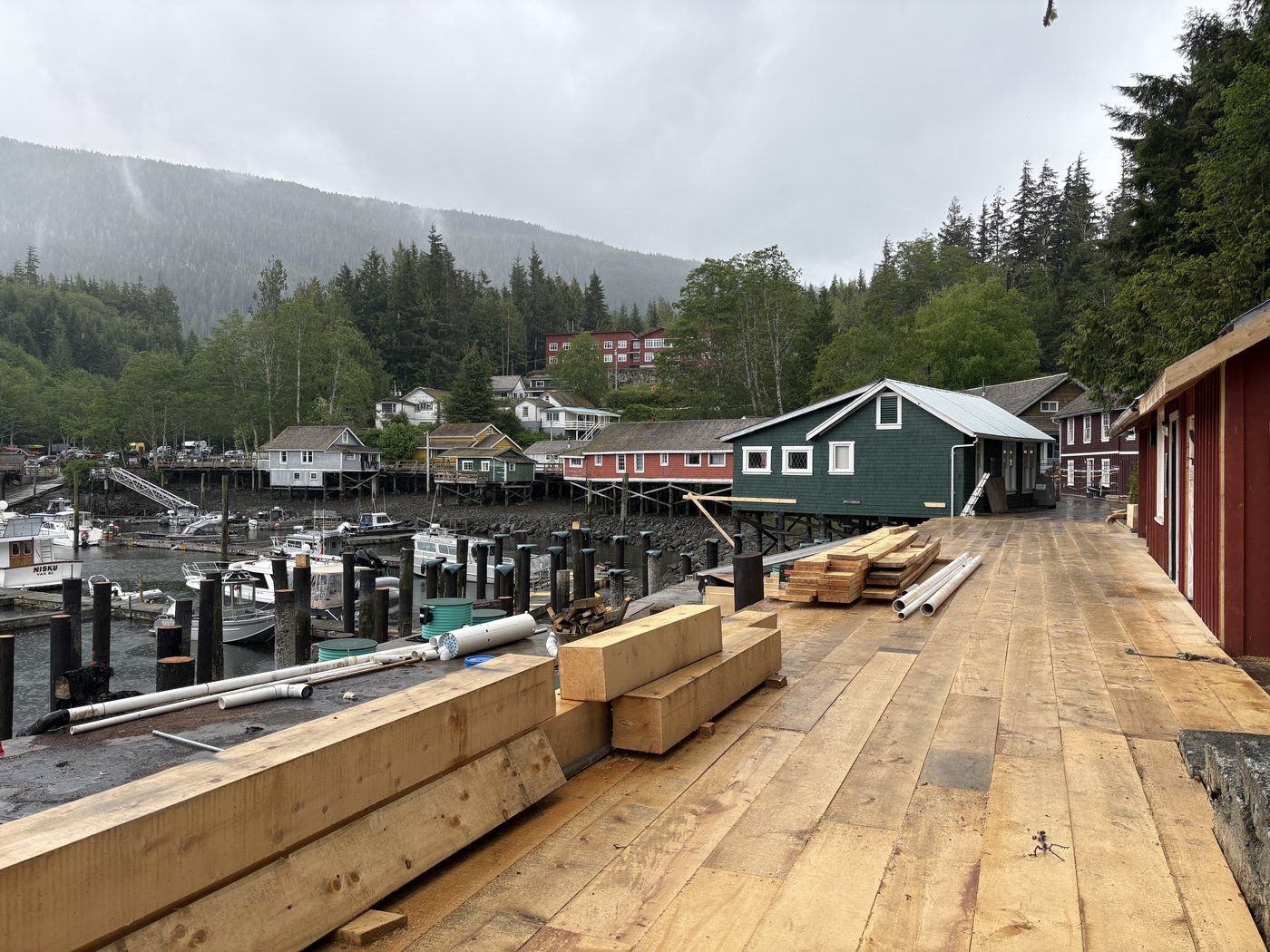
The couple have lived for decades in the colourful cove, where green and red houses sit on the boardwalks that jut into the water.
They began the Whale Interpretive Centre in 2002 and amassed the largest public collection of marine mammal skeletons in B.C., including a prized 20-metre-long fin whale that hung from the rafters as if swimming above visitors.
Almost all of the exhibits were lost in the fire. The bones of a pygmy sperm whale and two dolphins had been out on loan in nearby Port Hardy.
When word spread that they were rebuilding the centre, skeletons starting popping up everywhere.
Borrowman said their team has received offers and donations of skeletons from across the country.
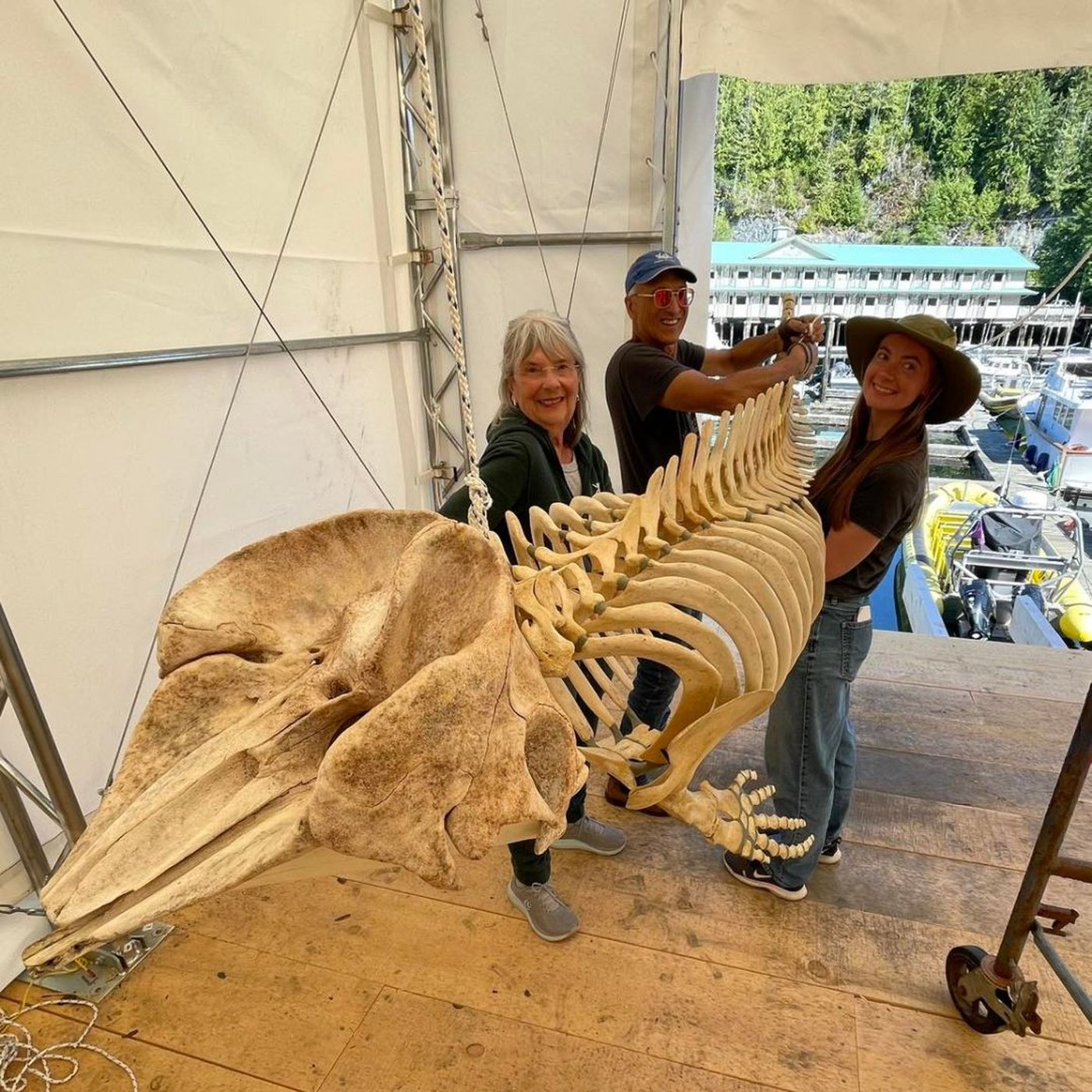
The museum was notified of the death of a whale in May that washed ashore in nearby Port McNeil. It was identified as a young Bryde’s whale, in the first recording of the species in B.C. waters.
The Namgis First Nation gifted the body to the centre, and it’s now under the care of Cetacea Contracting on Salt Spring Island, a company that specializes in cleaning and rebuilding the bones of marine mammals.
Mike deRoos, president of Cetacea Contracting, said he put together a small crew of volunteers to help recover the skeleton.
They packed up everything into a trailer and brought it south to Salt Spring Island, where they began the cleansing process by cutting away as much of the flesh as possible. Then they recruited blackfly larvae to eat the remaining flesh from the bones, he said.
“And it’s a good thing we don’t have neighbours close by, because it was pretty smelly too, you can imagine,” said deRoos.
The bones are now dry and will be placed in an industrial-sized dry cleaning machine, he said.
It has been a labour-intensive process, said deRoos, but the time and effort have been worthwhile.
“Telegraph is a very special place for Vancouver Island, and it’s really important for people to give it as much support as possible through the rebuilding process,” said deRoos.
Pearson College in Victoria gave the centre a skeleton of a mature male stellar sea lion. Dave Duffus from the University of Victoria’s whale lab retired and gave them a Baird’s beaked whale skull, sea lion skulls, baleen, and mandibles from a juvenile sperm whale.
“The support was amazing, and the kind words from people, and not only financially, but every week, something really positive happens,” said Borrowman.
The museum has raised over a quarter of their $1 million fundraising goal so far.
A goal of May 1, 2026, has been set for the reopening of the museum and the rest of Telegraph Cove.
Resort owner and founder Gordie Graham, 80, spent decades turning Telegraph Cove into a thriving ecotourism hub.
He milled lumber for the project himself, transforming the tiny community that was once home to a sawmill and salmon cannery. But he said he and his wife, Marilyn, could only sit and watch as the fire raged in the early hours of Dec. 31, 2025.
Some of the things lost were more than 100 years old, including original blueprints for the boardwalk and an old motor that was used to keep the village’s power plant running before BC Hydro came in 1958 with its power lines, said Graham.
They had no idea what would happen after the fire, he said, but support from the public came in a flood, making it easier for them to deal with so much loss.
“From the morning that the fire happened, from then on, it’s been unbelievable,” said Graham.
“All of the fire departments are showing up here, all of the people offering everything, money, wages, help, whatever. Telegraph Cove seems to be a very important place to a lot of people, and even though there’s only half a dozen people living here, a lot of people have great memories of holidays, whales, bears, and fishing,” said Graham. “And it’s been quite amazing.”
It took two months to remove the debris and clean the remaining structures, before the arrival of a crane and barge, a “beautiful sight” in the rebuilding process, he said.
“Unfortunately, I’m 80 years old this year, so I can’t do a heck of a lot, but I keep an eye on things,” said Graham.
Although it’s difficult to restore everything to its original form, Graham said it’s important that buildings in the town retain the same esthetic as before.
“You come here, there’s something about it, and it is a magical place. And I’m not exactly sure why. I think it’s the culmination,” he said.
“We’re planning on being open on the first of May,” said Graham. “We’re confident we’re going to have it done.”
Borrowman said Christmas has been a happy time since her children and grandchildren flew home to spend time with them, and her New Year’s wish is that the rebuilding will continue.
“We’re looking forward to 2026 and kind of leaving the fire behind, and we’re optimistically hopeful for the future,” she said.
The cabins, buildings, and the town will look the same, “with the same flavour,” said Borrowman.
“You know what? I am not the type of person who can sit around and do nothing. I always have to have something to do, and I can’t think of anything better than what we’re doing right now.”
This report by The Canadian Press was first published Dec. 31. 2025.
News from © The Canadian Press, . All rights reserved.
This material may not be published, broadcast, rewritten or redistributed.

This site is protected by reCAPTCHA and the Google Privacy Policy and Terms of Service apply.
Want to share your thoughts, add context, or connect with others in your community?
You must be logged in to post a comment.