Elevate your local knowledge
Sign up for the iNFOnews newsletter today!
Elevate your local knowledge
Sign up for the iNFOnews newsletter today!
Select Region
Selecting your primary region ensures you get the stories that matter to you first.
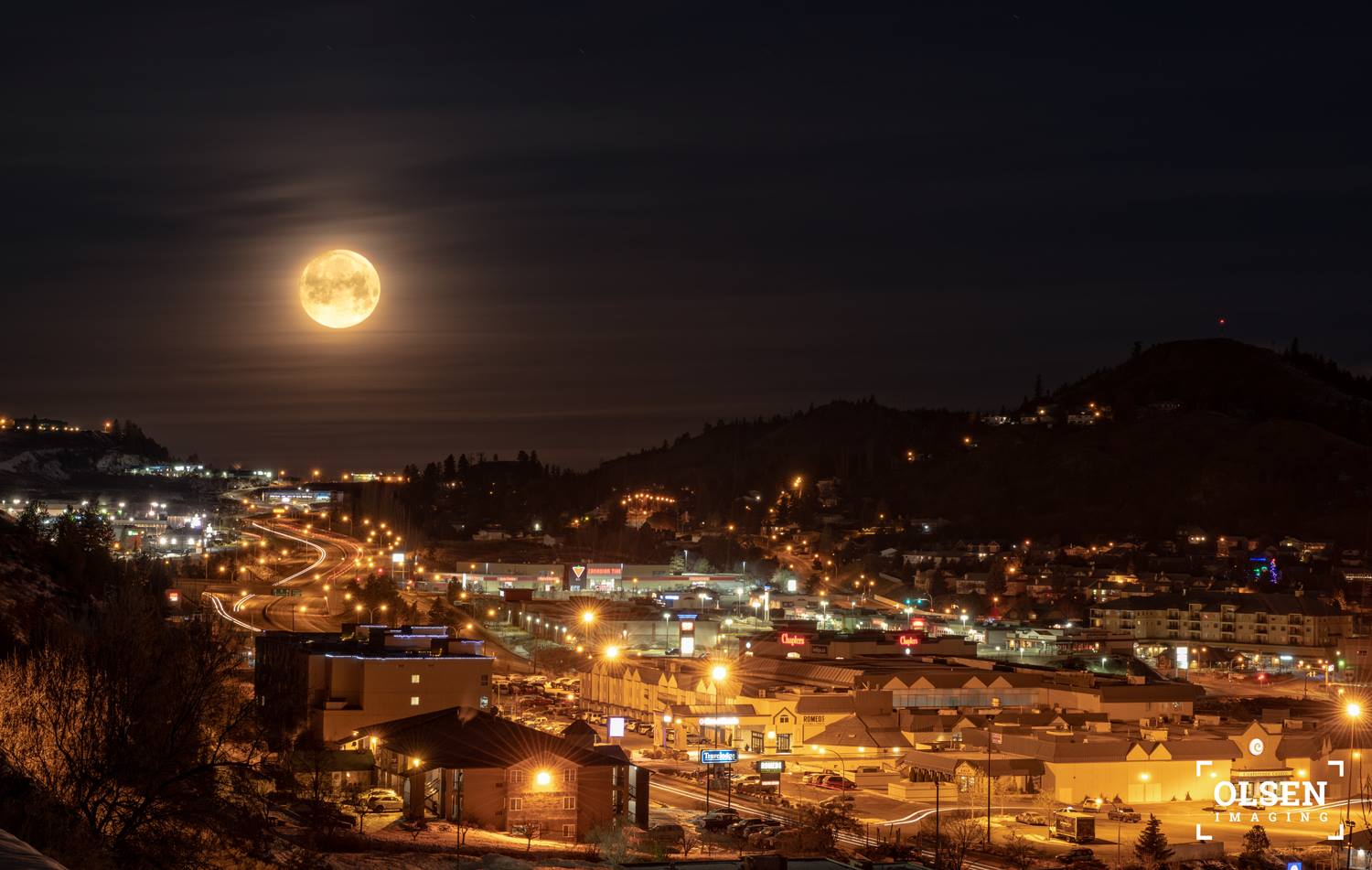
The first full moon of 2026 is a supermoon, but skywatchers in the Thompson-Okanagan region will have to contend with clouds to see it.
The Wolf Moon reaches peak illumination at 2:03 a.m. Saturday, Jan. 3, and will also look full the night before and after.
A supermoon occurs when the moon reaches peak illumination at the same time it is closest in its orbit to Earth, causing it to appear bigger and brighter than a typical full moon, according to the Old Farmer’s Almanac.
The Wolf Moon is named after wolves howling in the wintertime, but it has several other names that include Cold Moon, Frost Exploding Moon and Freeze Up Moon that reference cold winter temperatures.
Coinciding with the moon’s peak fullness on Saturday is the peak of the Quadrantid meteor shower that is active between Dec. 26 and Jan. 16. Considered by NASA to be one of the best meteor showers of the year, 60 to 100 meteors can be seen every year under perfect conditions.
This year, the light of the full moon will make it more challenging to see the shower.
Sky watchers in the Thompson-Okanagan region will likely have to contend with clouds and periods of snowfall from Friday to Sunday night, according to the Environment Canada forecast.
News from © iNFOnews.ca, . All rights reserved.
This material may not be published, broadcast, rewritten or redistributed.

This site is protected by reCAPTCHA and the Google Privacy Policy and Terms of Service apply.
Want to share your thoughts, add context, or connect with others in your community?
You must be logged in to post a comment.