Elevate your local knowledge
Sign up for the iNFOnews newsletter today!
Sign up for the iNFOnews newsletter today!
Selecting your primary region ensures you get the stories that matter to you first.
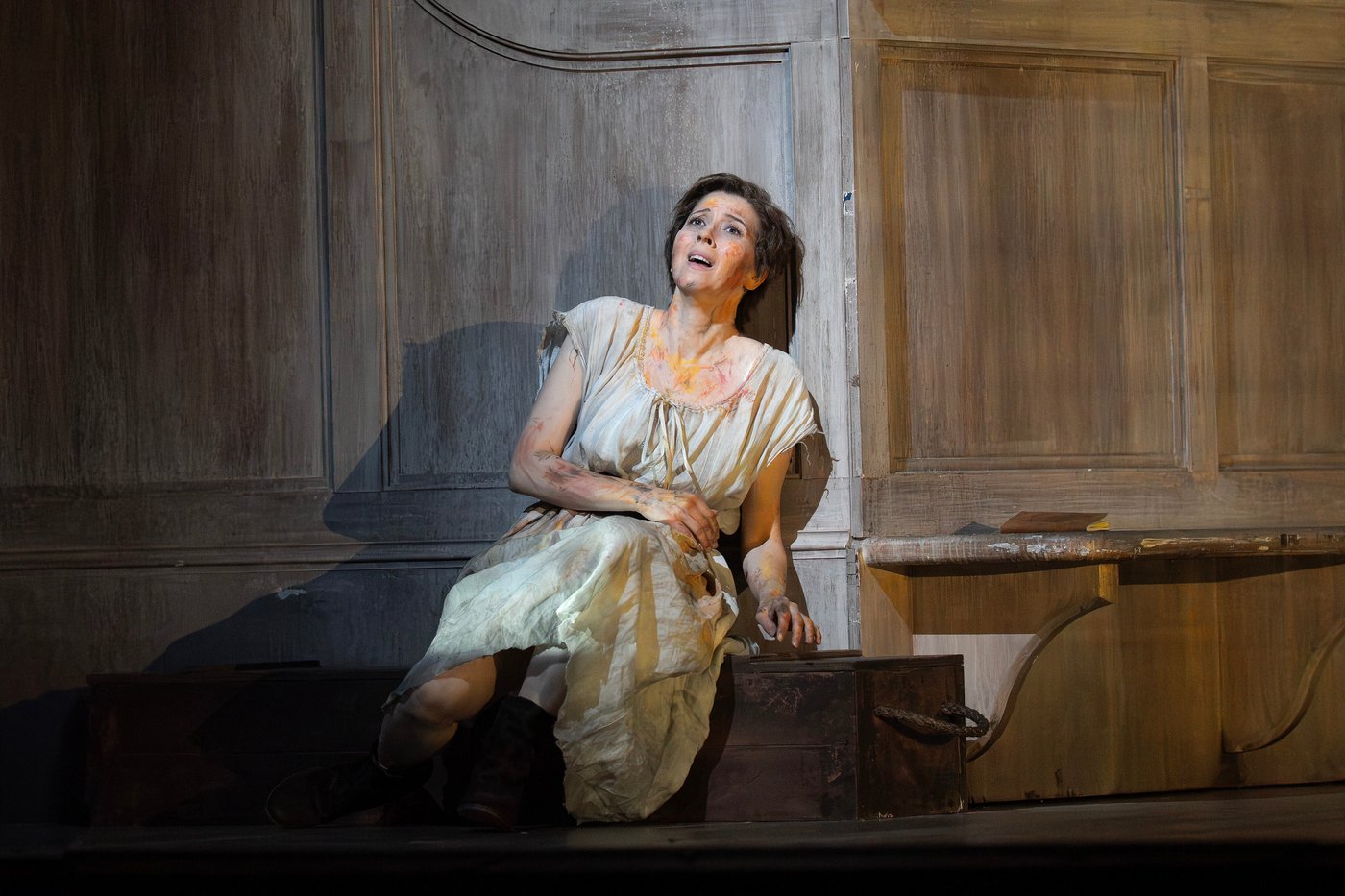
NEW YORK (AP) — Lisette Oropesa impresses Peter Gelb as more than a singer.
“She reminds me a little bit of Beverly Sills,” the Metropolitan Opera general manager said. “She seems to have that kind of intellectual quickness. She’s extremely astute and she connects with people. Who knows? Maybe someday she’ll be running the Met?”
Sills was a top soprano before heading New York City Opera from 1979-89, then chairing the Met board from 2002-05 and overseeing Gelb’s hiring.
A 42-year-old soprano who grew up in Baton Rouge, Louisiana, Oropesa is starring with tenor Lawrence Brownlee in the Met’s first new staging of Bellini’s “I Puritani” since the heralded 1976 production with Luciano Pavarotti and Joan Sutherland.
Last week’s opening received rave reviews after Oropesa shimmered through the difficult coloratura. This Saturday’s performance will be televised worldwide.
“I’ve been wanting to sing it forever. I think it’s Bellini’s best work,” Oropesa said. “I find `Puritani’ is one of the exceptions to the bel canto generalization of: it’s boring, it’s slow, it’s all about the singers, the text is terrible, the stories are stupid.”
Met career started two decades ago
Oropesa was a winner at the 2005 Met National Council Auditions, joined the company’s young artists program and made her Met debut a year later in Mozart’s “Idomeneo.” Among her first larger roles was in Puccini’s “La Rondine” on New Year’s Eve in 2008, when she sang the character named Lisette under the baton of Marco Armiliato, also this season’s “Puritani” conductor.
“You can catch right away the sparkling in the voice,” he said. “She’s developed her career in a beautiful and very intelligent way, choosing the right role in the right time.”
Oropesa debuted at Munich’s Bavarian State Opera in 2011, the Paris Opéra in 2015, London’s Royal Opera in 2017 and Milan’s Teatro all Scala in 2019.
While she had sung Elvira’s mad scene in auditions, she didn’t feel ready for the entire role.
“It’s good to be young and fresh because you’re agile, you’re resilient,” she said. “But you don’t necessarily have the stamina that it takes to get through a long bel canto, big work like this. And that’s something that comes with age and experience.”
Oropesa sang her first staged Elvira in February 2025 in Paris, also with Brownlee.
“She is so committed in everything she does, and she gives a full performance every time she walks on stage,” Brownlee said.
Going silent before taking the stage
To prepare for performances, Oropesa stops speaking.
“Twelve hours of silence,” she said. “If you’re singing every day at a high level, that 8 to 8, 10 to 10, 12 to 12, whatever that half the day of the clock where you do not speak resets you better than any medicine, better than any Advil, better than anything.”
She did have a new speaking role at the Met, hosting the television broadcast of “Andrea Chenier” last month.
Dealing with acid reflux
Oropesa felt vocal problems in July 2024, when she traveled from Japan to Naples, Italy, for performances as Violetta in Verdi’s “La Traviata.”
“I got off the plane and I was like: My throat hurts. I’m sick or I’m getting sick or I’m jet-lagged or I need a few days,” she said. “Days and days go by, and I’m not getting sick. I just have this consistent pain in my throat.”
When her voice cut out as she started to warm up for a dress rehearsal, she decided to go to a doctor.
“He takes one look at my vocal cords and he says, `You have reflux really bad,’” she recalled. “All your muscles around there are red. Your vocal cords are fine, but the muscles are so like burnt that they can’t hold your cords together.”
She was told to take 10 days of rest, start on medication and to sleep on an incline. A vegan for 15 years, she now generally avoids eating after shows.
Helping younger singers
When Oropesa hosted the 2020 Met National Council Auditions final concert, she announced that because the prize was $15,000, the same amount she received in 2005, she was donating $25,000 to increase the total to $20,000 for each of the five winners.
“It is a very, very difficult, very difficult profession, as you all know, and this is the time that that money really, really makes all the difference,” Oropesa told the crowd.
Met donors have since raised the money to keep the prize at $20,000 for each winner.
Future operas
Oropesa will sing the title role in Bellini’s “Norma” for the first time in a concert at Finland’s Savonlinna Opera Festival in late July and make her role debut as Liu in Puccini’s “Turandot” two weeks later at Italy’s Arena de Verona – her 50th role.
“Sometimes you take for granted artists who you see growing up in front of you and I think in the case of Lisette we might have been guilty of that,” Gelb said. “She felt, and maybe she was right, that she had to go to Europe to prove herself as a star — and she certainly became a very big star in Europe — to get the attention of the Met. But she certainly has our attention now.”
News from © The Associated Press, . All rights reserved.
This material may not be published, broadcast, rewritten or redistributed.

This site is protected by reCAPTCHA and the Google Privacy Policy and Terms of Service apply.
Want to share your thoughts, add context, or connect with others in your community?
You must be logged in to post a comment.