Elevate your local knowledge
Sign up for the iNFOnews newsletter today!
Sign up for the iNFOnews newsletter today!
Selecting your primary region ensures you get the stories that matter to you first.
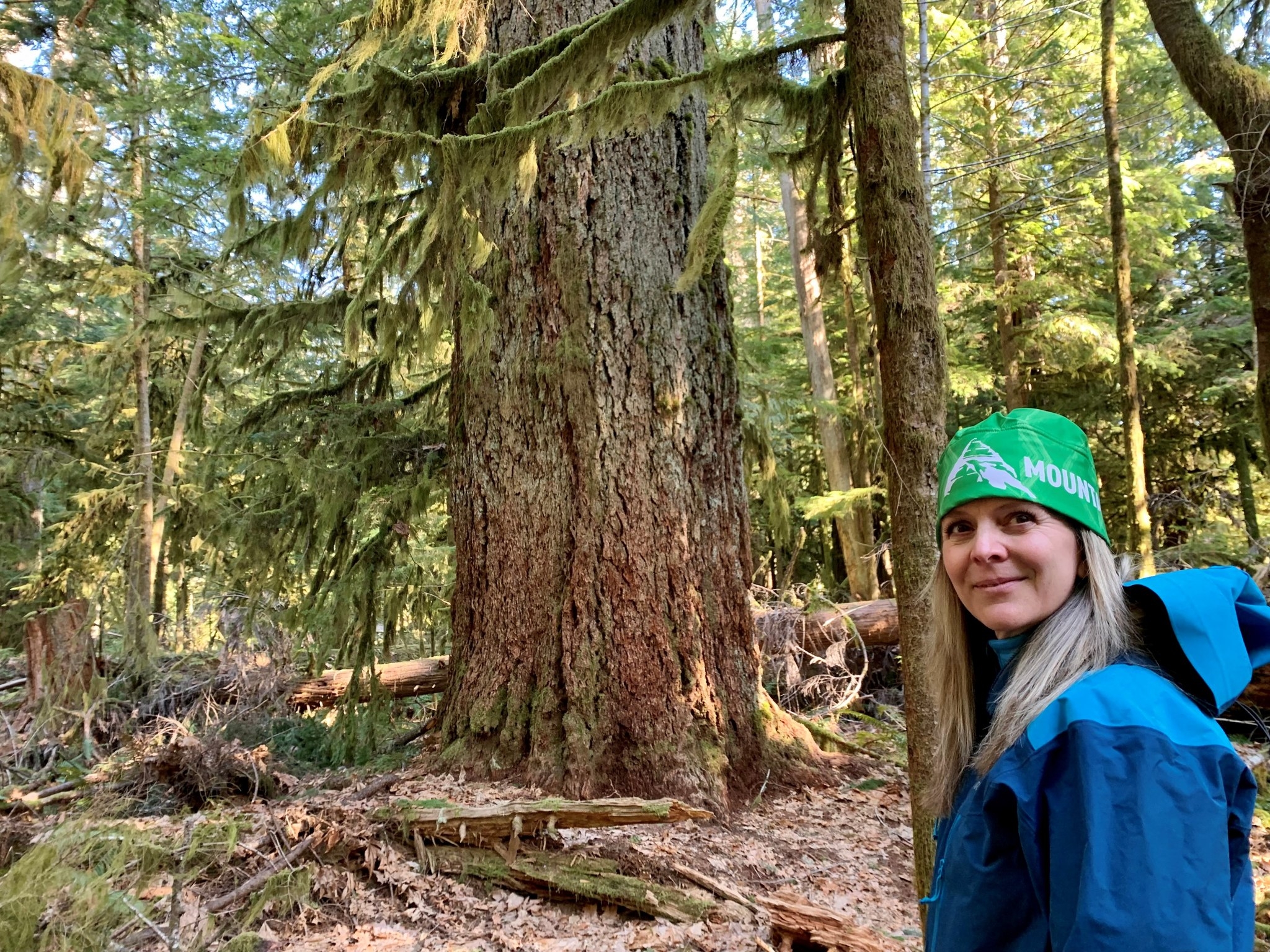
A growing curiosity in forest bathing is emerging in Kamloops in the midst of a provincial health-care crisis, as more people turn to self care and wellness options.
It’s a trend the owner at Forest Roots Consulting, Nicole Wood, is noticing. She offers forest bathing sessions through her private practice and through the City of Kamloops.
“People are definitely more curious about it,” she said. “There’s an increase in people looking for connection through all different ways. With the challenges we have in our current medical system and people unable to access family doctors, they’re searching for other ways to support their wellness.”
Forest bathing is a wellness practice inspired by Shinrin-yoku in Japan, a term that emerged in 1982 that translates to “breathing in the atmosphere of the forest.” Participants immerse themselves in nature to improve mental, physical and emotional well-being. The practice is not a therapy in the traditional sense, rather a way to gain therapeutic benefits from being in nature.
Wood is a registered professional forester and certified yoga teacher, and a practitioner with the Association of Forest Therapy Guides and Programs. A lot of the sessions she leads are through the activity guide with the City of Kamloops, that added the sessions in 2023. She also donates sessions and does private group sessions.
“I take participants into forest and invite them into the present moment and into their bodies. It’s just a really lovely and very simple process,” she said. “It’s often done in community with others.”
“It’s a very slow, gentle practice and slow sensory experience. I like to use words like holding space. Nature is the therapist and the guide opens the door.”
According to a research published by UBC, there are all sorts of health benefits that come out of the practice.
“We have got 30 or 40 years of research done largely in Japan that tells us the scientific part of the benefits,” Wood said. “I think most people know intuitively when you go outside there is a wonderful reset and grounding that happens.
“Some people also like the science of it.”
Trees release phytoncides, organic compounds that are part of the trees’ protective mechanism. Wood said they have health benefits for humans.
“Phytoncides are those aerosols you get when you’re breathing the smell of pine on a hot day, they can reduce stress levels and are an incredible mood regulator,” she said. “They also have an influence on our heart health, they have a regulating effect on blood pressure.”
Breathing in the forest air can boost the immune system and result in better sleep and cognitive function, and there are other benefits that go beyond the physical body.
“Being in nature and practising with others gives a sense of connectedness to each other, to community and to the land,” Wood said.
“When offering the practice my hope is that people fall in love with the land again. In this culture and time, we’re so disconnected and driven by technology that even five minutes in nature can be a powerful way to find a sense of connection.”
Wood has led groups for forest bathing in the winter, however, it is tricky as the practice is slow and participants get cold. She also takes the practice, and pieces of nature, indoors for groups with mobility issues often in partnership with local somatic body practitioners.
“It’s an accessible practice. We’re offering one through the City this spring for senior citizens,” she said.
“For those who can’t stand or walk, you still want to be able to give them the pleasure and benefit of slowing down and breathing and enjoying aspects of nature.”
One of the best parts of forest bathing the cost is low or there is no cost at all.
“I’m not charging tons of money and once people have a taste of it the hope is they can interweave the practice into their regular habits for wellness because nature is free,” she said.
“People spend money finding ways to care for themselves and it gets expensive. You don’t necessarily need a guided experience, it’s free to go out and sit beside a tree.”
Wood said her forest bathing sessions are not therapy, rather an experiential practice.
Go here to learn more and connect with Nicole Wood at Forest Roots Consulting.
News from © iNFOnews.ca, . All rights reserved.
This material may not be published, broadcast, rewritten or redistributed.

This site is protected by reCAPTCHA and the Google Privacy Policy and Terms of Service apply.
Want to share your thoughts, add context, or connect with others in your community?
You must be logged in to post a comment.