Elevate your local knowledge
Sign up for the iNFOnews newsletter today!
Elevate your local knowledge
Sign up for the iNFOnews newsletter today!
Select Region
Selecting your primary region ensures you get the stories that matter to you first.
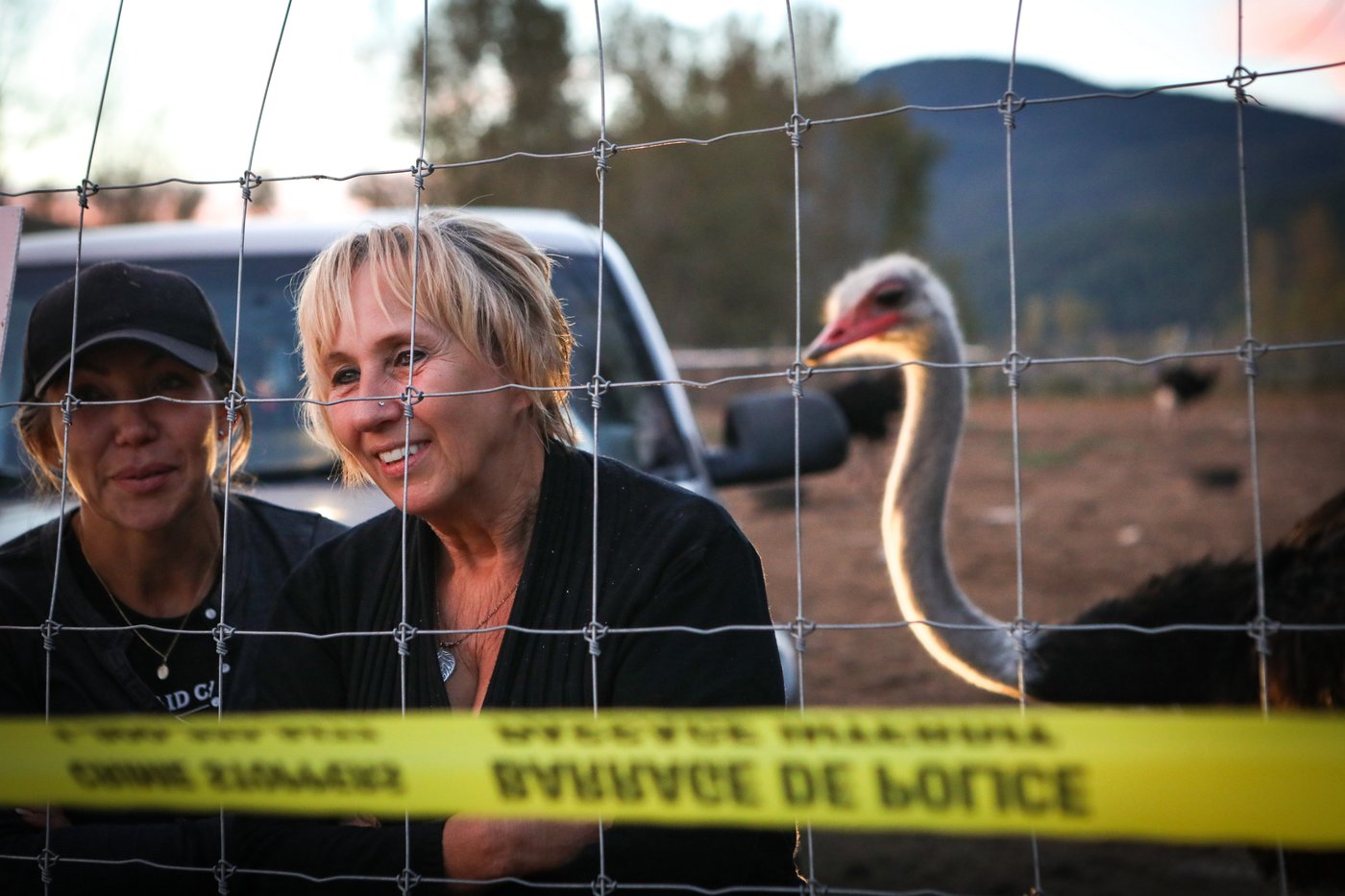
The owners of Universal Ostrich Farm have lost an appeal after being fined $10,000 for not telling authorities that some of their birds died during an initial outbreak of avian influenza.
According to a Dec. 11, 2025, Canada Agricultural Review Tribunal decision, Universal Ostrich Farm owners David Bilinski and Karen Espersen appealed the $10,000 fine for violating the Health of Animals Act, which mandates that farm owners have to notify a vet if they suspect their birds have avian flu.
“The (Universal Ostrich Farm) knew that its birds were sick. It observed several symptoms in their birds that are symptoms of avian influenza in ostriches. The (farm’s) owners purport to be experts in ostrich health and welfare. And yet they failed to exercise the same level of adherence to the Health of Animals Act that a reasonably prudent person would have done in a similar situation,” the Tribunal said.
The decision gives a timeline of the events that took place long before the protesters turned up and the ostriches’ fate made international headlines.
The events began to unfold in December 2024, when over several weeks, the ostriches started dying.
Bilinski said during that time, some of the birds were lying in water before they died, which he thought was due to a fever. He also said the sick birds looked “down.”
Espersen found by mid-December that the sick birds had watery eyes, were staying away from the rest of the flock and were lethargic and depressed.
However, neither owner called a vet and the Canada Food Inspection Authority only found out following an anonymous call to its “Sick Bird Line” on Dec. 28, 2024.
The decision says a Canadian Food Inspection Agency vet called Bilinski that day. He told the vet that about five per cent of his birds had already died. Over the next month or two, 69 birds died.
Bilinski took swabs from two recently dead birds, and two days later, the tests came back positive for avian influenza.
They were later fined $10,000 for not telling the authorities about a suspected outbreak of bird flu.
In the appeal, Bilinski argued he wasn’t aware the birds had symptoms of avian influenza.
However, the Tribunal pointed out that by his own admission, he said the birds had white nodules at the back of their mouths, were coughing up white chunks, had “dull eyes,” cold-like symptoms, and he thought the birds appeared depressed.
The Tribunal ruled the birds had at least one factor that indicated avian influenza.
Bilinski also argued he called a vet five days before the dead birds were reported, but because it was Christmas, the vet was away. He also said he “attempted to reach” another vet who was unavailable.
However, the Tribunal ruled that the farm had only called a vet weeks after the birds became sick and it could have called the “sick bird line.
“All (Bilinski) had to do was immediately make a call to that phone number and inform them of any of the facts indicating the potential presence of a reportable disease,” the Tribunal ruled.
It wasn’t good enough to “attempt” to call a vet.
The farm also argued that it did its best and thought the birds had a “non-reportable disease.”
However, the Tribunal ruled this wasn’t a good enough defence.
The Canadian Food Inspection Agency argued that the farm intentionally didn’t inform it, but the Tribunal wouldn’t go that far.
“I do not agree with the (Canadian Food Inspection Agency) that the (Universal Ostrich Farm’s) violation was intentional,” the Tribunal ruled. “The violation was, nevertheless, certainly negligent.”
The Tribunal ruled that while the gravity of the offence wasn’t as severe as the Canadian Food Inspection Agency argued, it still warranted a $10,000 fine.
“I find that the violation could have led to serious or widespread harm to human or animal health,” the Tribunal ruled.
The $10,000 fine will add to a list of creditors that the Universal Ostrich Farm owes money to.
After a series of legal challenges, the remaining 300 or so ostriches were culled.
To date, the farm has publicly made almost $200,000 from public donations.
News from © iNFOnews.ca, . All rights reserved.
This material may not be published, broadcast, rewritten or redistributed.

This site is protected by reCAPTCHA and the Google Privacy Policy and Terms of Service apply.
Want to share your thoughts, add context, or connect with others in your community?
You must be logged in to post a comment.














2 responses
Great article, just a little clarification, the estimates for what the farm has taken in as far of donations if far greater than $200,000. With over 20 various gofundme, givesendgo, e-transfers, cash received plus known bigger donations, it is felt they have taken in at least if not well over $2million. They have used the excuse of needing it for the farm ‘operating expenses’ as well as “legal expenses”. Of late they ask for donations to fight to “destroy the CFIA”. Everything the CART points out is factual, as well as any breakdowns of expenses the CFIA has now issued with a total cost of $6.7 million. This would not have been this high, had the farm not immediately continued to be non-compliant and followed quarantine orders. They chose to drag through countless courts for the rest of year receiving dismissals at ever level to and including the Supreme Court. To this day they continue to refuse and avoid taking any responsibility whatsoever for the fact it was their own coverup that led to 69 ostriches dying without them contacting CFIA or a vet somewhere in BC. Any other environment such as a dog kennel with 69 dogs dying would be viewed as inflicting animal abuse. Given they kept claiming the ostriches which for 25 years were sent to the slaughter house, were suddenly “pets”.
Well there you go. It really does sound like it’s all about the money. They say they are big animal lovers, but you have dying animals and some coughing up a lung and you don’t get a vet out?