Elevate your local knowledge
Sign up for the iNFOnews newsletter today!
Sign up for the iNFOnews newsletter today!
Selecting your primary region ensures you get the stories that matter to you first.

OTTAWA — Owners of banned firearms will have until the end of March to declare interest in a federal program offering compensation for turning in or permanently deactivating their guns.
The federal government says the declaration period for individuals will begin Monday and run through March 31.
Since May 2020, Ottawa has outlawed about 2,500 types of guns, including the AR-15, on the basis they belong only on the battlefield.
Public Safety Canada said Saturday that firearm licence holders will be notified of the declaration period and how to take part.
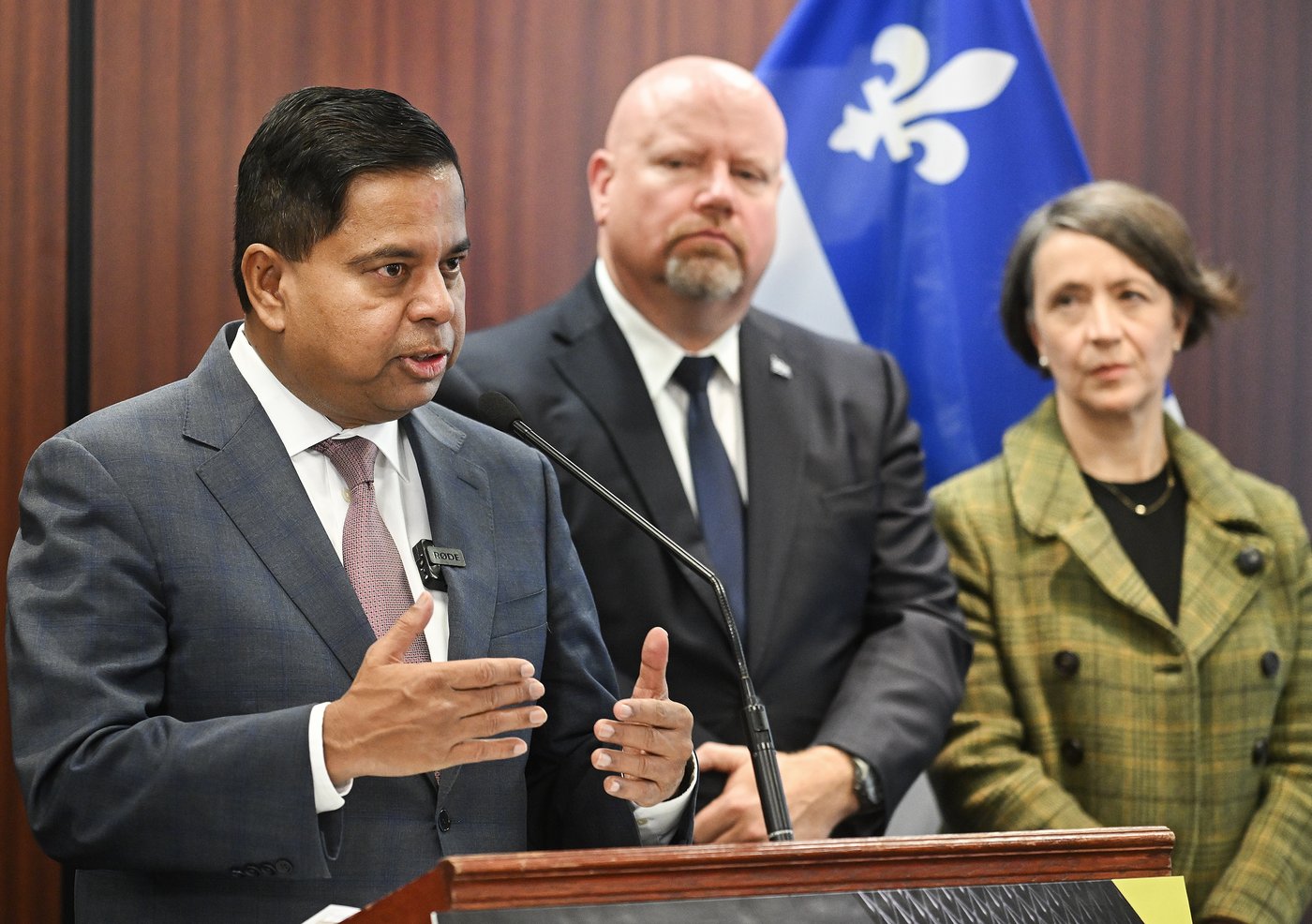
“These are firearms designed for war, for killing people,” said Public Safety Minister Gary Anandasangaree. “They have no place in our communities.”
The government says compensation will be determined primarily on a first-come, first-served basis.
In the spring, owners whose declarations are approved will be invited to finalize their claims and schedule appointments to turn in their guns to the RCMP, local police or a mobile collection unit.
Prohibited firearms and devices must be disposed of — or permanently deactivated — by the end of an amnesty period on Oct. 30.
The government says anyone in possession of a banned firearm or device after the amnesty period will be breaking the law and could face criminal prosecution.
“The deadlines are real — please heed them,” Anandasangaree told a news conference Saturday in Montreal.
Liberal MP and secretary of state for nature Nathalie Provost, who was shot by a gunman at Montreal’s École Polytechnique in 1989, and Québec Public Security Minister Ian Lafrenière also appeared at the announcement.
“It’s a reality now,” Provost said. “We are enforcing the law and doing something to remove the assault-style weapons from our streets.”
Federal officials said at a technical briefing that almost $250 million has been earmarked to compensate people who take part in the program by turning in their firearms or having them deactivated by a certified gunsmith.
The government anticipates the money will cover compensation for about 136,000 firearms.
Owners of banned guns who do not take part in the program can also comply with the law by deactivating their firearms at their own expense, turning them in to local police for no compensation or exporting them if they hold an export permit.
During an initial phase of the program, more than 12,000 firearms were collected from businesses, with approximately $22 million in compensation paid out.
The federal government has budgeted more than $742 million for the overall cost of the program, dating from 2020.
Firearm rights advocates and the federal Conservatives have denounced the program as a poor use of taxpayer dollars targeted at law-abiding gun owners.
Anandasangaree acknowledged Saturday that the program faces hurdles in Alberta and Saskatchewan, where officials have criticized the effort.
“There are legal impediments that have been deliberately placed on this program being implemented in those two provinces,” he said.
“We’re hopeful that we can find compromises where they too can either deactivate or submit their firearms for compensation.”
Several groups that advocate stricter gun controls said Saturday the national launch of the buyback program is “a win for public safety in Canada” that addresses the risks posed by firearms ill-suited for hunting.
The groups included PolySeSouvient, which was formed in response to the Polytechnique shooting, the National Association of Women and the Law, Danforth Families for Safe Communities, and Canadian Doctors for Protection from Guns.
They warned, however, that the buyback will succeed only if the federal government acts quickly to end sales of new models of the SKS rifle, which is not among the banned firearms.
The SKS is commonly used in Indigenous communities to hunt for food. It has also been used in police killings and other high-profile shootings. Officials are reviewing the firearm’s classification.
“If the government fails to ban new sales, taxpayer-funded buyback money could be used to purchase such weapons, rendering the buyback a failure,” the groups said in a statement.
Critics stressed the program’s expense and its underwhelming results during a pilot project in Cape Breton, where the government collected only 25 of a hoped-for 200 firearms.
“The federal government needs scrap this program because every dollar wasted on the confiscation is a dollar that can’t be used to stop the real problem of illegal gun smuggling,” said Gage Haubrich, Prairie director of the Canadian Taxpayers Federation, in a release.
Some police associations have raised similar concerns that the move will do little to reduce crime while draining resources from fighting it.
The Canadian Coalition for Firearm Rights on Saturday called the program “ineffective and divisive.”
This report by The Canadian Press was first published Jan. 17, 2026.
— With files from Christopher Reynolds in Montreal
News from © The Canadian Press, . All rights reserved.
This material may not be published, broadcast, rewritten or redistributed.

This site is protected by reCAPTCHA and the Google Privacy Policy and Terms of Service apply.
Want to share your thoughts, add context, or connect with others in your community?
You must be logged in to post a comment.