Elevate your local knowledge
Sign up for the iNFOnews newsletter today!
Sign up for the iNFOnews newsletter today!
Selecting your primary region ensures you get the stories that matter to you first.

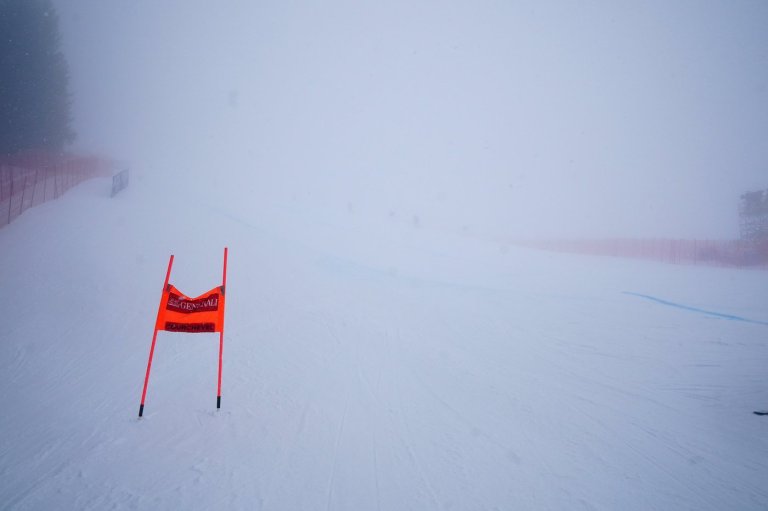
TORONTO — Climate change is rapidly shrinking the number of reliable hosts for the Winter Olympics and Paralympics, say Canadian researchers studying how to adapt the Games as a new paper floats the idea of a unified event or multi-country hosts.
The study published Wednesday builds on recent research co-authored by the University of Waterloo’s Daniel Scott that suggested about half of a possible 93 locations could reliably host the Olympics in February by mid-century if global warming continues on its current trajectory.
For the Paralympics held in March, the outlook is far worse. Under that same trajectory, only 22 locations are considered reliable hosts by 2050, down to 16 by 2080.
Scott and his co-authors at the University of Toronto and Austria’s University of Innsbruck say improving the reliability of the Paralympics should be a key priority before the 2038 Games are awarded.
“That is the challenge that the (International Olympic Committee) and (International Paralympic Committee) has to really grapple with,” said Scott.
The new research says unifying the Games in February is one strategy. A merger could support sponsorship and visibility for the Paralympics, but it also runs the risk of being overshadowed, the study says. The sheer size of a merged Games would also make it increasingly complex to host and possibly cut out smaller cities.
Another idea Scott and his co-authors say is promising would be shifting both Games earlier by two to three weeks. The study suggests that nearly doubles the number of reliable Paralympic locations by 2080 with only a small cut to the list of potential Olympic hosts.
“So that was really positive to find that maybe there are some workable solutions,” said Scott. “We’re putting some numbers to that strategy.”
Other strategies in the paper include a regional or multi-country host bid. A host such as Munich could partner with a smaller climate-reliable Austrian city to hold the snow sports, Scott said. He also floated the idea of a “Quebec-New England” Games where Montreal and Quebec City, which don’t have the elevation for a standard men’s downhill skiing event, team up with Vermont or New Hampshire.
The idea isn’t entirely new. Innsbruck in 2017 dropped a bid that would have spread the Games out among existing venues in the Austria, southern Germany and northern Italy after it was voted down in a referendum.
The research also suggests snowmaking, despite its water and energy demands, will be critical to the future of the Games. Without it, the study suggests only seven places could reliably host the events right now, down to four or fewer by mid-century.
Snowmaking has been used at each Winter Games since Lake Placid in 1980, but Beijing was the first to rely on it almost entirely in 2022.
At next month’s Milan Cortina Games, organizers plan to make about 2.4 million cubic metres of snow. When Cortina hosted in 1956, no manufactured snow was used, though some was trucked in by the Italian army from the Dolomites.
The study says those who oppose snowmaking at the Winter Games would “condemn” the events to increasingly unfair and unsafe conditions for athletes, until snow sports are excluded entirely. The study suggested an end to snowmaking was no more an option than moving hockey back outside, as it was in the early Winter Games.
Finding ways to make snowmaking more sustainable must be a priority, the study said.
In a statement, co-author Madeleine Orr said “no sport can escape the impacts of climate change.”
The future of the Games will depend on whether the world can keep global warming, driven by fossil fuel emissions, below two degrees, the study says. In that world, there are an additional 24 locations that could reliably host a late-century Olympics compared to a scenario where emissions are high.
“The world’s best athletes, who have dedicated their lives to sport, deserve nothing less than the best conditions that can be provided sustainably. The winter sport community must work together to find solutions to adapt to climate change and achieve the goals of the Paris Climate Agreement,” said Orr, a sport ecology professor at the University of Toronto.
The study was published in the peer-reviewed journal Current Issues in Tourism and co-authored with Robert Steiger at Austria’s University of Innsbruck.
Previous research co-authored by Steiger and Scott showed that of the 21 hosts to date, almost half would not be “climatically reliable” by mid-century. A location is considered unreliable if it didn’t have sufficient snow depth or cold temperatures in 75 per cent of its winters. To be labelled reliable, locations had to have both in nine out of 10 winters.
Calgary was one of the most reliable — one of only four locations that could host a March Paralympic Games by late-century under a scenario where planet-warming emissions remain high.
Vancouver starts to get “climatically risky” by mid-century, the study found. Rain and high temperatures plagued snow events in the North Shore Mountains overlooking Vancouver during the 2010 Games. Scott said if all the snow events were instead hosted in Whistler or interior British Columbia, Vancouver could be reliable again.
That 2018 research eventually got the attention of the International Olympic Committee. Scott said shortly after they presented their findings, the IOC paused the bidding race for the 2030 Games and cited the need to further study the effects of climate change.
Scott and Steiger were commissioned by the IOC to expand their original analysis to 93 locations, including mountain ranges with ski runs approved for elite competition. The highest-elevation ski resorts in each of those ranges were assessed in the 2024 study.
The Games now require snow competition venues to be climate-reliable until at least mid-century.
This report by The Canadian Press was first published Jan. 21, 2026.
– With files from The Associated Press
News from © The Canadian Press, . All rights reserved.
This material may not be published, broadcast, rewritten or redistributed.

This site is protected by reCAPTCHA and the Google Privacy Policy and Terms of Service apply.
Want to share your thoughts, add context, or connect with others in your community?
You must be logged in to post a comment.