Elevate your local knowledge
Sign up for the iNFOnews newsletter today!
Sign up for the iNFOnews newsletter today!
Selecting your primary region ensures you get the stories that matter to you first.
MONTREAL — After more than seven years in power, Quebec Premier François Legault announced on Jan. 15 that he would step down after the Coalition Avenir Québec chooses his replacement.
The upcoming leadership race is the first in the CAQ’s history, as Legault co-founded the party in 2011 and has served as its only leader.
The party says it will announce the rules for the leadership race on Jan. 22, and while no candidates have officially announced they intend to run, several names are circulating. Other high-profile candidates have already bowed out.
Here are some of those considered to be in the running:
—
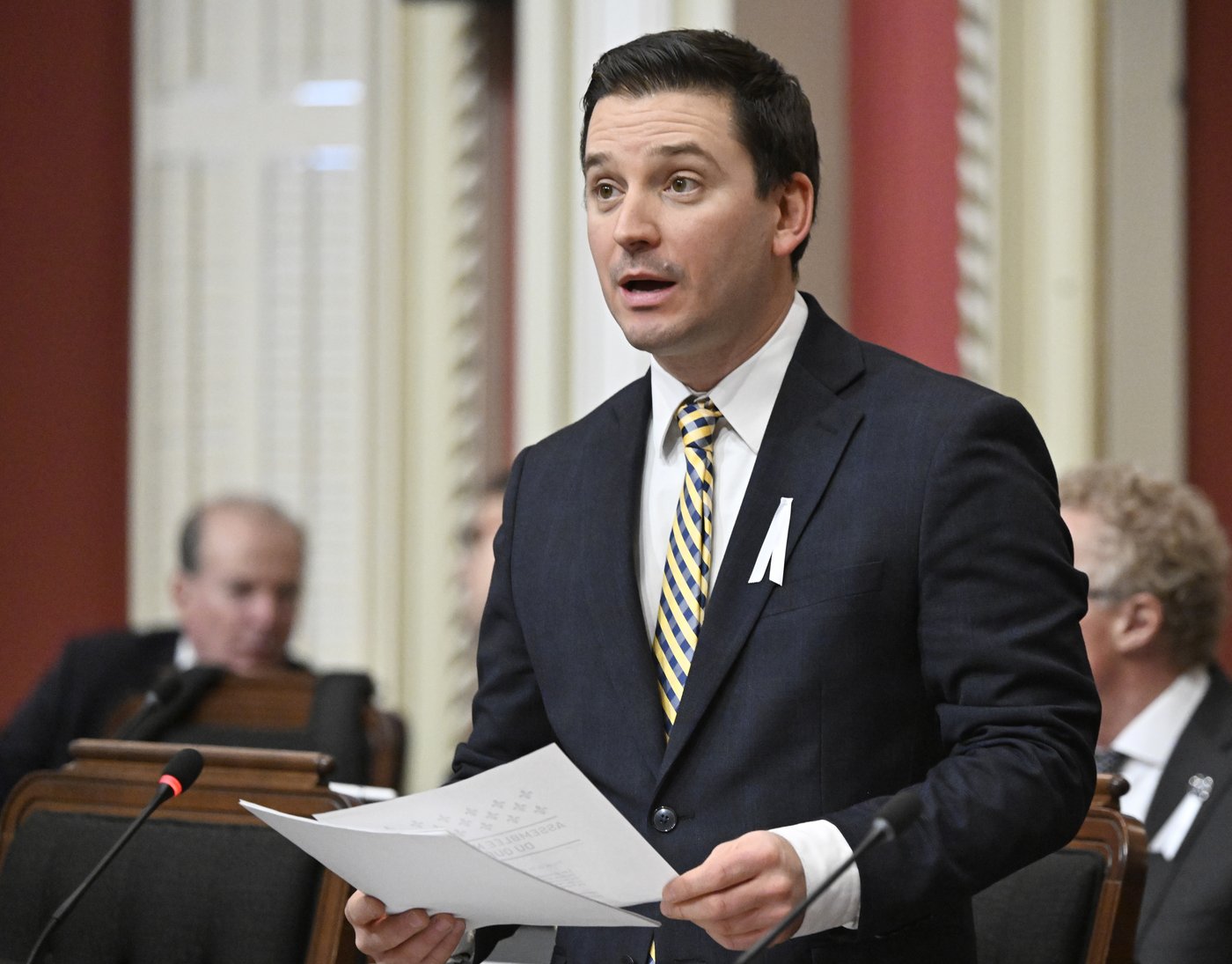
Simon Jolin-Barrette
Education: Université de Sherbrooke, master of laws; ENAP public administration graduate school, master of public administration.
Before politics: Lawyer for City of Montreal.
Political record: Jolin-Barrette was first elected in riding of Borduas during the April 7, 2014, provincial election, winning by 99 votes over former Parti Québécois higher education minister Pierre Duchesne. He was re-elected easily in the 2018 and 2022 general elections. In the first CAQ mandate — 2018-2022 — he served as immigration and francization minister, bringing in the province’s secularism law, known as Bill 21, in 2019. The law banned religious symbols on the job for certain public sector employees in positions of authority, including teachers, police, judges, and prosecutors.
In June 2020, he was appointed justice minister but retained the portfolios pertaining to secularism, parliamentary reform and the French language. He piloted Bill 96, the province’s updated French-language law, passed in May 2022. Jolin-Barrette also introduced specialized tribunals for conjugal and sexual violence cases in 2021. He was returned to cabinet after the 2022 election as justice minister. He has been the CAQ parliamentary leader since October 2018.
Quote: “Over the past few days, I’ve spoken with several colleagues, some of whom have expressed their support and endorsement … and that’s very important because the CAQ is a team, it’s the third way,” Jolin-Barrette told reporters on Jan. 21 in Quebec City, saying he’s “seriously considering” running.
—
Christine Fréchette
Education: HEC Montréal, degree in business administration, specializing in economics and international trade; Université Laval, master’s degree in international relations.
Before politics: U.S. political analyst, political staffer, president of Chambre de Commerce de l’Est de Montréal.
Political record: Fréchette entered provincial politics with the CAQ, winning the riding of Sanguinet during the October 2022 provincial election. Considered a high-profile candidate, she was immediately named immigration and French-language minister by Legault. On Sept. 5, 2024, Fréchette was tapped to replace Pierre Fitzgibbon as economy, innovation and energy minister.
Quote: “The decision I’m currently making isn’t just a personal one; it’s also a collective process. I’m working through my thinking, and what’s helping me along the way is exchanging ideas with my colleagues. I’m taking the pulse of the situation, seeing how they see things. What’s their interpretation, what would they like to see put forward?” Fréchette told reporters ahead of a cabinet meeting in Quebec City on Jan. 21, saying she would announce a decision soon.
—
Bernard Drainville
Education: University of Ottawa, bachelor of political science, communication; London School of Economics and Political Science, master in international relations.
Before politics: Journalist, political commentator, radio host.
Political record: A star candidate during the 2022 provincial election, Drainville won the Quebec City-area riding of Lévis, and served as education minister until September 2025, when he was moved to the environment portfolio. He used to be a member of the Parti Québécois, first elected in the March 26, 2007, provincial election and re-elected in 2008 and 2012, when PQ took power with a minority government. He became minister for democratic institutions and introduced the ill-fated charter of values, which aimed to prohibit public sector workers from wearing religious symbols. He was re-elected in 2014 in the official Opposition, but quit in June 2016 to return to radio.
Quote: “I think we need to rely on experience, and I think we need to unite Quebecers, not bicker, and work with the other provinces to address the threats. So, that’s what I’m thinking right now,” Drainville told reporters on Jan. 21, adding he has the green light from his family to run but is waiting to see the rules of the leadership race.
—
François Bonnardel
Education: Royal Military College Saint-Jean, officer cadet training, recruit camp training (soldier), pedagogical training in pure sciences.
Before politics: Businessman
Political record: Member for the riding of Granby, in the Eastern Townships. First elected to the national assembly under the Action démocratique du Québec banner in the former riding of Shefford on March 26, 2007, when the party became official Opposition. He was re-elected in 2008 for the ADQ and eventually joined the Coalition Avenir Québec when the two parties merged. Bonnardel was re-elected in 2012 and 2014 with the CAQ.
After winning again in 2018, he was named transport minister under Legault’s first government. In 2022, during the party’s second mandate, he held the role of public security minister until he was shuffled out of cabinet in September 2025. That shuffle coincided with the fallout from the $500-million cost-overrun scandal at the province’s auto insurance board, over which he oversaw during his time as transport minister. Bonnardel later told a public inquiry he was kept in the dark about the rising costs with the project for a new online platform at the auto board. He said he was extremely disappointed with being forced from cabinet, but remained in caucus.
Quote: “It’s much too early to ask me that question,” Bonnardel told Paul Larocque of TVA following Legault’s announcement, saying that before making a decision on running for party leader, he would need to know the rules of the leadership race.
—
Jean-François Simard
Education: Université du Québec à Montréal, bachelor in psychosociology of communication; Université du Québec à Rimouski, master in regional development; Université Laval, PhD in sociology.
Before politics: Social sciences professor at Université du Québec en Outaouais.
Political record: Simard was first elected to the legislature with the Parti Québécois in 1998 in the Quebec City-area riding of Montmorency, serving until 2003, when he was defeated by the Liberal candidate. He returned to provincial politics in 2018, winning the riding while running for the CAQ. He was re-elected in 2022 and in September 2025 he was named natural resources minister and minister for the Quebec City region during a major cabinet shuffle.
Quote: “The upcoming leadership race must be centred on ideas. I intend to contribute actively to it in one way or another. Whatever happens, the (Quebec City region) must continue to shine and remain fully involved in the major decisions to come,” Simard said Monday on social media.
—
Potential candidates who’ve announced they won’t seek the leadership:
Ian Lafrenière, public security and indigenous affairs minister, announced on Jan. 21 he would not seek the leadership. Other ministers who have withdrawn from consideration include Eric Girard, finance minister; Sonia LeBel, education minister; Geneviève Guilbault, municipal affairs minister; and Christopher Skeete, international relations minister.
Olivier Primeau, a Quebec entrepreneur, announced on Jan. 16 he would not add his name to the list of potential successors to Legault, saying he has personal and entrepreneurial projects he wishes to see through.
This report by The Canadian Press was first published Jan. 21, 2026.
News from © The Canadian Press, . All rights reserved.
This material may not be published, broadcast, rewritten or redistributed.

This site is protected by reCAPTCHA and the Google Privacy Policy and Terms of Service apply.
Want to share your thoughts, add context, or connect with others in your community?
You must be logged in to post a comment.