Elevate your local knowledge
Sign up for the iNFOnews newsletter today!
Elevate your local knowledge
Sign up for the iNFOnews newsletter today!
Select Region
Selecting your primary region ensures you get the stories that matter to you first.
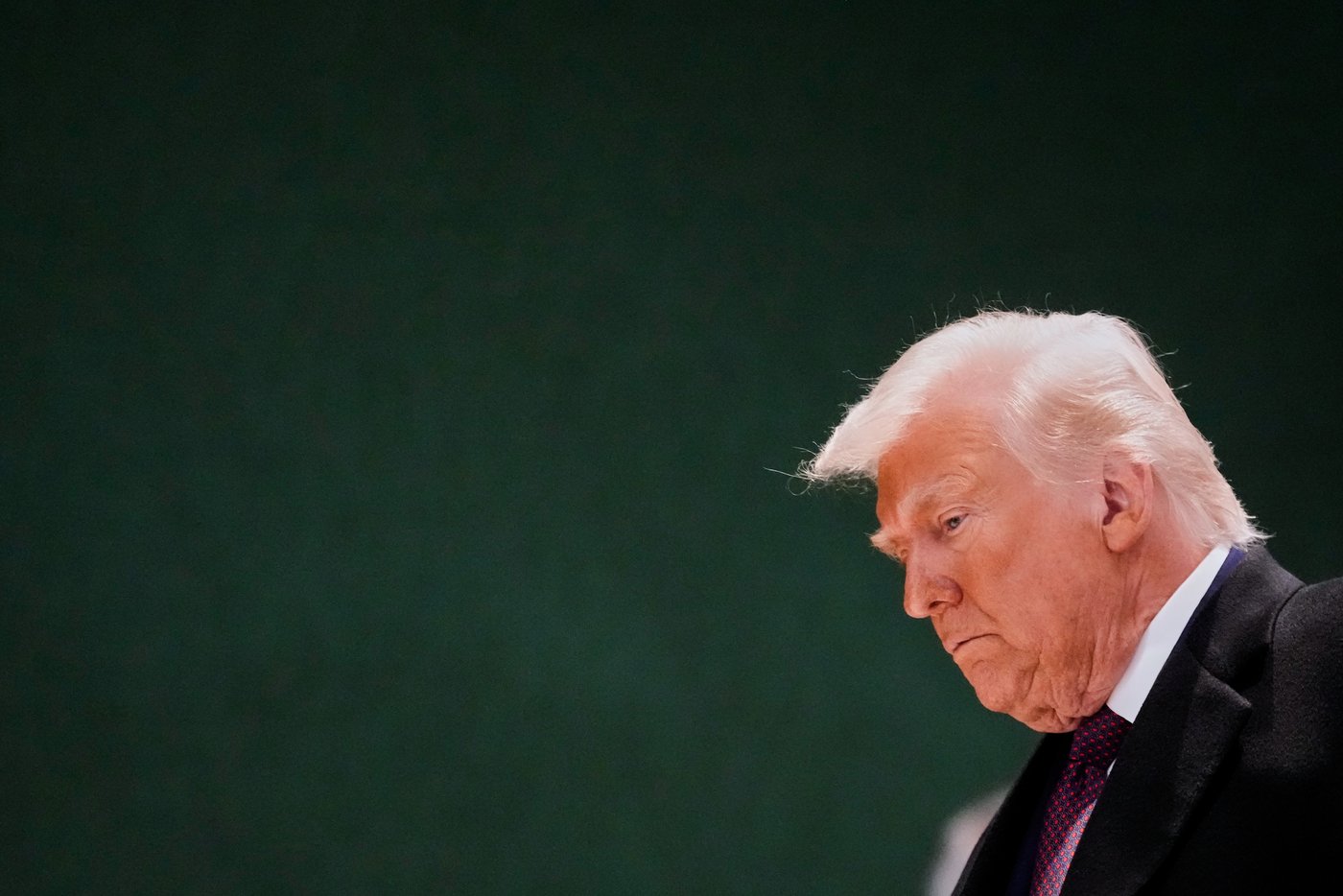
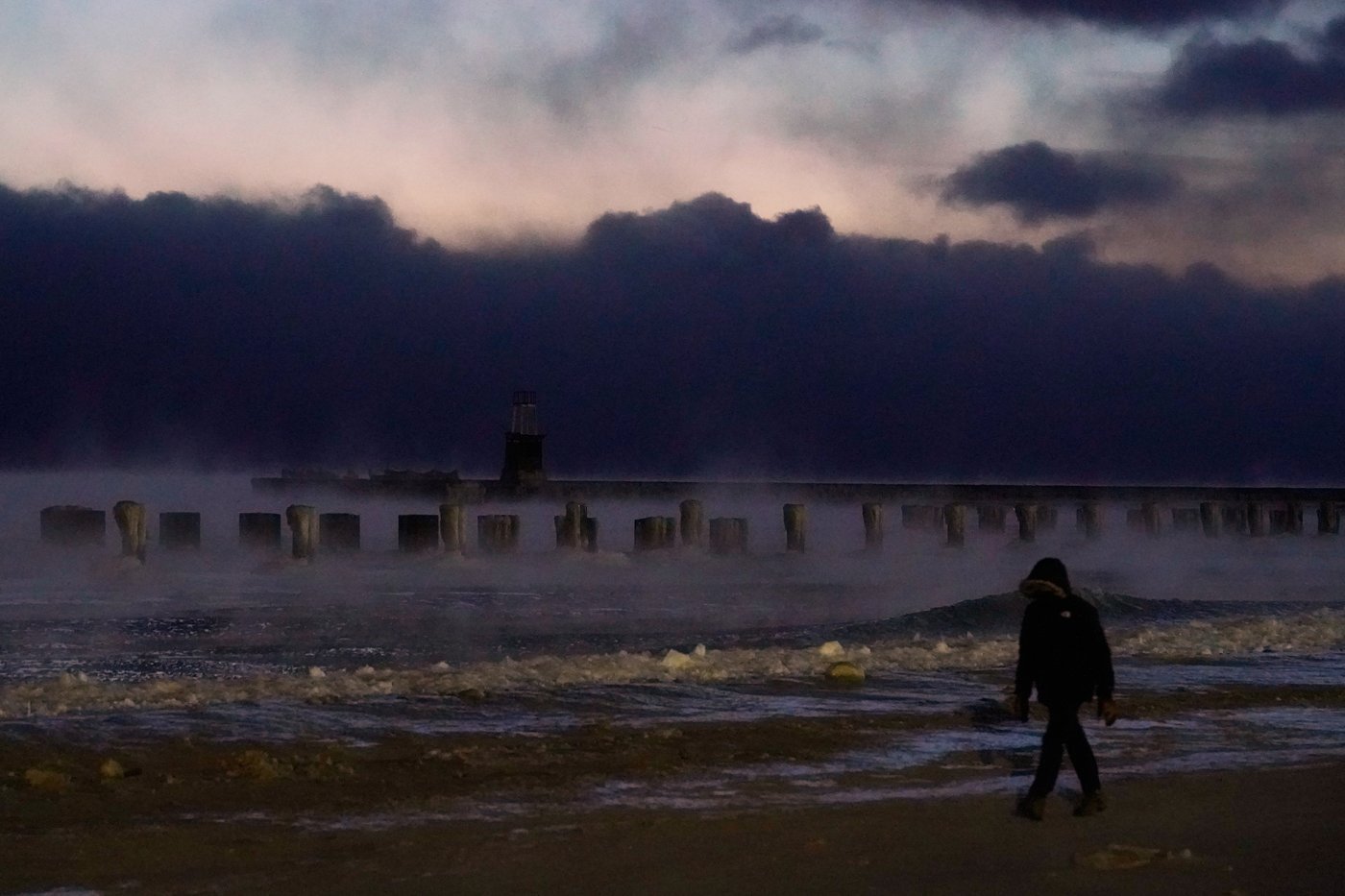
As much of the United States faces numbing cold, treacherous ice and heavy snow from an enormous winter storm, President Donald Trump used social media to dispute that the world is warming.
In a 25-word post on his Truth Social account, the president Friday questioned how the world can be warming when it is so cold, and called the temperatures nearly unprecedented. He also called advocates and scientists “environmental insurrectionists.”
More than a dozen scientists Friday told The Associated Press the president’s claims were wrong. They point out that even in a warmer world, winter and cold occur, and they never said otherwise. They note that even as it is cold in the eastern United States, more of the world is warmer than average. They also stressed the difference between daily and local weather and long-term, planetwide climate change.
Meteorologists also said that global warming over the past couple of decades may make this cold seem unprecedented and record-smashing. But government records show it has been much colder in the past.
“This social media post crams a remarkable amount of inflammatory language and factually inaccurate assertions into a very short statement,” said climate scientist Daniel Swain of the California Institute for Water Resources. “First of all, global warming continues —and has in fact been progressing at an increased rate in recent years.”
Here’s a closer look at the facts:
Climate change is still here
TRUMP: “WHATEVER HAPPENED TO GLOBAL WARMING???”
THE FACTS: “Global warming hasn’t gone anywhere, it’s here,” Princeton University climate scientist Gabriel Vecchi said.
The last three years have been the warmest on record, increasing at significantly faster rate than they had been, data shows.
Globally, winter temperatures — December, January and February — have increased by 1.3 degrees Fahrenheit (0.72 degrees Celsius) since 1995, with the previous two winters the warmest on record, according to National Oceanic and Atmospheric Administration records. The United States has warmed slower than the rest of the world, about half a degree Fahrenheit (0.28 degrees Celsius) since 1995. Last month was the fifth-hottest December on record globally and in the United States.
Local cold differs from longer, global warming
Scientists note they talk about “global” when it comes to warming. The United States is only 2% of Earth’s area — and west of the Rockies isn’t that cold for this time of year. Global temperature maps show two-thirds of the United States is many degrees colder than normal and same for Russia. But Australia, Africa, the Arctic, Antarctica, Asia, Canada, much of Europe and even Greenland are warmer than normal.
“Even as the Earth warms, cold days and cold winters are not projected to disappear, just become fewer in number,” said Princeton University climate scientist Michael Oppenheimer. “In addition, what happens in the U.S. during a brief period of days is not an indication of what’s happening to the U.S. as a whole or the Earth as a whole over the long term.”
There is even a theory among many scientists — but it is not yet a consensus — that the American East is getting more extreme winter outbreaks because of a warming Arctic, which is part of climate change.
“This is an active research area with uncertainty,” said Northern Illinois University meteorology professor Victor Gensini. “One hypothesis is that Arctic warming reduces the temperature contrast between the pole and mid-latitudes, which can sometimes weaken or distort the jet stream and allow cold Arctic air to spill south. That said, not every cold outbreak can or should be attributed to climate change. Weather still has large natural variability.”
It has been colder in the past
TRUMP: “Record Cold Wave expected to hit 40 States. Rarely seen anything like it before.”
THE FACTS: Yes we have.
The National Weather Service forecasts Minneapolis to be minus-11 degrees on Saturday (minus-24 Celsius) and minus-13 (minus-25 Celsius) on Sunday, but that is nowhere near the records of minus-33 and minus-31 (minus-36 and minus-35 Celsius) set in 1904 there. Chicago is supposed to drop to 2 degrees (minus-17 Celsius) Saturday and 8 degrees (minus-13 Celsius) Sunday, but the record for those days are minus-15 and minus-20 (minus-26 and minus-29 Celsius) from 1897 and as recently as Jan. 30, 2019 it hit minus-23 (minus-31 Celsius) in Chicago. Fargo, North Dakota and Washington, D.C. are forecast to not come within a dozen degrees of the coldest day on record.
“Truly historic cold waves, like those in 1978–79, 1983–85, or earlier decades, were often colder and more persistent over large regions,” Gensini said. “We are also less accustomed to severe cold now because winters overall are warmer than they were several decades ago.”
Don’t expect too many broken records
Kristina Dahl, vice president of science at Climate Central, said a check of U.S. weather stations with at least 50 years of data finds 45 record lows set in January of this year — compared to 1,092 record highs.
While some daily records may fall, especially in the Plains, Texas and Louisiana, it will be “very hard to break long-period (100 years+) records with this cold blast,” said Ryan Maue, who was NOAA’s chief scientist in the end of Trump’s first term. Maue forecast that on Monday the Lower 48 states will average a low of 10 degrees Fahrenheit (minus-12 degrees Celsius) with more than 90% of the country below freezing. But in January 1985, the Lower 48 averaged a low of 4.1 degrees (minus-15.5 degrees Celsius), Maue tweeted.
Maue lauded Trump for “appropriately raising alarm about the impending severe cold. In a roundabout way, while he is trolling about global warming it seems to be on his mind.”
___
Find AP Fact Checks here: https://apnews.com/APFactCheck.
___
The Associated Press’ climate and environmental coverage receives financial support from multiple private foundations. AP is solely responsible for all content. Find AP’s standards for working with philanthropies, a list of supporters and funded coverage areas at AP.org.
News from © The Associated Press, . All rights reserved.
This material may not be published, broadcast, rewritten or redistributed.

This site is protected by reCAPTCHA and the Google Privacy Policy and Terms of Service apply.
Want to share your thoughts, add context, or connect with others in your community?
You must be logged in to post a comment.