Elevate your local knowledge
Sign up for the iNFOnews newsletter today!
Sign up for the iNFOnews newsletter today!
Selecting your primary region ensures you get the stories that matter to you first.

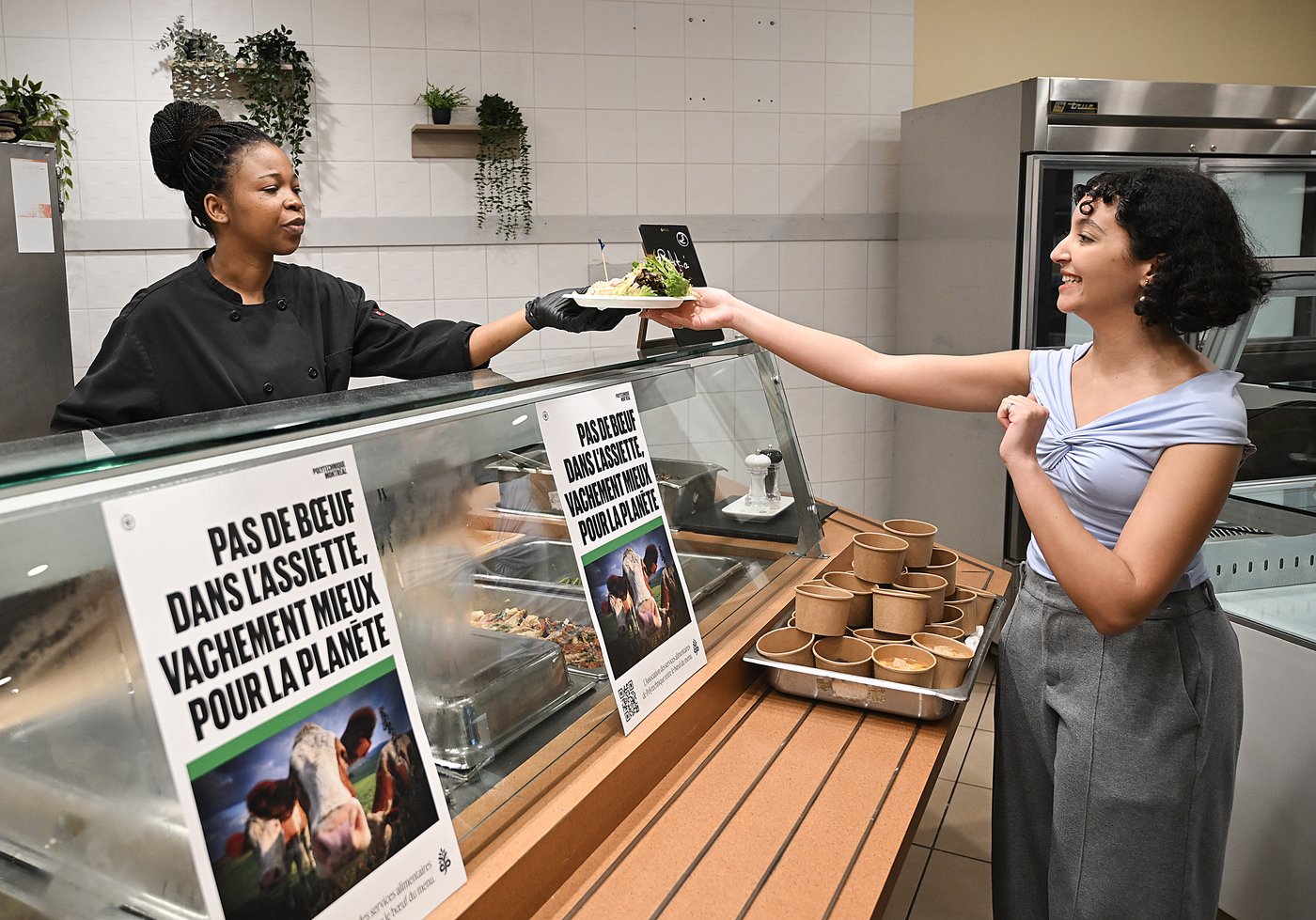
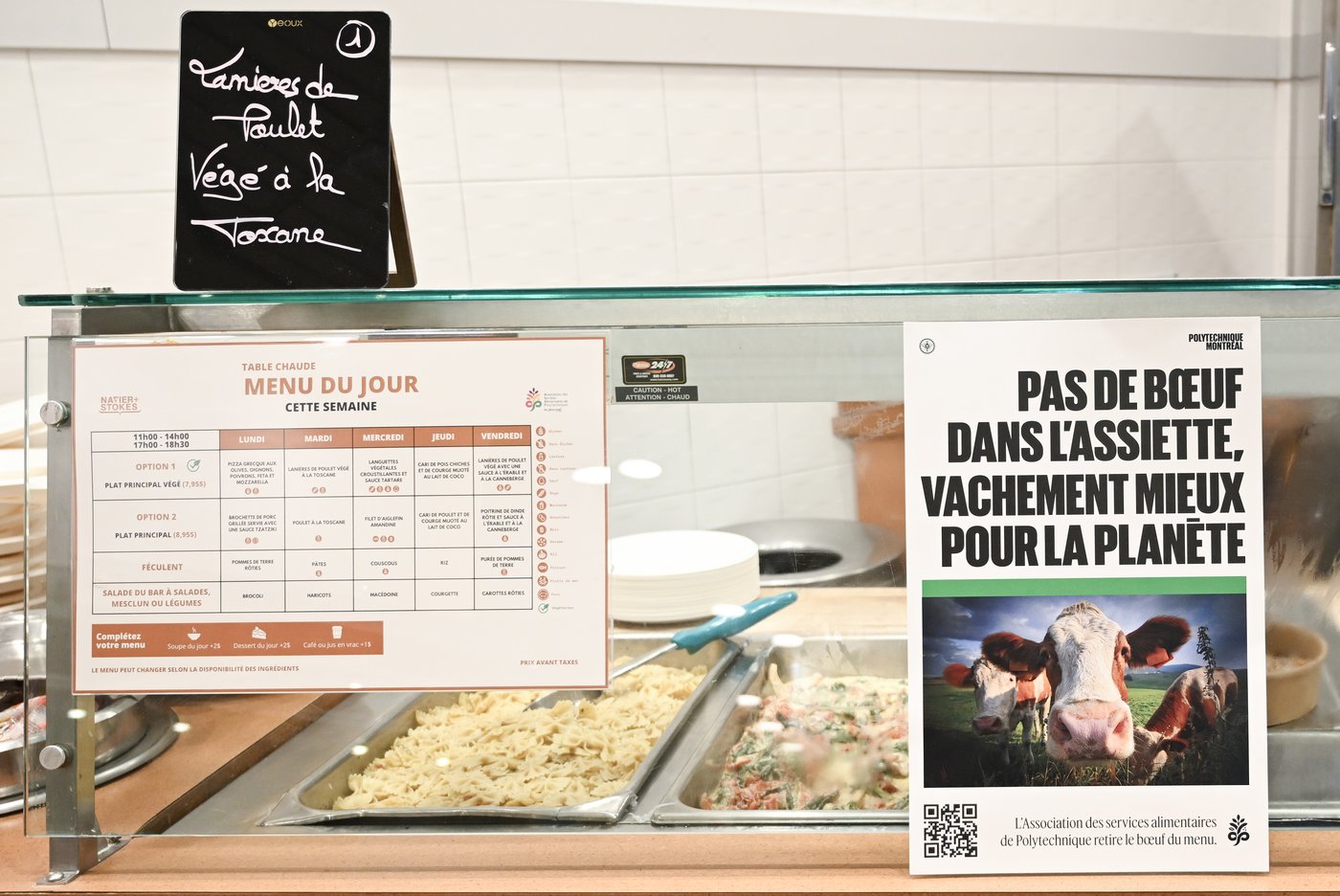
MONTREAL — A Montreal engineering school says it has removed beef from its cafeterias to reduce its carbon footprint.
Polytechnique Montréal started removing beef options in September from its six food stalls that serve about 2,500 meals a day to 10,000 students.
Patrick Cigana, director of Polytechnique’s office of sustainable development, said beef accounted for more than half of the cafeterias’ greenhouse gas emissions.
He cited data from a University of Oxford research platform showing that beef produces about 10 times the carbon emissions of chicken. Cigana said the school expects cafeteria-related emissions to drop this year, though full data is not yet available.
The decision meant removing some of the school’s most popular menu items. Three of the bestsellers — the beef burger, the Philly steak submarine, and the smoked-meat poutine — all contained beef.
“The beef burger alone accounted for about four to five per cent of our sales,” said Benoit Beauséjour-Savard, director of the Polytechnique Food Services Association, who is in charge of food services at the school.
To compensate for the loss of those high-selling items, the school expanded its food offerings rather than reducing student choice, Beauséjour-Savard said.
New options were added at the six food outlets, including a sushi bar, ramen bar, and poke bowl counter. The beef burger was replaced with chicken, chickpea, and black bean burgers.
“We wanted to offer a diverse selection and ensure that the withdrawal of beef is not as significant in the overall number of dishes available,” said Beauséjour-Savard.
He said the changes did not lead to higher prices, with most meals still costing under $10.
Students approached by The Canadian Press said they welcomed the changes.
Imane Chafi, 26, president of the Polytechnique graduate student association, said the new menus encourage her to eat a more varied diet and are a source of pride on campus. “It shows that students are also open-minded to this type of change,” she said.
Sophia Roy, 26, said she eats more often at school with the new changes implemented, “We are seeing real change happening at school, which reflects our values.”
Polytechnique Montréal, affiliated with Université de Montréal, says it’s the first post-secondary institution in North America to stop offering students beef.
But agricultural producers have criticized the decision.
“It’s really a shame to set aside excellent beef protein,” said Charles-Félix Ross, general director of the Union of Agricultural Producers.
“It is a narrow-minded view to think and believe that by eliminating beef from menus, we will truly promote, support, and sustain sustainable development, local purchasing,” he said.
There is significant research showing how animal products generally have a higher environmental impact than plant-based foods, according to the Intergovernmental Panel on Climate Change, a group made up of scientists and government officials from around the world.
Elliot Muller, an analyst at the International Reference Centre for Life Cycle Assessment and Sustainable Transition, said the findings of research on this topic underscore the reasoning behind the school’s decision to remove beef from its menus.
Three years ago, Polytechnique worked with the centre to calculate the carbon footprint of each menu item and advertise it at the cafeterias.
“We gave each item a grade, like a school report card, to really embed it in the student environment,” Cigana said.
“As a student, when you see that, you think, ‘I’m going to get an A. I have an A on my report card. When I eat, I want an A too,’” said Chafi.
Environmental groups at Polytechnique hope the move will go even further. “We expect Polytechnique to take note of this and gradually reduce the amount of meat offered,” said Olivier Verrette, 23, director of Polysphère, an environmental committee at the school.
Beauséjour-Savard said the cafeterias could target milk next, though the goal is not to eliminate animal protein entirely.
“It’s about encouraging the consumption of good food made with ingredients that produce the least emissions,” he said.
Other universities in Quebec are watching the initiative closely, Beauséjour-Savard said.
He said a group of food service directors — including those from Université Laval and major universities in the Greater Montreal area — are taking notes from Polytechnique.
“All it takes is for one of them to take the plunge,” he said.
This report by The Canadian Press was first published Jan. 27, 2026.
News from © The Canadian Press, . All rights reserved.
This material may not be published, broadcast, rewritten or redistributed.

This site is protected by reCAPTCHA and the Google Privacy Policy and Terms of Service apply.
Want to share your thoughts, add context, or connect with others in your community?
You must be logged in to post a comment.