Elevate your local knowledge
Sign up for the iNFOnews newsletter today!
Elevate your local knowledge
Sign up for the iNFOnews newsletter today!
Select Region
Selecting your primary region ensures you get the stories that matter to you first.
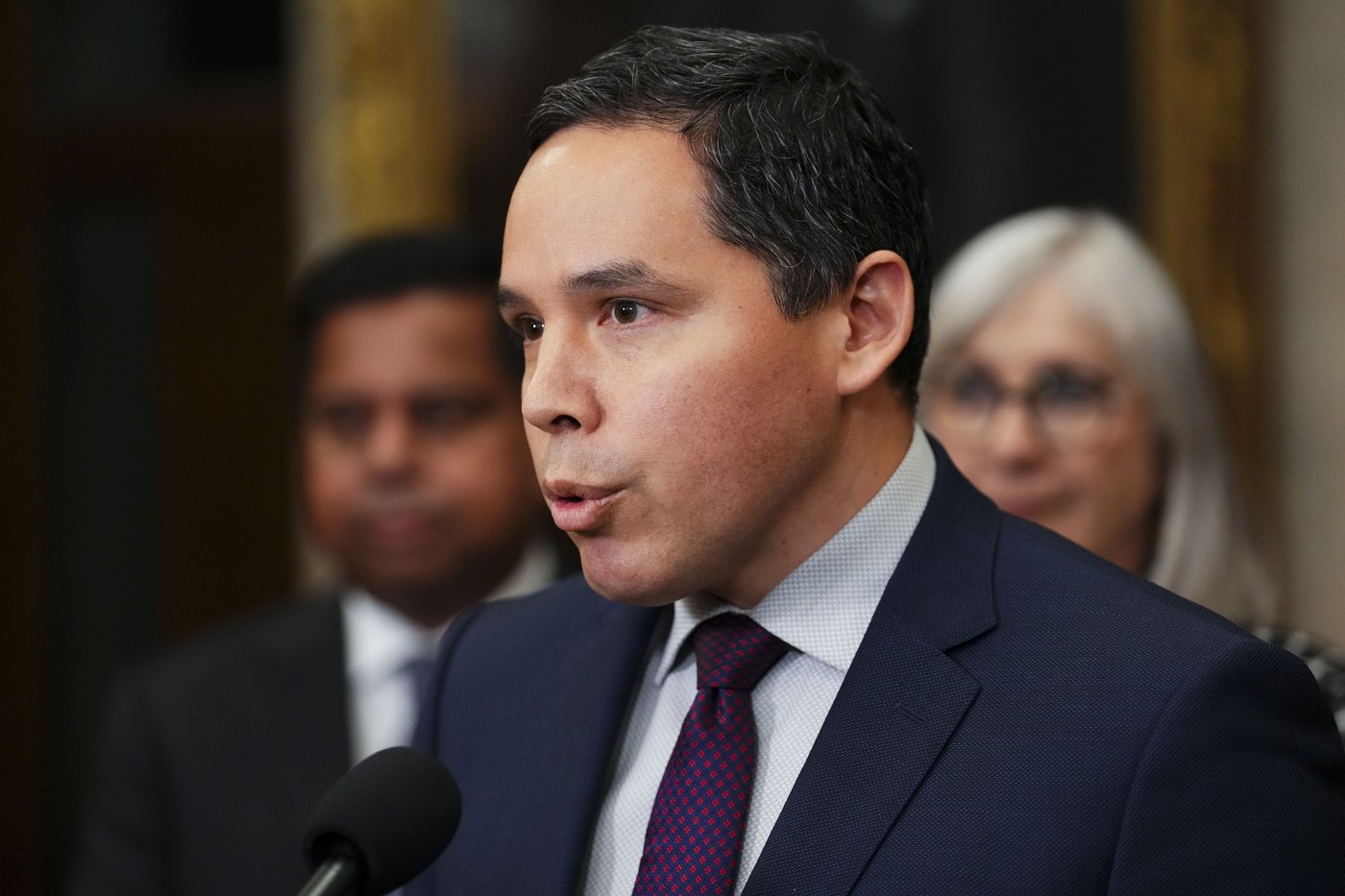
OTTAWA — The leader of the national organization representing Inuit says the federal government must bring them to the table when it makes its plans for defence spending in the Arctic.
Inuit Tapiriit Kanatami head Natan Obed said Wednesday Inuit want to avoid a repeat of their experiences during the Arctic military buildup of the early Cold War, which he said “radically changed” Inuit lives by allowing the “Canadian government to coerce Inuit off of our lands into settled communities.”
He was addressing the Nordic-Canadian Arctic Symposium, an Ottawa conference that featured ambassadors from Nordic states and Indigenous representatives from Greenland and Northern Europe.
The conference took place a week before Foreign Affairs Minister Anita Anand is expected to open a new Canadian consulate in Greenland — and roughly a week after U.S. President Donald Trump escalated and then tempered his demands for the United States to acquire the Danish territory.
“The ground is shifting again and we have to meet this moment,” Obed said.
“We need allyship, and we need people who are willing to think about a change in the way you think of this country, a change of the way you think of diplomacy.”
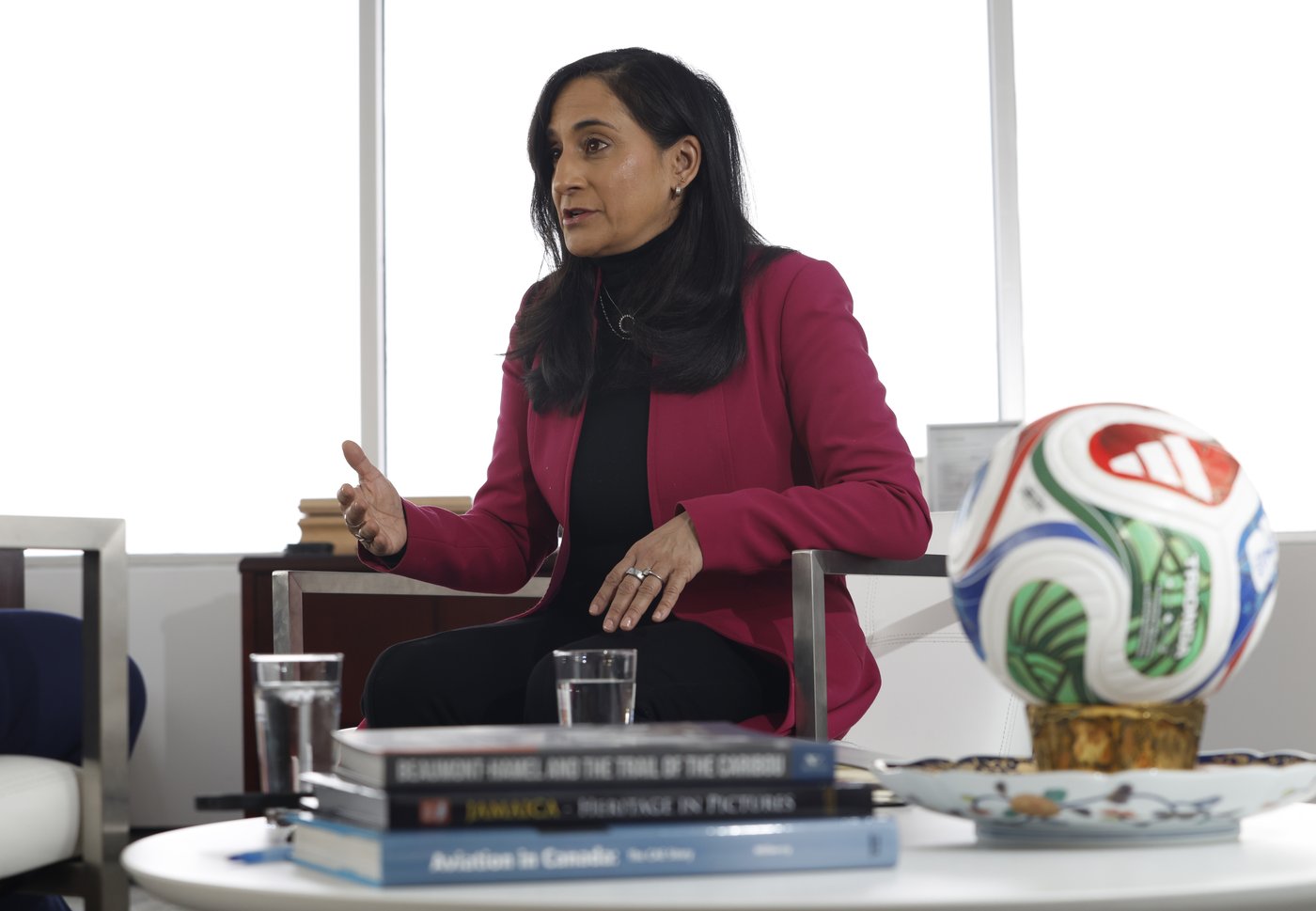
Addressing the event Wednesday, Anand said Ottawa’s growing focus on defending the Arctic will boost living standards in the region while ensuring that Inuit are at the table.
“This means decision-making based on respect, meaningful consultation and co-operation, as well as participating in economic benefits,” she said. “Security imposed without partnership is not sovereignty.”
Obed said that while Canada has taken positive steps in the past decade to integrate Indigenous Peoples into its decision-making, there are still significant shortfalls.
He cited the exclusion of Indigenous leaders from the formal meetings Prime Minister Mark Carney holds with premiers, and Quebec’s legal objection to transferring authority over Indigenous child welfare to Indigenous nations.
Obed noted Denmark included Greenland representatives in the delegation it sent to the White House, and said he doubted Ottawa would bring Inuit leaders along if it held similar talks with Trump.
He said Carney’s argument earlier this month in his speech before the World Economic Forum — that great powers impose their will on smaller nations — could also describe Ottawa’s treatment of Indigenous nations.
“I couldn’t help but think of some of the terms that were used, and the application of those terms in our context — large, main powers only applying the rules of law when it is convenient, and excusing themselves when it is not,” he said.
“This is where the large, main powers oppress all those that they can. And instead of middle powers, it’s Indigenous powers.”
He also warned that American rhetoric about Denmark not doing enough to develop Greenland is likely going to be directed at Canada.
“The argument often starts with the colonial power has not done enough to improve the land … and so therefore they don’t actually have territorial authority over it,” he said.
“I guarantee you, that same rhetoric is coming to Canada and to the Canadian Arctic.”
The conference heard from representatives of the Sami people, an Indigenous group from northern Europe, about the need to include them in climate change adaptation and national security planning.
Anand said Nordic states have known of threats to the Arctic since Russia’s full-scale invasion of Ukraine in 2022.
Since then, Trump has argued that Russian and Chinese ships are circling Greenland — despite being contradicted by academics funded by the U.S. military — and he has mulled using military force to secure the island.
“Recent weeks have indicated that the Arctic is no longer a low-tension region, and it is increasingly the front line of strategic competition. The international discourse around Denmark and Greenland have highlighted this,” Anand told the conference.
“Defending Canada’s Arctic sovereignty is an unquestionable national security priority of this government. It is not a secondary concern. It is not a regional issue, but central to how we protect Canada — in our front yard — and how we contribute to global security.”
She listed various investments Ottawa is undertaking in the North to bolster defence, and repeated her argument that NATO needs to shift its focus more toward the Arctic.
Danish Ambassador to Canada Nikolaj Harris told the conference that Anand will visit Copenhagen next week before heading to Nuuk to open Canada’s consulate in Greenland.
In a roundtable with reporters, Nordic ambassadors said they hope the consulate can help deepen their partnerships with Canada.
Icelandic Ambassador Audbjorg Halldorsdottir said Canada’s consulate in Nuuk “is going to co-locate with Iceland at the outset of their stay.”
Harris said he hopes the diplomatic mission will spark “concrete co-operation” that benefits people in both countries.
“There is a wide range of areas where we can take inspiration from each other in the North. They have solutions in Greenland that might be of inspiration for Iqaluit,” he said.
“I was in Yellowknife last week, and we had good conversation on some of the know-how we have in infrastructure and energy. For instance, how to use hydro energy up in the North under similar conditions. But also an area like waste-to-energy could be another one, (or) how to construct houses under very difficult circumstances.”
Finnish Ambassador Hanna-Leena Korteniemi said Canada and the Nordic nations are making progress on getting NATO to focus more on the Arctic, and said whatever comes next will require more resources and a greater public understanding of the threat posed by Russia.
“We need to collectively build up our capabilities,” she said. “We need to strengthen strategic communications.”
Greenland’s government pledged in February 2024 to open an office in Ottawa. Harris said those plans are still underway and the diplomatic mission “will most likely be hosted in the embassy of the Kingdom of Denmark.”
This report by The Canadian Press was first published Jan. 28, 2026.
News from © The Canadian Press, . All rights reserved.
This material may not be published, broadcast, rewritten or redistributed.

This site is protected by reCAPTCHA and the Google Privacy Policy and Terms of Service apply.
Want to share your thoughts, add context, or connect with others in your community?
You must be logged in to post a comment.