Elevate your local knowledge
Sign up for the iNFOnews newsletter today!
Sign up for the iNFOnews newsletter today!
Selecting your primary region ensures you get the stories that matter to you first.

Melody Leinweber’s latest tattoo is a stylized portrait of an ostrich with a colourful beak, pink and turquoise stars around its head and a twinkle in its eyes.
The mother of four from West Kelowna, B.C., said the inspiration was twofold — her daughter had wanted an ostrich for Christmas, and Leinweber never wanted to forget the 314 ostriches culled by the Canadian Food Inspection Agency last November after an outbreak of avian influenza on a British Columbia farm.
“I still haven’t been able to tell my kids that the ostriches aren’t here anymore,” she said.
Leinweber is not alone in mourning the flock at Universal Ostrich Farms, shot by marksmen on a night of cold, drenching rain.
Support for the farm’s battle to save its flock had grown into a movement, linking locals like Leinweber to members of the administration of U.S. President Donald Trump and leaders of the pandemic-era “Freedom Convoy” protest.
With their large eyes, long eyelashes and dance-like displays, the flock of ostriches in a quiet valley in southeastern B.C. became a rallying point for many who saw the looming cull as gross overreach by a government agency.
Yet rather than disbanding after the cull, the movement persists, including a Facebook group of more than 80,000 members.
Supporters post ostrich-themed artwork, clothing, stuffed animals and AI-generated images showing ostriches wearing Santa hats or waving Canadian flags. Some, like Leinweber, have shared photos of tattoos honouring the birds.
The group is also replete with content decrying “globalist elites,” calling flu shots “poisonous,” and saying the COVID-19 pandemic was planned.
Some in the group claim the ostriches contained antibodies that would have provided a cure to diseases across the world, and that’s why they were destroyed. Many believe the CFIA secretly removed some of the birds for its own purposes, an accusation the agency denies, saying it disposed of all the material it seized.
After the cull, a self-described “psychic” offered a “remote viewing” of the ostriches said to have gone missing.
Members make occasional off-line forays, staging small protests against the CFIA.
Leinweber had made the 185-kilometre drive to the farm in southeastern B.C. on the day of the cull last Nov. 6, but she left before the slaughter began.
“I didn’t want to be there when the birds actually were to meet their fate because it just would have ripped my heart right in half,” she said.
Leinweber, for her part, said she didn’t want to “politically label” the farm’s plight.
“It’s just a simple question of what’s right and what’s wrong,” she said.
‘STANDING TOGETHER MATTERED MORE’
Katie Pasitney, daughter of farm co-owner Karen Espersen, said the support they’ve received has been surprising and “overwhelming in the most humbling way,” helping the family cope with the ordeal.
“We never really imagined this would grow beyond our farm, let alone resonate with people across Canada and the United States,” she said, responding to questions over email.
“People we had never met reached out with letters, prayers, donations, and messages of encouragement at a time when we felt completely broken.”
Pasitney said their supporters came from different backgrounds and held different political views, but they were unified in choosing compassion over division.
“They agreed that what happened was wrong, and that standing together mattered more than tearing each other apart for the most part,” she said.
Pasitney acknowledged misinformation circulating among the farm’s supporters and said it can “create unnecessary fear, polarization, and confusion,” and “ultimately hurt the very cause people care about.”
The farm itself had “always tried to encourage respectful dialogue, critical thinking, and fact-based discussion,” she said in her email.
Pasitney said the farmers don’t control what their supporters say or believe.
“But we are clear about what we stand for: unity, transparency, science, compassion, and accountability not hate, not violence, and not conspiracy thinking.”
The saga over the ostriches began in early December 2024, when birds began falling ill and dying on the farm near the tiny community of Edgewood, B.C.
A Federal Court ruling from May 2025 said the CFIA intervened after receiving an anonymous tip on Dec. 28, 2024, with tests on two carcasses swabbed on Dec. 30 coming back positive for highly pathogenic avian influenza the next day.
The cull was ordered 41 minutes later, prompting the farm to launch its nearly 11-month battle to save the survivors of the outbreak that went on to kill 69 ostriches.
Pasitney disputed whether the CFIA was in the dark about what was going on at the farm before the anonymous tip, saying the agency already knew by then that co-owner Dave Bilinski had contacted a veterinarian who wasn’t available at the time.
The CFIA consistently rejected the farm’s scientific claims, specifically that the birds had “rare and valuable genetics” that justified calling off the cull.
The May 2025 decision sided with the CFIA’s scientists.
“Simply put, the (farm’s) documentation has failed to establish the fundamental premise that its birds possessed genetics that are both rare and valuable, regardless of their epidemiological status,” Justice Russell Zinn ruled.
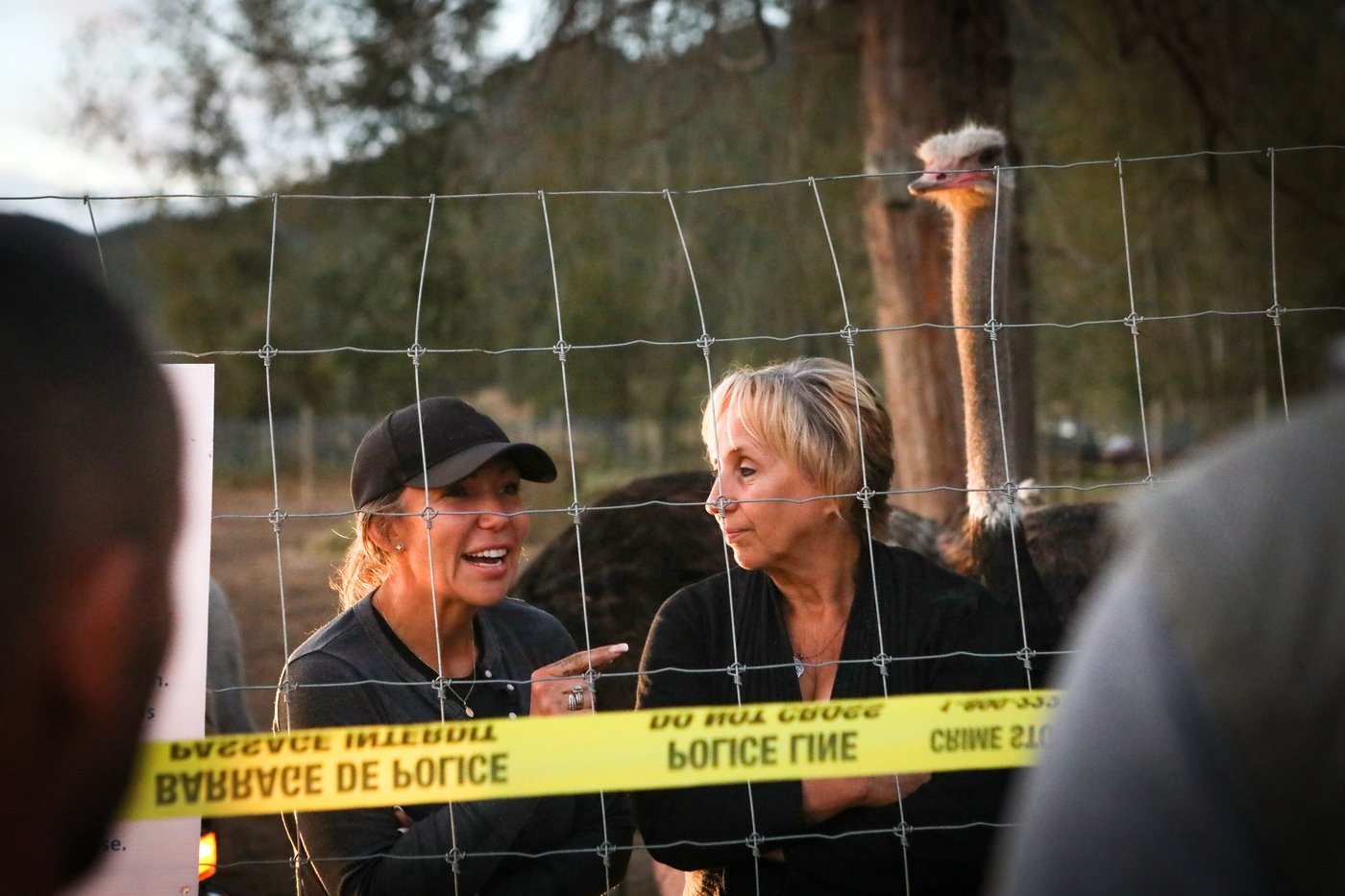
A series of court rulings did little to deter the farm’s supporters, who gathered at the farm, holding prayer circles and staging an “OstrichFest” concert.
Timothy Caulfield, an expert in health-related misinformation, said the movement illustrates a phenomenon that took off during the pandemic — when an issue becomes “more about your ideological flag and your community than what the evidence says.”
The cull order had sparked concern among animal rights advocates. But it also became a “cause célèbre” for the right wing, said Caulfield, a professor in the University of Alberta’s faculty of law and school of public health.
Since the pandemic, misinformation related to vaccines, the medication ivermectin and a host of other issues are increasingly tethered to political views, he said.
Caulfield said everyone, regardless of their political stripe, is exposed to an online world that’s “rigged” to create communities based on echo chambers.
“Our information environment feeds us stuff that increases our rage, increases our fear, and satisfies our hunger for our side being right,” he said.
Ostriches are unusual creatures, and the flock at Universal Ostrich Farms offered a powerful, visual story that “tugs at our heartstrings,” he said.
“A powerful anecdote can overwhelm our ability to think scientifically, to think rationally, and again, this is something that we all do.”
Caulfield said government agencies, including the CFIA, may be hesitant to wade into the online fray, but the case of Universal Ostrich Farms underscored the importance of clear, engaging, science-based communication.
“Otherwise, the misinformation is going to win.”
A senior executive with the CFIA speaking on the condition of anonymity due to security concerns stemming from the ostrich cull said the attention it garnered was “on another level from anything the CFIA has experienced before.”
The official said the agency strives for transparency and clear communication, “particularly in the face of mis- and disinformation.”
But concerns arising from online, telephone and in-person threats and harassment its staff have been subjected to “did compromise” its ability to communicate in relation to its operation at the farm, the official said in an interview Thursday.
‘YOU CAN’T DRAG THINGS OUT’
B.C. legislator Jordan Kealy, a supporter of Universal Ostrich Farms who has continued to advocate against CFIA “overreach” since the cull, said he was drawn to the cause in part because the farm could easily be his own.
“This could be my wife’s animals. If we reported a sick chicken on our farm and they say that it’s avian flu, they could come and they could cull of our chickens,” said Kealy, the Independent MLA for Peace River North. “They could kill our other animals, they could kill our cats and our dogs.”
Kealy said the CFIA’s “unchecked powers” over farmers would deter people from reporting issues on their farms and discourage the next generation of farmers.
“We need to come up with alternative practices that allow farmers to survive going forward to where they’re not just culling their huge flocks,” he said in an interview.
“Otherwise, we are going to eradicate all of our farmers, because if they come on my property and kill my animals, I’m done.”
The CFIA official said the agency carried out the cull under its stamping-out policy for avian flu, an internationally recognized standard to control the spread of disease, protecting human and animal health as well as the poultry industry.
The stamping-out policy is part of trade agreements and non-compliance could result in significant economic costs, the agency has said.
Kealy said he viewed the situation at Universal Ostrich Farms as unique because the birds were not being raised for human consumption at the time.
“These animals weren’t even a food source. They didn’t even leave their property. They didn’t actually pose a threat,” he said.
“The only threat that actually happened was a wild bird came onto their property, gave them the virus, and then flew off and probably took the virus somewhere else. And then they killed all the birds … Does it stop the avian flu? No. Avian flu is going on still.”
Kealy said he didn’t care about ideological viewpoints among the farm’s supporters — he had visited the property “for farmers and that farm.”
The CFIA has said even healthy-looking ostriches could still spread disease, while scientists have long worried a mutation of H5N1, the avian flu virus found in the ostriches, could trigger a pandemic among humans.
“Ostriches in particular are known to contribute genetic mutations to avian influenza viruses that increase its adaptability to mammals,” the CFIA said in one of its submissions to the Supreme Court of Canada.
The ostrich farm did not have facilities to separate its flock from wild birds passing by, thereby “risking that reinfection and what we call reassortment of the disease,” the CFIA official said Thursday.
For the same reason, the official said testing each bird to determine its status following the initial outbreak wouldn’t have changed the fact ostriches serve as a “vehicle for reassortment.”
Dr. Scott Weese, an infectious disease veterinarian at the Ontario Veterinary College, has said there were some “valid” questions for the CFIA arising from the saga of Universal Ostrich Farms, along with potential lessons for the agency.
But he said the H5N1 avian flu virus cannot be controlled by hoping for the best.
“And that’s what we would have been doing here,” Weese said last November.
“You can’t drag things out because every day that a bird’s out there being exposed to other birds and people, that’s a transmission risk,” he said.
‘EYE-OPENING MOMENT’
Pasitney said seeing so many tributes to the ostriches was something the farmers never expected and showed the birds “touched people’s hearts in a deep way,” becoming symbols of “innocence, resilience, and a stand against injustice.”
She said people continued to visit the farm, which has “become a place of remembrance and reflection” while pushing for reform in how Canada manages disease outbreaks.
“We are pushing for systemic reform, not just acknowledgment of what went wrong here, but changes that prevent it from happening again,” she said.
In West Kelowna, Leinweber agreed some of the farm’s supporters expressed “some pretty out-there thoughts” and said “I’m definitely not one of those people.”
Still, she said the cull was a “very eye-opening moment” for her.
“It makes you think like, what’s next? What’s the next thing that they’re going to overstep on?” she asked.
Leinweber said she’s thinking about taking her children, who range in age from nine to 15, back to the farm this spring to tell them what happened to the flock.
“They won’t get to see the ostriches, but they’ll get to go back and know that at least the birds weren’t alone.”
This report by The Canadian Press was first published Jan. 29, 2026.

News from © The Canadian Press, . All rights reserved.
This material may not be published, broadcast, rewritten or redistributed.

This site is protected by reCAPTCHA and the Google Privacy Policy and Terms of Service apply.
Want to share your thoughts, add context, or connect with others in your community?
You must be logged in to post a comment.














One response
What an amazing level of commitment the ostrich farm owners have. They are so committed that they are willing to bet/gamble with everyone else’s flock too.