Elevate your local knowledge
Sign up for the iNFOnews newsletter today!
Sign up for the iNFOnews newsletter today!
Selecting your primary region ensures you get the stories that matter to you first.
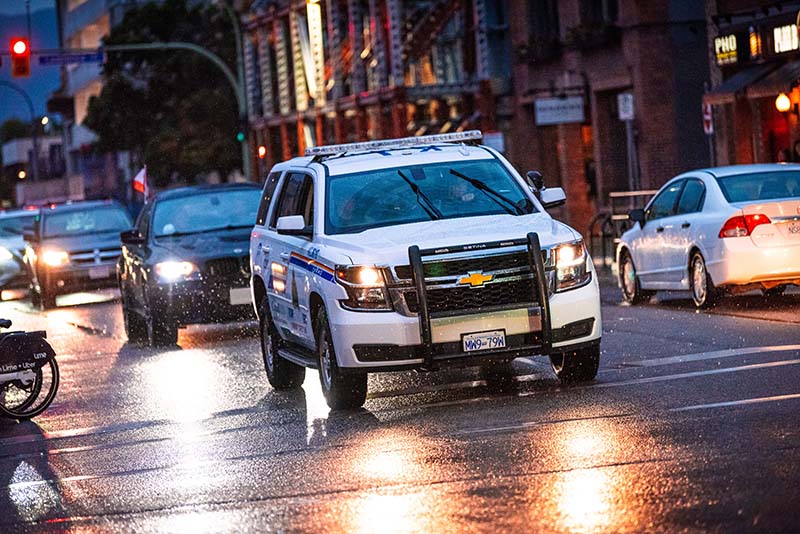
Perception of crime can vary widely from hard data and that might be in part because crime statistics aren’t that reliable at the best of times.
Businesses in downtown Kelowna have been complaining about an increase in crime and the city and RCMP are responding. Within that response and the conversation around it, crime statistics naturally come up but there’s a disparity between how people feel about crime or what they see in their day-to-day and what the numbers show.
Dr. Melissa Munn is a criminologist and a professor at Okanagan College. She said all these numbers can elicit an emotional response, but don’t exactly paint a complete picture, especially when looked at on a year-to-year basis.
“One of the things we know about the crime statistics is they’re not really a very accurate representation of what’s actually happening,” she said. “We have something called the dark figure of crime, which is all the crimes that occur, but not all those crimes are reported. If they are, not all of them are taken seriously and so don’t actually make it into the official crime stats.”
In 2025, break-ins to businesses were down by 4.8 per cent compared to 2024 but property crime was up by 6.4 per cent overall, according to RCMP data.
Statistics Canada’s crime rate for Kelowna in 2024 was 18,343, down from a high of 21,435 in 2021, but up significantly from 2014 when it was 12,947.
Kelowna’s city council received an Ipsos survey in November where 35 per cent of residents said crime has increased in their neighbourhood in the past two years, 57 per cent said it remained the same and only six per cent said it decreased.
Residents said crime impacted their daily life with 42 per cent saying they avoid certain areas or they are cautious of their surroundings and 33 per cent said they feel unsafe.
Munn said things like police priorities and underreporting can skew the numbers. She said if police decide to focus on a particular crime, then they catch more people committing that crime and the rate goes up even though the actual number of incidents might be the same.
Data can also be slow to show changes in policy or policing so comparing this year to last year isn’t going to give people a good idea of what’s actually happening.
“Sometimes we see new initiatives that come in and they may have an impact on crime statistics two years from now,” she said. “More longitudinal data, like crime statistics over a 10-year period, is more reflective.”
When it comes to how people perceive crime in their community, Munn said that there’s a natural bias to see crime as worse than it is, since people don’t make a point of talking about a lack of crime.
“One of the things that we know about crime statistics is that people always overestimate the amount of crime they think is happening. And they also overestimate the severity of the crime,” she said. “We have to be really careful that coverage in the media and coverage from your neighbourhood conversations tends to focus on the bad things that happen, not the good things that happen.”
The crime severity index is different from the crime rate. Statistics Canada uses the crime severity index to measure how serious crimes in a given community are and calculates an average. Crimes are given a severity value. For example, first-degree murder has a crime severity value of 8273.62, while mischief has a value of 26.99.
Kelowna’s crime severity index followed a similar trend as its crime rate, down to 123 in 2024 from a high of 148 in 2022, but it was just 102 in 2014.
Munn said that while mischief like broken windows isn’t weighed highly in the statistics, it can have a serious impact that isn’t going to show up in the numbers.
“It’s upsetting. If you’re a business owner who has their window broken in a snatch-and-grab, or is having to file insurance claims or is having difficulty getting insurance because they’ve already filed a claim, these become big issues. And so it really is upsetting to the community at large,” she said.
News from © iNFOnews.ca, . All rights reserved.
This material may not be published, broadcast, rewritten or redistributed.

This site is protected by reCAPTCHA and the Google Privacy Policy and Terms of Service apply.
Want to share your thoughts, add context, or connect with others in your community?
You must be logged in to post a comment.