Elevate your local knowledge
Sign up for the iNFOnews newsletter today!
Elevate your local knowledge
Sign up for the iNFOnews newsletter today!
Select Region
Selecting your primary region ensures you get the stories that matter to you first.
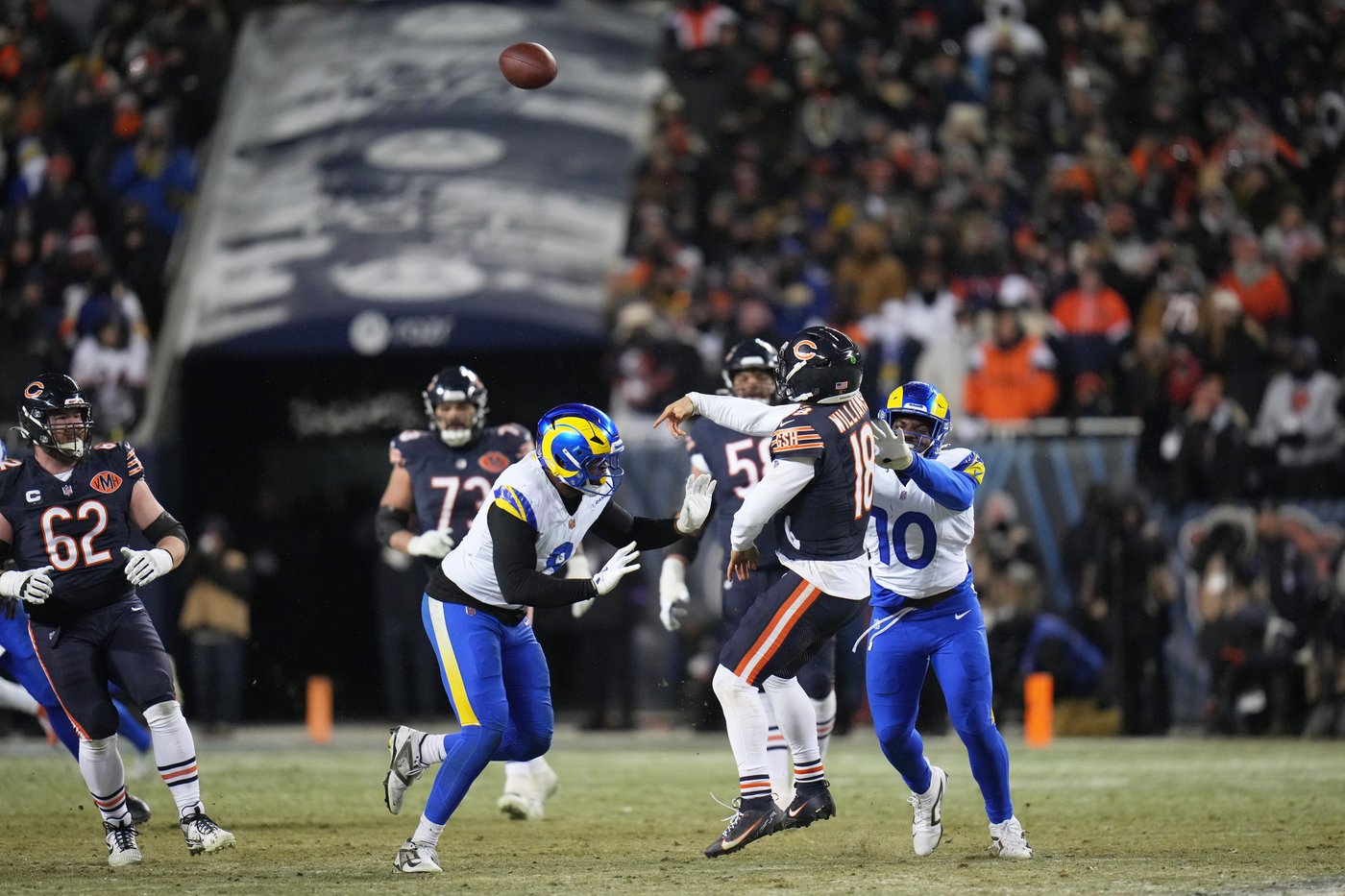
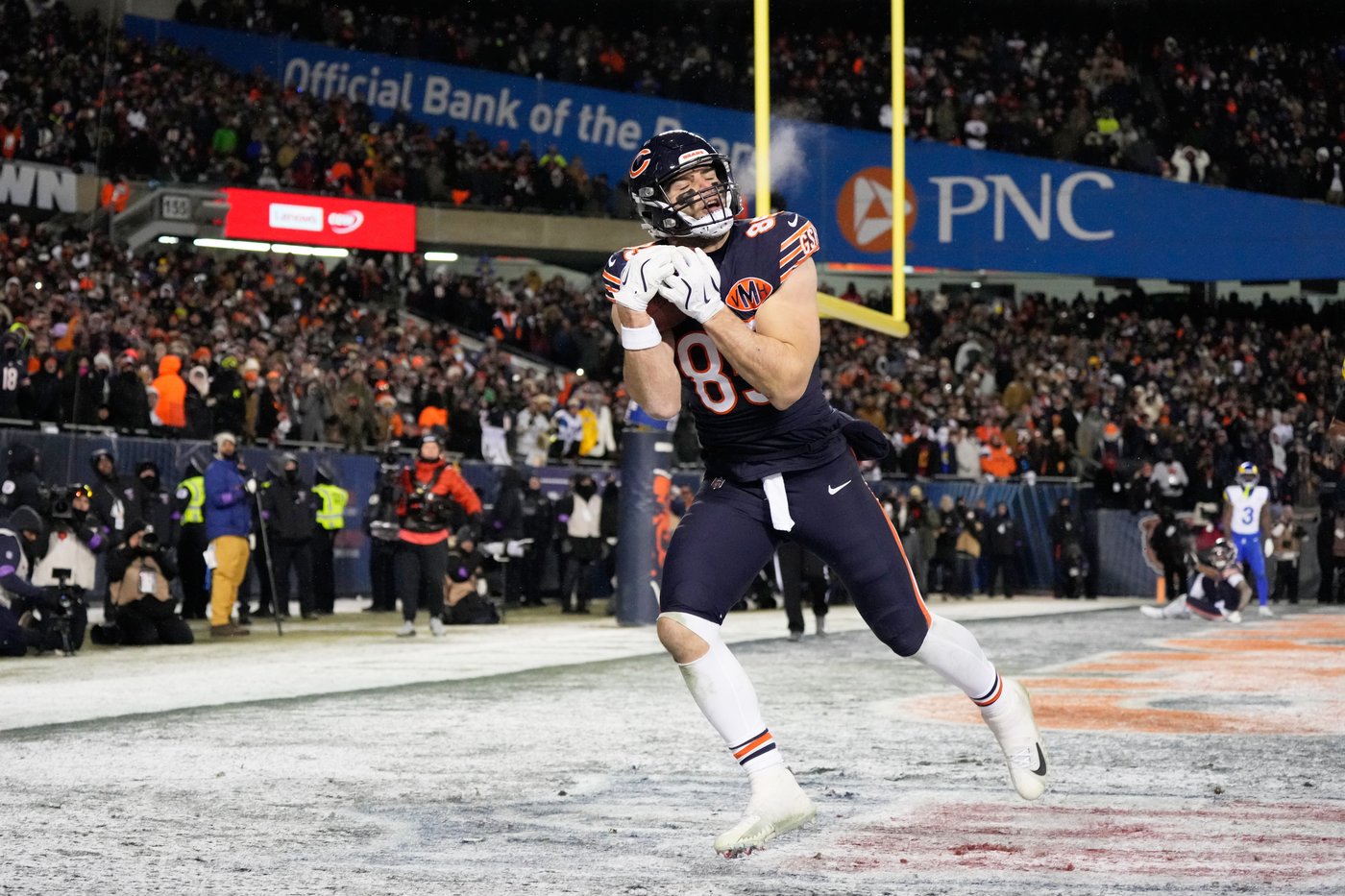
SAN FRANCISCO (AP) — Anyone watching Caleb Williams’ desperation fourth-down touchdown pass in the divisional round knew how improbable a play it was.
Quantifying that was a different story. That’s when the NFL’s Next Gen Stats stepped in.
Within minutes after the 14-yard touchdown landed in Cole Kmet’s hands, the answer was all over social media. The pass traveled 51.2 air yards for the longest throw in the red zone on record. Williams retreated so far back that he launched the pass from 26.5 yards behind the line of scrimmage, 4 yards further back than any other pass on record. The completion probability was a mere 17.8% from the time Williams threw the pass.
A sport whose statistics used to be mostly simple ones like yards gained, passes attempted, passes completed and touchdowns now has numbers based on all sorts of advanced statistics thanks to radio-frequency identification chips the NFL has placed in the ball and shoulder pads of players and the power of the AWS computers to sift through and analyze them.
The NFL just completed the 10th season of the Next Gen Stats era that has transformed the way fans consume the game, how teams make decisions and how the league makes its rules.
“Next Gen Stats is the hub of a bicycle wheel that powers all of these new spokes,” said Mike Band, the NFL’s senior manager of Next Gen Stats research and analytics. “So the more spokes and the longer that these spokes can be created, the bigger our wheel gets and the more we power. I think as we go on, player health and safety, schedule creation, rule changes, team decision-making, coaching, scouting, strength and conditioning, maximizing player output, those are all just the objectives of the NFL front office. This is a tool to help them do that.”
Josh Helmrich, the NFL’s senior director of media strategy, business development and Next Gen Stats, said more data gets collected in one game with the tracking chips than in the history of football before the chips were used.
The data the NFL collects through the chips provides simple answers like how fast players run and how far a pass is thrown to more complex ones thanks to the machine learning technology and artificial intelligence through AWS that has helped the NFL’s research team create models for things like completion probability, yards gained over expected on runs or catches and deciphering defensive coverages.
Teams use the technology to monitor the speed and freshness of their players, impacting when to have strenuous practices and when to back off and helping reduce injuries by being able to better monitor a player’s condition throughout the week.
“Some use it more than others,” Helmrich said. “But that’s sort of their secret sauce. They don’t share a ton of the nitty gritty with us. We know all those people, they ask us questions, ask us to make improvements on the data set, add this field, add that field. So we have a pretty good sense of what they do. … But they keep that a secret because they think it differentiates them from other teams.
The technology has played a key part in rule changes like figuring out the best method for the so-called “dynamic” kickoff first put in place in 2024 and tweaked again this past season. It also has been used by the NFL’s scheduling team to help determine the impact of short rest or multiple road games in a row on the speed of players.
It even has brought some more specificity to spotting punts, with the chips in the ball being used about five times alone in the AFC championship to determine where punts crossed out of bounds on a snowy day with little visibility. That helped turn the guesswork of an official sometimes 40 or 50 yards away from the ball into a precise measurement.
The technology has also led to the virtual measurement system for first downs this season but still can’t be used to spot the ball after scrimmage plays because, “Ultimately, I think we’d like to help all ways of spotting the ball, but it’s very complicated, hard problem,” Helmrich said.
But its most public use remains in the statistics that have become part of the sport’s fabric thanks to their presence throughout broadcasts, on the NFL Pro website and on social media.
The NFL research staff works closely with each broadcast partner throughout the week and has one person dedicated to each game every Sunday who communicates directly with the broadcasters. There will be a researcher embedded in NBC’s production truck for the Super Bowl ready to detail any memorable play from the game.
“Next Gen Stats can be like the Kleenex of football in that something crazy happens, what does next-generation stats have to say about a play,” Band said. “That’s where we’ve built all of this brand equity to get to where we are now, where it’s becoming part of the vernacular of the game.”
___
AP NFL: https://apnews.com/hub/NFL
News from © The Associated Press, . All rights reserved.
This material may not be published, broadcast, rewritten or redistributed.

This site is protected by reCAPTCHA and the Google Privacy Policy and Terms of Service apply.
Want to share your thoughts, add context, or connect with others in your community?
You must be logged in to post a comment.