Elevate your local knowledge
Sign up for the iNFOnews newsletter today!
Elevate your local knowledge
Sign up for the iNFOnews newsletter today!
Select Region
Selecting your primary region ensures you get the stories that matter to you first.
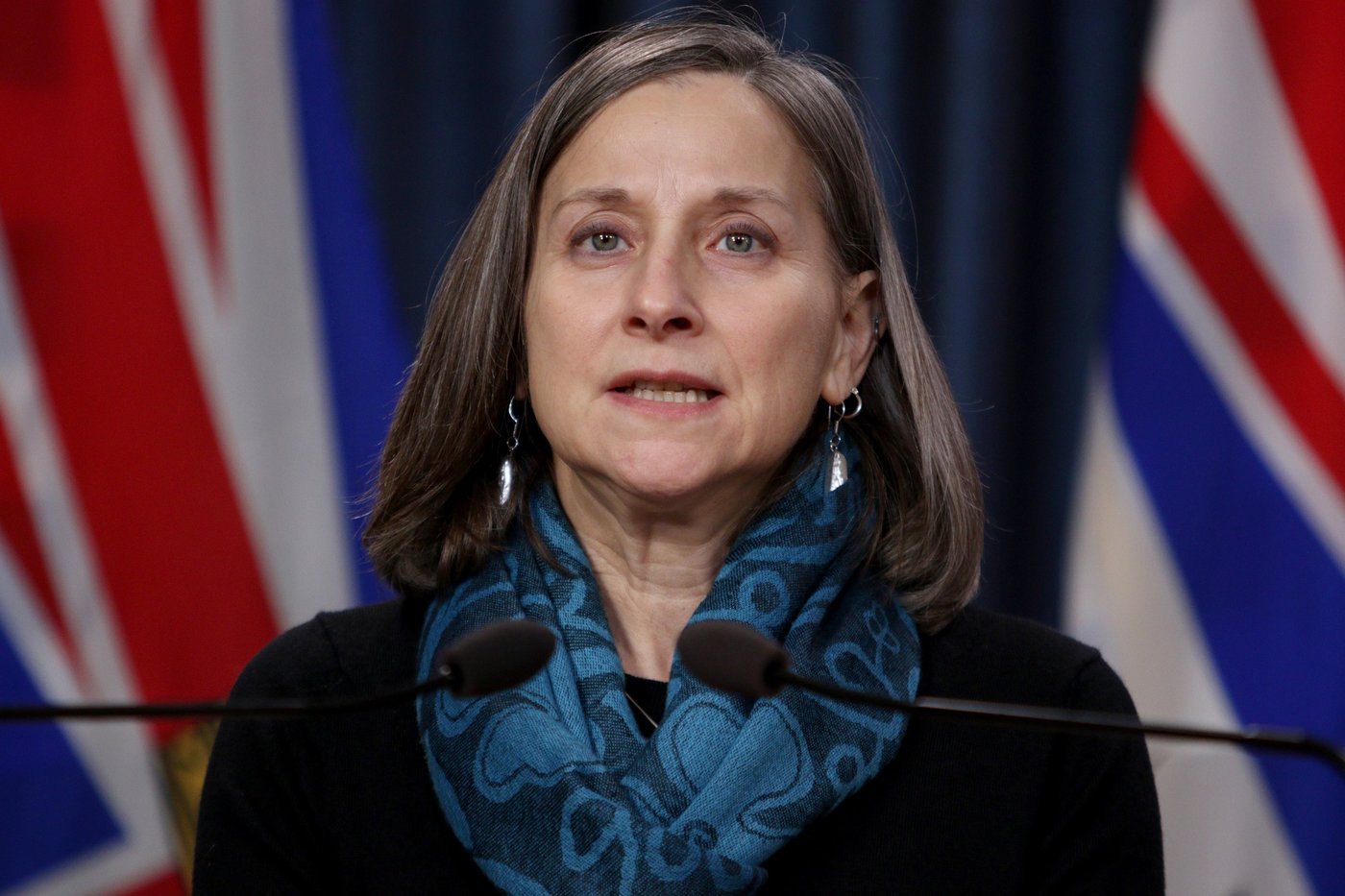
Former chief coroner Lisa Lapointe recently criticized B.C.’s drug policies, saying the province’s approach to the ongoing toxic drug crisis is not evidence based.
Lapointe, who was B.C.’s longest-standing chief coroner and held the position for 13 years before retiring in 2024, was speaking as part of a new, ongoing webinar series, “Perspectives on 10 Years in Crisis,” hosted by the Canadian Drug Policy Coalition.
Lapointe was interviewed by Jody Paterson. (Paterson is the partner of Tyee senior editor Paul Willcocks, who was not involved with the editing of this article.)
In April B.C. will have been under a public health emergency for a decade. During that time more than 18,800 British Columbians have lost their lives after being poisoned by unregulated drugs.
During her time in office, Lapointe called three death review panels, which brought together a wide range of experts and asked them to come up with recommendations for how to prevent future deaths.
The experts included health professionals specializing in addiction, members of different ministries, police, pharmacists, people with lived experience, WorkSafeBC, deputy ministers and more from across Canada, but with a provincial focus.
The province declined to implement most of the recommendations, and deaths continued to rise until 2023, when a record high of 2,589 British Columbians lost their lives. Deaths have been decreasing since then but still remain high. In the first 10 months of 2025, 1,538 people died due to toxic drugs, according to the most recent information available from the BC Coroners Service.
Lapointe said B.C.’s response to the ongoing crisis, which has focused on building treatment and recovery beds, is not evidence based.
Strategies that have been shown to work, such as B.C.’s safer supply program, the decriminalization pilot project, access to timely physical and mental health care, harm reduction, poverty reduction and access to stable and secure housing, either have faced controversy or were not supported by the government, she said.
“The only people, frankly, benefiting from the current model are organized crime and some of these private residential treatment centres who are charging exorbitant amounts to families who are desperate to help their loved ones become well, without any evidence that those are effective,” Lapointe said.
The decriminalization pilot project
The province announced in mid-January it would not be renewing its decriminalization pilot project after it wraps up at the end of this month.
The pilot project let people 18 and older carry up to a combined 2.5 grams of certain otherwise illegal substances, such as opioids, crack and powder cocaine, methamphetamine and MDMA.
Decriminalization was supposed to recognize how the criminalization of people who use drugs “perpetuates stigma, creates barriers, and elevates the risk of death associated with the toxic drug crisis,” according to a Vancouver Coastal Health web page.
In an email to The Tyee, the Health Ministry said the pilot project was supposed to make it “easier for people struggling with addiction to come forward for help. However, it has not delivered the outcomes we hoped for.”
But Lapointe said the pilot project was a success.
She asserted that over the last three years, there has been a “significant” reduction in drug-related deaths, drug-related arrests, drugs seized by police officers and ambulance calls, which suggests there were fewer overdose emergencies. At the same time, the number of people diagnosed with opioid use disorder did not increase, including for youth, she added.
Decriminalization came into force Jan. 31, 2023. Deaths that year were an all-time high but have since decreased. In 2024 there were 274 fewer drug-related deaths, according to the BC Coroners Service. The coroners service has reported drug-related fatalities for only the first 10 months of 2025, but so far it looks like total deaths will once again decrease by about 300.
Health Canada and a study published last fall say decriminalization did not significantly affect the number of paramedic response calls. The Tyee asked Lapointe to share what data she was basing her statement on but did not hear back by press time.
“Even if we decriminalized and nothing got better but nothing got worse, I would say it’s a success because it demonstrates criminalization isn’t addressing the crisis,” Lapointe said.
The Union of BC Indian Chiefs and the Surrey Union of Drug Users also criticized the province for ending decriminalization, warning the province is returning to a criminalization response rather than a health-based one, which will have disproportionate impacts on Indigenous and marginalized communities.
B.C. is “doubling down on policies that have already caused immense harm to First Nations,” said Union of BC Indian Chiefs president Grand Chief Stewart Phillip in a statement. “Arresting and criminalizing individuals who need care and support will not save lives, it will only deepen trauma, reinforce systemic racism in policing, and widen the disproportionate gaps in health and justice outcomes for First Nations.”
A return to criminalization will “increase our susceptibility to violence and harassment at the hands of police,” said Sparking Fast River Rising Woman (Mona Woodward), president of the Surrey Union of Drug Users’ board of directors.
B.C. was regularly reporting to Health Canada about decriminalization but did a poor job of proactively sharing positive results, Lapointe said.
“In that information vacuum, negative assumptions were made,” she told The Tyee.
She pointed to public disorder as an example.
What many people perceive as “street disorder” is actually a combination of a housing crisis that has left thousands of British Columbians unhoused, a lack of access to timely physical and mental health treatment, and a lack of evidence-based drug treatment, she told The Tyee.
Policy should be based on evidence and data, not anecdotes, Lapointe said.
Treatment and recovery beds
Lapointe was also critical of B.C.’s focus on treatment and recovery beds because the industry is not regulated for how — or what kind of — treatment is offered, does not report if it is helping or harming those who undergo treatment, and is not evidence-based.
Treatment and recovery services are regulated under the Community Care and Assisted Living Act, which lays out how facilities that offer child daycare, child and youth residential and adult residential settings, and assisted-living residences for seniors or people with disabilities should be run.
The act does not cover how treatment for substance use disorder should be offered.
All bed-based treatment and recovery services are expected to follow the Provincial Standards for Registered Assisted Living Supportive Recovery Services, which were introduced in 2021. These standards mostly focus on the delivery of psychosocial supports and are distinct from clinical standards.
The gold standard for treating opioid use disorder is opioid agonist treatment.
However, many treatment centres focus on abstinence, which can increase a person’s risk of a fatal overdose, Lapointe said.
Opioid use disorder is a chronic relapsing disease, which means people are likely to start using again after periods of abstinence. Regular opioid users will build up a tolerance to the drug, meaning they can take stronger and stronger doses. But after just three days of abstinence their tolerance starts to drop, which means when they use again they will have a much lower tolerance, increasing their risk of an overdose, Lapointe said.
Lapointe said the death review panels recommended regulating the treatment and recovery industry and requiring businesses to report how many people graduated their recovery program, how many people did not complete it and how many people had an overdose or a fatal overdose during or after completing the program.
The provincial government should similarly report how many people have achieved lasting sobriety after going through treatment and recovery, rather than just reporting how many beds it has funded, Lapointe said.
As of September 2025, there are 3,748 publicly funded adult and youth substance use beds in B.C., and in 2024-25, 4,999 people received services in publicly funded treatment and recovery beds, the Health Ministry said.
The province did not respond by press time to a question about how many people had fatal or non-fatal overdoses during their time in treatment or in the year after they attended treatment.
Safer supply
The second and third death review panels recommended that B.C. expand its safer supply program, which the province said it would not do.
Safer supply aims to separate people from the high-risk unregulated street supply by prescribing them pharmaceutical alternatives.
In Health Canada pilot projects, safer supply showed “really promising results,” Lapointe said, but it was a hard sell because people confused the program with promoting drug use.
Harm reduction has never been about promoting drug use but works to be practical about how to reduce harms if a person is going to use drugs anyway, she said.
Health Canada said safer supply programs reduced people’s dependence on unregulated markets and led to fewer deaths, fewer arrests, less social disorder and better health outcomes for participants. B.C.’s provincial health officer Dr. Bonnie Henry even released a report recommending the province expand the program.
Despite this success, B.C. has scaled back its program.
Out of 225,000 people in B.C. deemed to be at high risk of overdose and death, only about 2,900 are currently accessing safer supply, down from 5,200 at the program’s peak in March 2023.
The next Canadian Drug Policy Coalition webinar will be on Feb. 11 from 10 to 11 a.m. with Denise Baldwin, co-founder of the Indigenous Harm Reduction Network, speaking with Les Harper, an Indigenous harm reduction worker.
— This article was originally published by The Tyee
News from © iNFOnews.ca, . All rights reserved.
This material may not be published, broadcast, rewritten or redistributed.

This site is protected by reCAPTCHA and the Google Privacy Policy and Terms of Service apply.
Want to share your thoughts, add context, or connect with others in your community?
You must be logged in to post a comment.