Elevate your local knowledge
Sign up for the iNFOnews newsletter today!
Sign up for the iNFOnews newsletter today!
Selecting your primary region ensures you get the stories that matter to you first.
VANCOUVER — Police and the City of Vancouver took “unlawful” actions when restricting media access as city workers broke up a Downtown Eastside homeless encampment in 2023, but they are unwilling to accept recommended reforms that might restrict “police discretion,” British Columbia’s human rights commissioner says.
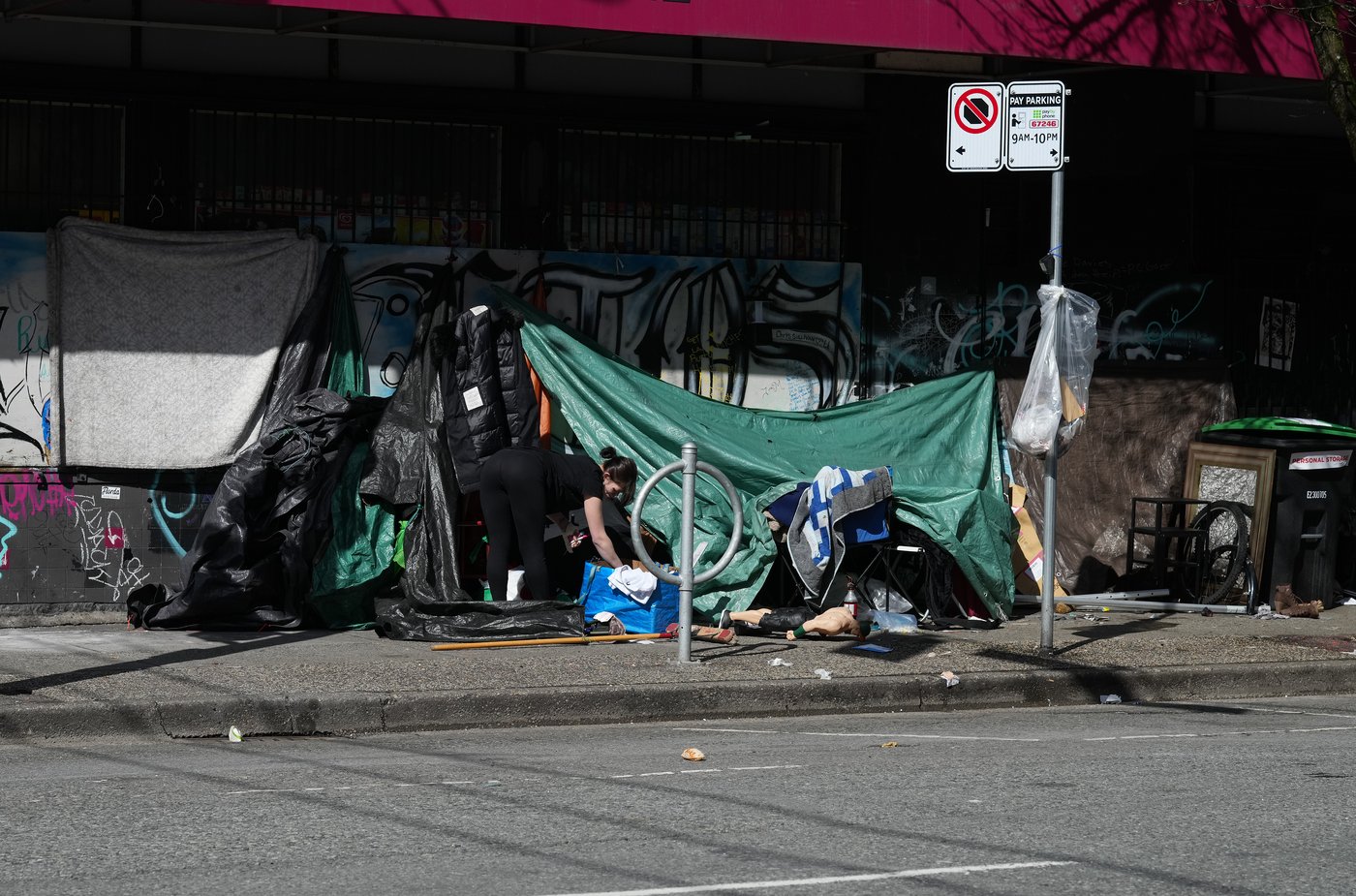
Kasari Govender’s office released a report Wednesday into the exclusion of media from the area on Hastings Street, which at the time had been lined with tents on sidewalks for months before being forcibly removed in April 2023.
Govender said journalists and police gave evidence under oath, and she found that the police department “did not have statutory or common law authority for the exclusion zone, and therefore that it was unlawful.”
Vancouver Police Department spokesman Sgt. Steve Addison said that police “disagree with the suggestion that media was banned or excluded from the Hastings Street decampment.”
“We have concerns with how the human rights commissioner has characterized our actions,” Addison said in a statement Wednesday.
A joint statement from the City of Vancouver and the Vancouver police Wednesday also disputed the report’s findings.
“The City and VPD maintain that the report’s description of a ‘media exclusion zone’ does not reflect the facts, as media access was in fact prioritized, planned for, and communicated in advance,” it said.
During the decampment operation on April 5 and 6, Vancouver Police had moved into the Downtown Eastside neighbourhood with city staff to dismantle tents put up by homeless occupants, throwing away belongings and other structures set up on the sidewalk.
Govender said in the report that police and the city “failed to strike the appropriate balance” between public safety with the freedom of the media in its handling of the decampment operation, where journalists were denied access, resulting in transparency being compromised.
Govender found the zone was “not in accordance with human rights standards,” and “police and city evidence was contradictory on the timing of whether or when the access to reporters was restricted in some way.”
The report found the evidence clearly showed that “the police and city did not effectively organize or communicate their position in relation to media to each other or members of the press.”
An officer interviewed for the report also cited “reputational” risks around the decampment action for the city, police and the province.
Govender said at a news conference Wednesday that the police department and the Vancouver Police Board also didn’t “adequately” handle a complaint about the exclusionary actions.
“The investigator assigned to investigate the complaint was not sufficiently independent because that investigator was also the gold commander with overall operational responsibility for the decampment,” she said.
Addison’s statement said that the department “went to significant lengths” to ensure media access.
“Truth is, we wanted media present during the decampment,” Addison said in an email response. “We went to significant lengths to ensure media could observe the process taking place so they could report on it accurately.”
He said police had shared information, including a note on the morning of April 5 encouraging editors to contact police to gain access as well as inviting journalists to the area.
The report includes a transcript of a recorded interaction between an independent journalist and an unnamed police officer, who asked him to leave the area on the morning of April 5, 2023.
The reporter asked the officer “is this the exclusion zone?,” to which the officer replied, “yup.”
“So, I’m here as media.”
“Yeah, media is not coming in here,” the officer said.
Reporters with The Canadian Press were among those who were temporarily excluded from the encampment site on Hastings Street, but it did not take part in the inquiry, citing the need to maintain journalistic independence from the process.
The report makes six recommendations, including that police departments in B.C. immediately stop excluding or restricting media around police actions without judicial authorization or “a credible and substantial threat” to public safety, and that the province put that in legislation.
Govender said, however, “there is not a willingness to implement the recommendations from the parties directly involved.”
“I understand that one of the concerns is around restricting police discretion,” she said.
Govender also wants the Public Safety Ministry to fund rights-based training for police officers and change the Police Act to require compliance with recommendations made by the Office of the Police Complaint Commissioner.
The commissioner said Wednesday that evidence gathered in preparation of the report showed the city and police “did not give due regard to the importance of the human rights at stake.”
“In prioritizing safety over freedom of the press and freedom of assembly without balancing the degree of safety risk, the city and the VPD failed to ensure that the restrictions on these freedoms were proportionate, which they are required to do so by law,” she said.
This report by The Canadian Press was first published Feb. 4, 2026.
News from © The Canadian Press, . All rights reserved.
This material may not be published, broadcast, rewritten or redistributed.

This site is protected by reCAPTCHA and the Google Privacy Policy and Terms of Service apply.
Want to share your thoughts, add context, or connect with others in your community?
You must be logged in to post a comment.