Elevate your local knowledge
Sign up for the iNFOnews newsletter today!
Elevate your local knowledge
Sign up for the iNFOnews newsletter today!
Select Region
Selecting your primary region ensures you get the stories that matter to you first.

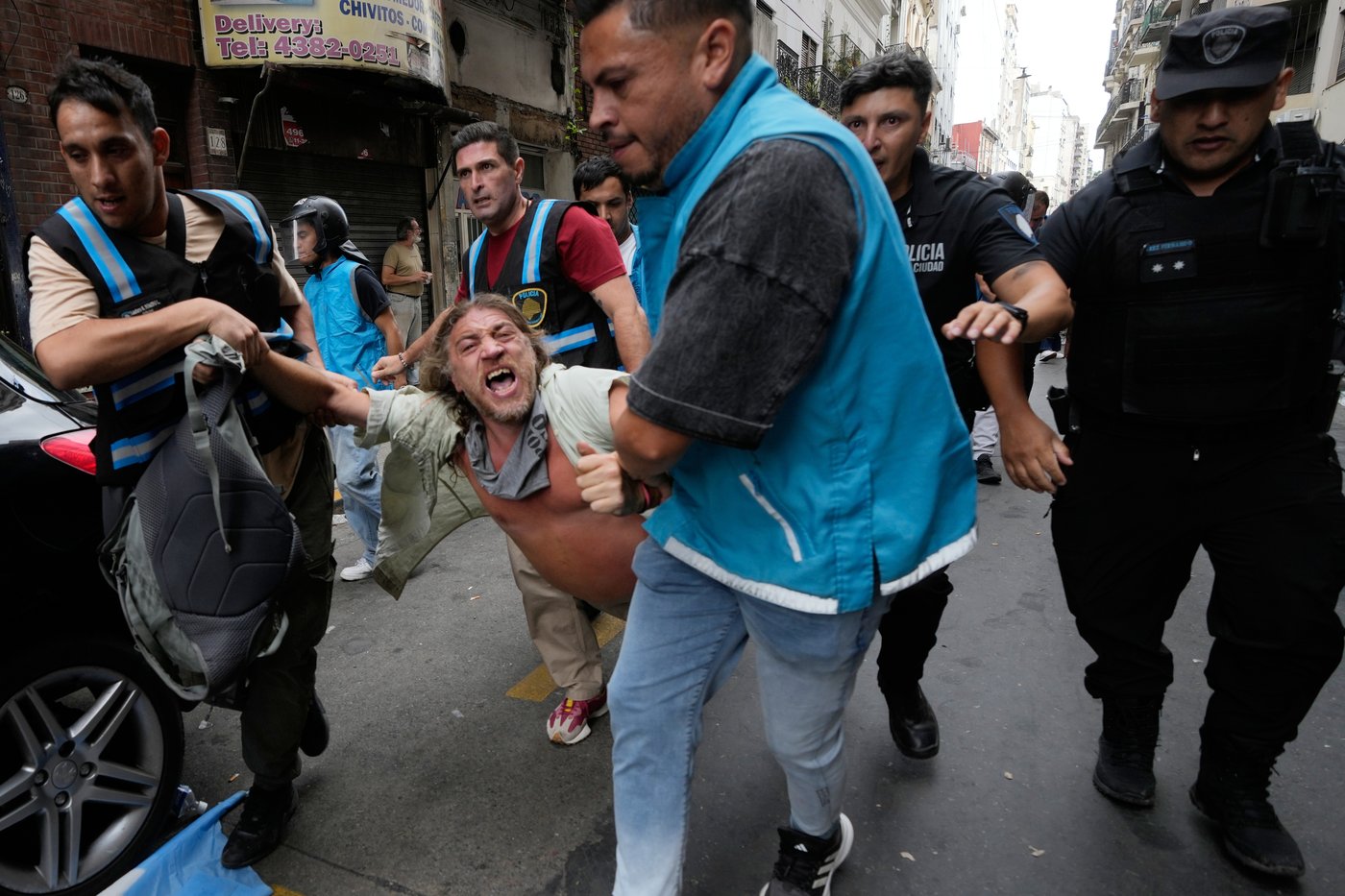
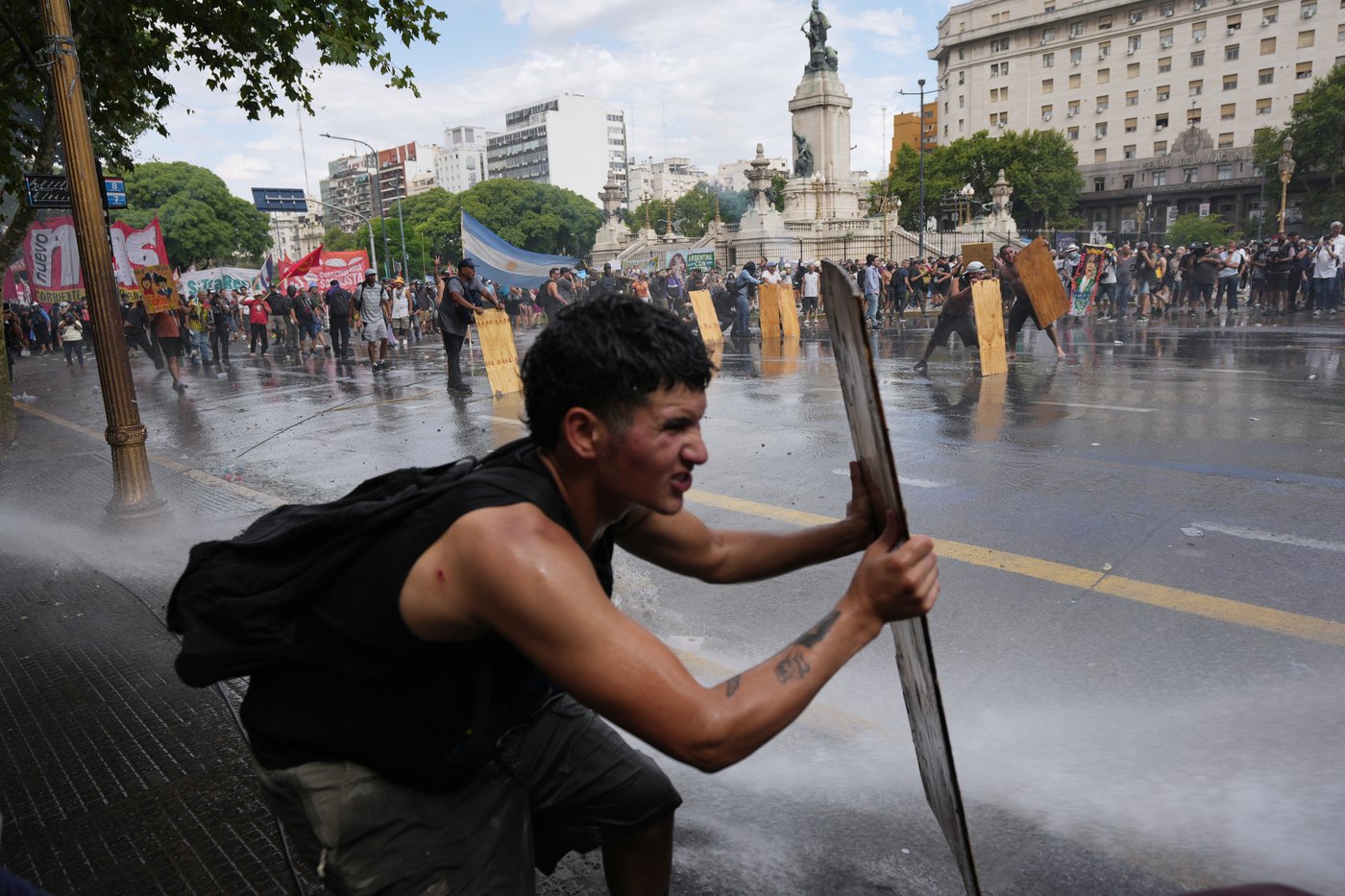
BUENOS AIRES, Argentina (AP) — Thousands of workers mobilized by powerful trade unions converged outside Argentina’s Congress on Wednesday, blocking traffic and clashing with police as senators debated a sweeping overhaul of the nation’s rigid labor laws considered crucial to libertarian President Javier Milei’s shock therapy program.
Security forces struggled to control the crowds in a central square of downtown Buenos Aires, firing water cannons and rubber bullets at protesters who lobbed petrol bombs, stones and water bottles. Authorities said they made at least 15 arrests, among them protesters accused of attacking police officers.
The fiery standoff underscored the sensitivity of labor rights in this nation dominated since the 1940s by Peronism, a populist movement that has swung right and left ideologically over the decades but always claimed to champion workers’ rights.
Supporters of Milei’s labor overhaul blame nearly two decades of stagnant private sector job creation on Argentina’s sky-high payroll taxes, byzantine system of severance payments and national wage agreements that constrain negotiations at the company level. They say the changes would encourage foreign investment and incentivize formal hiring in a country where almost half of all workers are employed off the books.
“With the modernization of the labor system, more people will have access to formal, legal employment,” Milei’s La Libertad Avanza party said in a statement as the debate kicked off. “We are rebuilding Argentina from the ground up, starting with employment.”
But the bill faces bitter opposition from the labor unions that helped found modern-day Peronism and their political allies in Congress. They argue that the bill would roll back measures to protect vulnerable workers from abuse and from the nation’s notoriously frequent economic shocks.
The bill under discussion would offer businesses more flexibility by curbing the right to strike, extending trial periods during which companies can fire unproductive new employees, reducing the power of national trade federations in collective bargaining and cutting severance payouts.
“If severance pay, overtime and vacation time — in other words, all the protections workers have gained over time — are up for grabs, it won’t make things better for anyone,” said Axel Kicillof, the governor of Buenos Aires province and the most powerful elected official in the left-leaning Peronist opposition.
Successive governments, as well as a military dictatorship, have promised to overhaul Argentina’s labor legislation for over half a century, but have failed.
“This is the most important reform in the last 50 years,” said Sen. Patricia Bullrich, leader of the La Libertad Avanza bloc in Congress. “No government has achieved it, and I believe we will.”
One far-reaching reform came tantalizingly close in 1984 only to collapse in the Senate by a single vote. Another cleared the Peronist-dominated Congress in 2000, only to be discredited by a vote-buying scandal and promptly overturned. Yet another attempt in 2017 didn’t even make it to a vote in the face of violent protests and union pushback. Milei himself used an executive order to muscle through an overhaul after entering office in 2023, only for it to get tied up in court after unions filed for injunctions.
But after clinching a big midterm victory last year, with help from his ally U.S. President Donald Trump, Milei has a fresh mandate to enact long-desired reforms of a system largely unchanged since the 1970s.
Experts said that even if the government is forced to make concessions in Congress, the passage of anything called a “labor reform” would be a huge achievement in Argentina.
“I’m skeptical about whether it’s going to induce a massive formalization of workers in the labor market. That’s why I think the importance is much more political, symbolic,” said Ignacio Labaqui, a Buenos Aires-based senior analyst at risk consultancy Medley Global Advisors. “For Peronism, it would definitely be a huge defeat.”
The heated debate in the Senate was expected to stretch into early Thursday. If approved, the bill goes to the lower house of Congress for another debate and vote next month.


News from © The Associated Press, . All rights reserved.
This material may not be published, broadcast, rewritten or redistributed.

This site is protected by reCAPTCHA and the Google Privacy Policy and Terms of Service apply.
Want to share your thoughts, add context, or connect with others in your community?
You must be logged in to post a comment.