Elevate your local knowledge
Sign up for the iNFOnews newsletter today!
Sign up for the iNFOnews newsletter today!
Selecting your primary region ensures you get the stories that matter to you first.
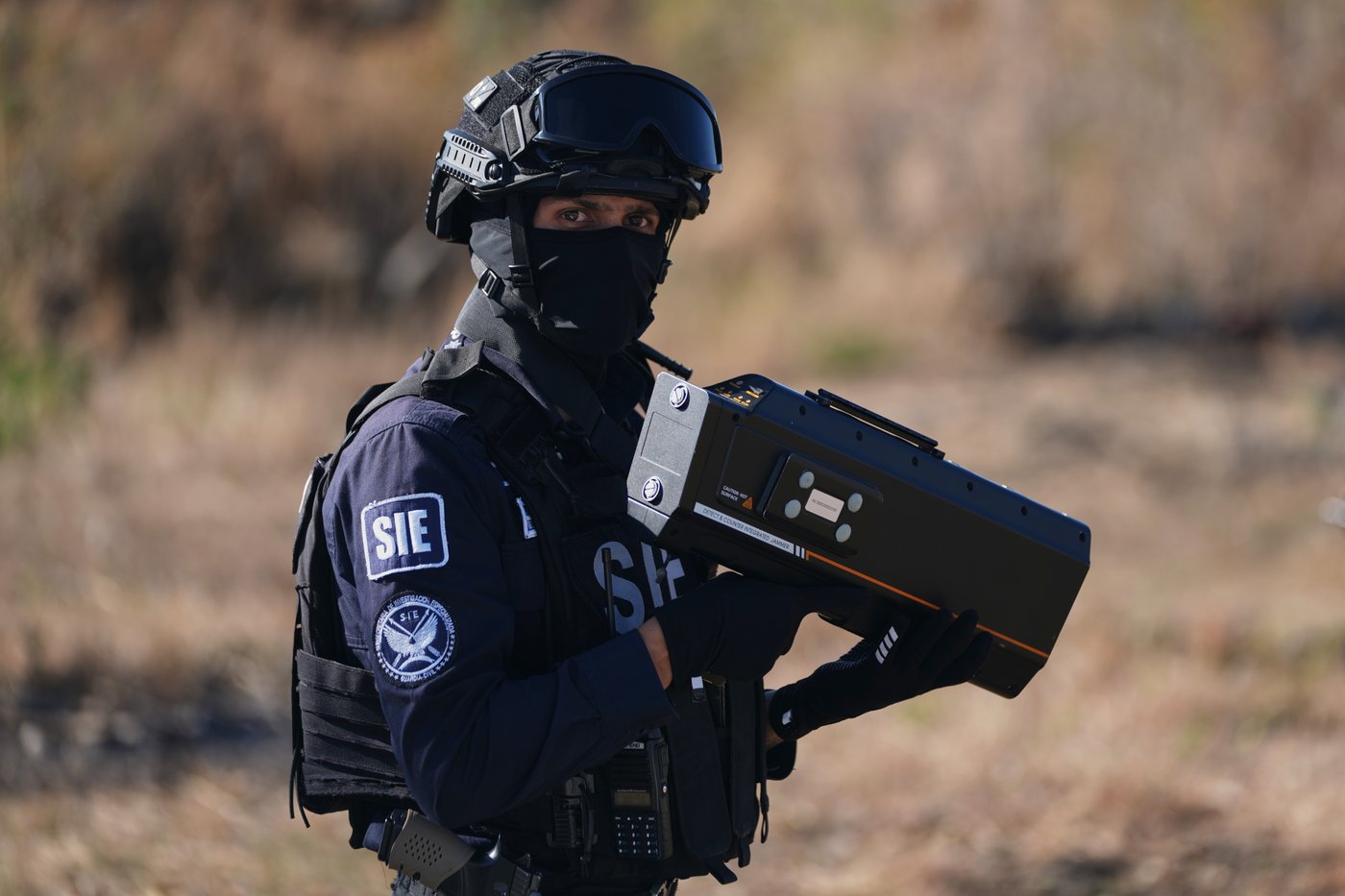
MEXICO CITY (AP) — The temporary closure of airspace over El Paso, Texas, on Wednesday caused unease south of the U.S.-Mexico border and put the spotlight on the use of drones by Mexican cartels.
The criminal groups have used the technology to modernize their operations, smuggle fentanyl, organize migrant border crossings, surveil territory and wage war on rival cartels and Mexican authorities.
U.S. officials initially said the airspace was closed to halt an incursion by Mexican cartel drones, though others familiar with the situation later put that explanation in doubt.
Steven Willoughby, deputy director of the Department of Homeland Security’s counter-drone program, told Congress in July that cartels use drones almost daily to move drugs across the border and to monitor Border Patrol agents.
According to their data, in the last six months of 2024 more than 27,000 drones were detected within 500 meters (1,640 feet) of the U.S. southern border, mainly at night.
Here’s what you need to know:
‘The Lord of the Skies’
Drug trafficking by air is not new and is linked to the history of Ciudad Juarez, across the border from El Paso.
In the 1990s, drug trafficker Amado Carrillo Fuentes, founder of the Juarez Cartel, specialized in transporting large drug shipments in small aircraft, earning him the nickname “The Lord of the Skies.”
When he died under suspicious circumstances following botched plastic surgery in 1997, his brothers and sons continued operating out of Ciudad Juarez.
Fifteen years later, when his brother Vicente was arrested — Vicente was sent from Mexico to the United States last year — it was estimated that 70% of the cocaine entering the United States came through Juarez.
2010s: The beginning
Mexico issued an international alert in 2010 about drug traffickers’ use of remotely piloted aircraft systems, and from then on the practice grew.
Between 2012 and 2014, U.S. authorities detected 150 unmanned aircraft systems crossing the border with Mexico. A decade later, U.S. Customs and Border Protection reported 10,000 incursions in the Rio Grande Valley area of southern Texas alone, according to data from the International Narcotics Control Board.
Over time, the drugs flowing into the U.S. were changing too, shifting from heavy bales of marijuana to more compact synthetics like methamphetamine and fentanyl that drones could carry.
Drones as attack weapons
In 2021, the Mexican government began publicly reporting the use of explosive-laden drones to attack security forces.
At the time, it was a tactic of the Jalisco New Generation Cartel (CJNG) detected in the states of Michoacan, Guanajuato and Jalisco.
The army said then that the drones were not as effective as criminals would like because they could only carry small explosive charges, sometimes taped onto the drone.
A widespread weapon
The use of drones spread to nearly all criminal groups and, according to Mexican authorities, they are used both for attacks and for surveillance, even transmitting real-time images.
In states such as Michoacan, both commercial drones and larger agricultural drones about one meter (3.3 feet) in diameter are used; instead of sprayers, they are fitted with adapters for explosives, according to data from that state’s government.
In 2025, the International Narcotics Control Board reported that cartels were increasingly using this method to smuggle fentanyl, sometimes with homemade drones capable of carrying up to 100 kilograms (220.46 pounds) of cargo, because with new satellite technologies traffickers can pre-program precise landing sites and reduce risks in deliveries.
Government efforts to fight drones
Mexico’s government, too, has used drones for their own purposes, both to combat cartels and to monitor migrant caravans in 2018 and 2019. It has also used specialized anti-drone equipment to fight back in states.
The army operates such systems along the borders dividing Sinaloa, Jalisco and Michoacan, primarily, although the latter state has its own unit dedicated to that work.
Last July, the southern state of Chiapas went a step further, announcing the purchase of a fleet of armed drones to battle the Sinaloa and Jalisco cartels that were fighting for control of Mexico’s southern border.
___
Follow AP’s Latin America coverage at https://apnews.com/hub/latin-america


News from © The Associated Press, . All rights reserved.
This material may not be published, broadcast, rewritten or redistributed.

This site is protected by reCAPTCHA and the Google Privacy Policy and Terms of Service apply.
Want to share your thoughts, add context, or connect with others in your community?
You must be logged in to post a comment.