Elevate your local knowledge
Sign up for the iNFOnews newsletter today!
Sign up for the iNFOnews newsletter today!
Selecting your primary region ensures you get the stories that matter to you first.
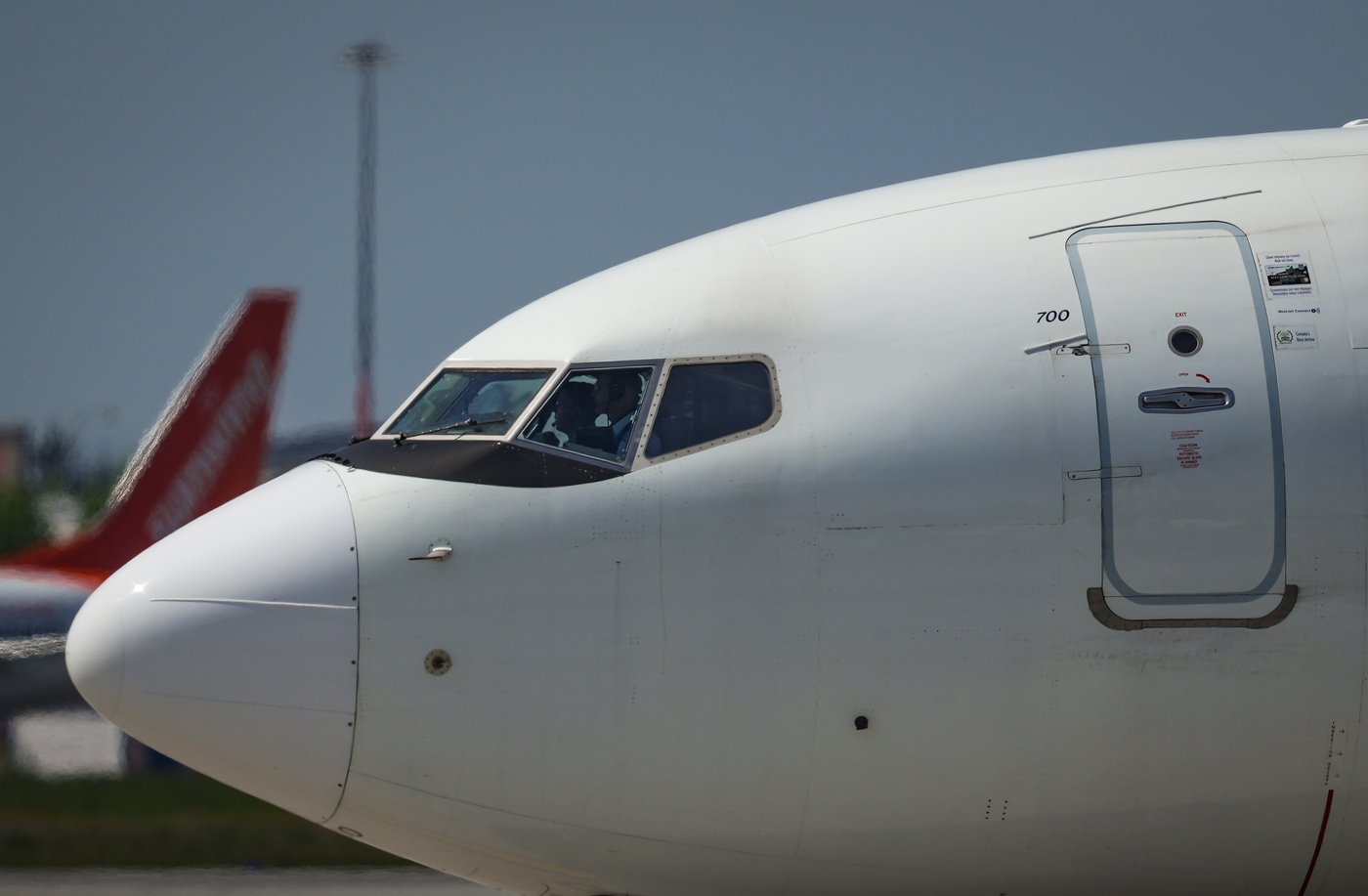
A long-running air traffic controllers shortage is expected to slow air travel at Canadian airports this summer.
The industry has been short-staffed for decades. But when air travel tanked during the COVID-19 pandemic, employer Nav Canada encouraged many air traffic controllers to retire and reduced training for new recruits from 2020 to 2021.
The resulting shortage has hung over the industry ever since, according to Nick von Schoenberg, president of the Canadian Air Traffic Control Association, or CATCA, the controllers’ union.
“We didn’t have enough people, and then we lost people that we needed,” von Schoenberg said. “Now, we are naturally losing more people that we can’t stand to lose right now.”
He estimates the country is short approximately 350 air traffic controllers. CATCA currently represents nearly 2,000 workers.
Dave Frank, executive director of the BC Aviation Council, said the shortage means airport towers across Canada are often understaffed, causing airlines to reduce traffic and leading to cancellations and delays.
He’s expecting the bottleneck to peak when air travel ramps up this summer — and as thousands of visitors and athletes come to Toronto and Vancouver for the FIFA World Cup.
“We are going to have an absolute disaster during the summer when it comes to delays, not safety,” Frank said. “Throw FIFA into that mix and you’ve got a real problem.”
Nav Canada is the private company that trains and employs air traffic controllers. Maryam Amini, a spokesperson for the company, said in an email that addressing the shortage is a “top priority.”
“Staffing is a global challenge for air navigation service providers and Nav Canada has not been immune to this challenge,” Amini said.
Amini added that Nav Canada will expand its training program’s capacity to meet growing demand.
“We are executing aggressive recruitment campaigns and adapting our hiring and training models to align with evolving industry and market dynamics, as well as enhanced workforce scheduling, hiring experienced air traffic controllers, and leveraging temporary assignments,” Amini said.
CATCA’s von Schoenberg said the shortage has plagued the industry for years.
Historically, he said, the employer aimed to meet 80 per cent of each airport tower’s minimum staffing requirements and make up the shortfall by having controllers work overtime.
“Where we are now is a situation that’s been decades in the making,” he said.
The intensity of air traffic controller training also means it takes years to bring in new recruits, von Schoenberg said.
He estimated about 30 per cent of students actually graduate from Nav Canada’s training program, and then they need about three years to get enough training and experience to start working.
Several high-profile air travel delays thrust the shortage into the spotlight last year.
Last May, an Air Canada pilot vented about the shortage to passengers after a Vancouver-Montreal flight was delayed by 50 minutes.
In October, that airline told pilots to avoid the Winnipeg and Kelowna airports while they struggled to staff control towers.
And in November, Nav Canada attributed another series of flight delays at Toronto Pearson International Airport to constraints including staffing issues.
The BC Aviation Council’s Frank said controllers ensure each flight safely lands and takes off at each airport. When a tower is understaffed, that restricts the number of flights able to move through the system.
“Safety comes first,” Frank said. “When they’re short-staffed, air traffic control has to restrict the frequency of aircraft landings and takeoffs to ensure that operations are safe.”
That means airlines delay or cancel flights.
According to Frank, that often means customer service agents are stuck working overtime to help passengers reschedule flights. And sometimes pilots, attendants and flight crews reach the maximum number of hours they’re allowed to work without leaving the ground.
He said the situation is especially bad in Vancouver, which has a ripple effect across the province.
“Airports of British Columbia are absolutely furious about this situation, because so many of their flights connect through YVR,” Frank said, adding the situation only gets worse during peak travel times.
“Prepare for a very delay-ridden summer.”
Von Schoenberg said the union and Nav Canada are in talks to find a way to manage air travel during the World Cup, which is expected to boost demand for travel to Canada in June and July.
Immigration, Refugees and Citizenship Canada said in a press release that it’s expecting hundreds of thousands of visitors to come to Toronto and Vancouver to watch the 13 matches hosted here.
Von Schoenberg said the event will be the “litmus test” as to how both parties can solve the shortage.
“We have a very constructive relationship between the union and the company. There’s a willingness on both sides to really have candid discussions,” he said. “I’m optimistic that we can mitigate things in Canada more capably than many other jurisdictions.”
Meanwhile, Nav Canada said more than 500 students are currently in training at the company’s facilities, and 478 additional students will receive training by 2028.
— This article was originally published by The Tyee
News from © iNFOnews.ca, . All rights reserved.
This material may not be published, broadcast, rewritten or redistributed.

This site is protected by reCAPTCHA and the Google Privacy Policy and Terms of Service apply.
Want to share your thoughts, add context, or connect with others in your community?
You must be logged in to post a comment.