Elevate your local knowledge
Sign up for the iNFOnews newsletter today!
Sign up for the iNFOnews newsletter today!
Selecting your primary region ensures you get the stories that matter to you first.
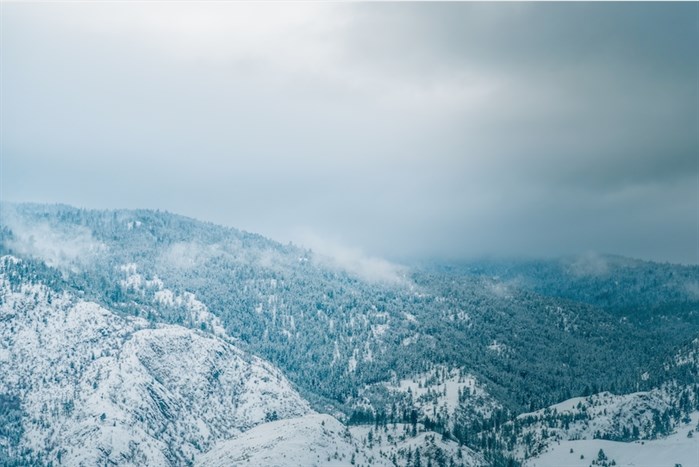
Most of B.C. has a healthy snowpack for the time of year, but the Okanagan is far below normal and one site is measuring an all-time record low.
The Brenda Mine station was established in 1992 and it’s at a record low for snowpack as of March 1, according to the River Forecast Centre. It currently has 47 per cent of normal snow levels, or 157 millimetres of snow water equivalent, which is 30 mm lower than the previous record.
Across the province there’s an average of 109 per cent of the median snowpack, but in the Okanagan it’s just 72 per cent of normal. The only part of the province with less snow is Vancouver Island with 58 per cent of normal.
Kelowna and Penticton saw roughly half of the precipitation they normally get over the winter, and Vernon had roughly 68 per cent of normal precipitation. But over in Kamloops, the city had 116 per cent of normal precipitation, even though it was largely due to two big storms near the start of the winter.
Environment Canada meteorologist Brian Proctor said the mild winter and the lack of snow are due to the two main weather patterns this winter.
Early on there were atmospheric rivers that brought warm temperatures into the BC Interior, and then ridges of pressure that caused precipitation to fall in the mountains before reaching lower elevations.
“Most of that warm air didn’t allow for much precipitation at all to reach the surface in the valley bottoms, it did allow for significant amounts of precipitation at higher elevations,” Proctor told iNFOnews.ca.
“Over the Coquihalla and some of those areas, we really saw fairly significant precipitation, but we didn’t get anything into the valley bottoms.”
Lake levels are also low with Osoyoos Lake hitting a record low in February and Okanagan Lake at 341.54 metres, which is slightly above the record low of 341.34 m.
Proctor said the lake levels and snowpack aren’t great, but it isn’t time to panic about a dry summer yet.
“While things are looking a little bit concerning at this point in time, often if we get some big precipitation events in the months of March and early April it can help to alleviate some of those concerns,” he said.
News from © iNFOnews.ca, . All rights reserved.
This material may not be published, broadcast, rewritten or redistributed.

This site is protected by reCAPTCHA and the Google Privacy Policy and Terms of Service apply.
Want to share your thoughts, add context, or connect with others in your community?
You must be logged in to post a comment.