Elevate your local knowledge
Sign up for the iNFOnews newsletter today!
Sign up for the iNFOnews newsletter today!
Selecting your primary region ensures you get the stories that matter to you first.
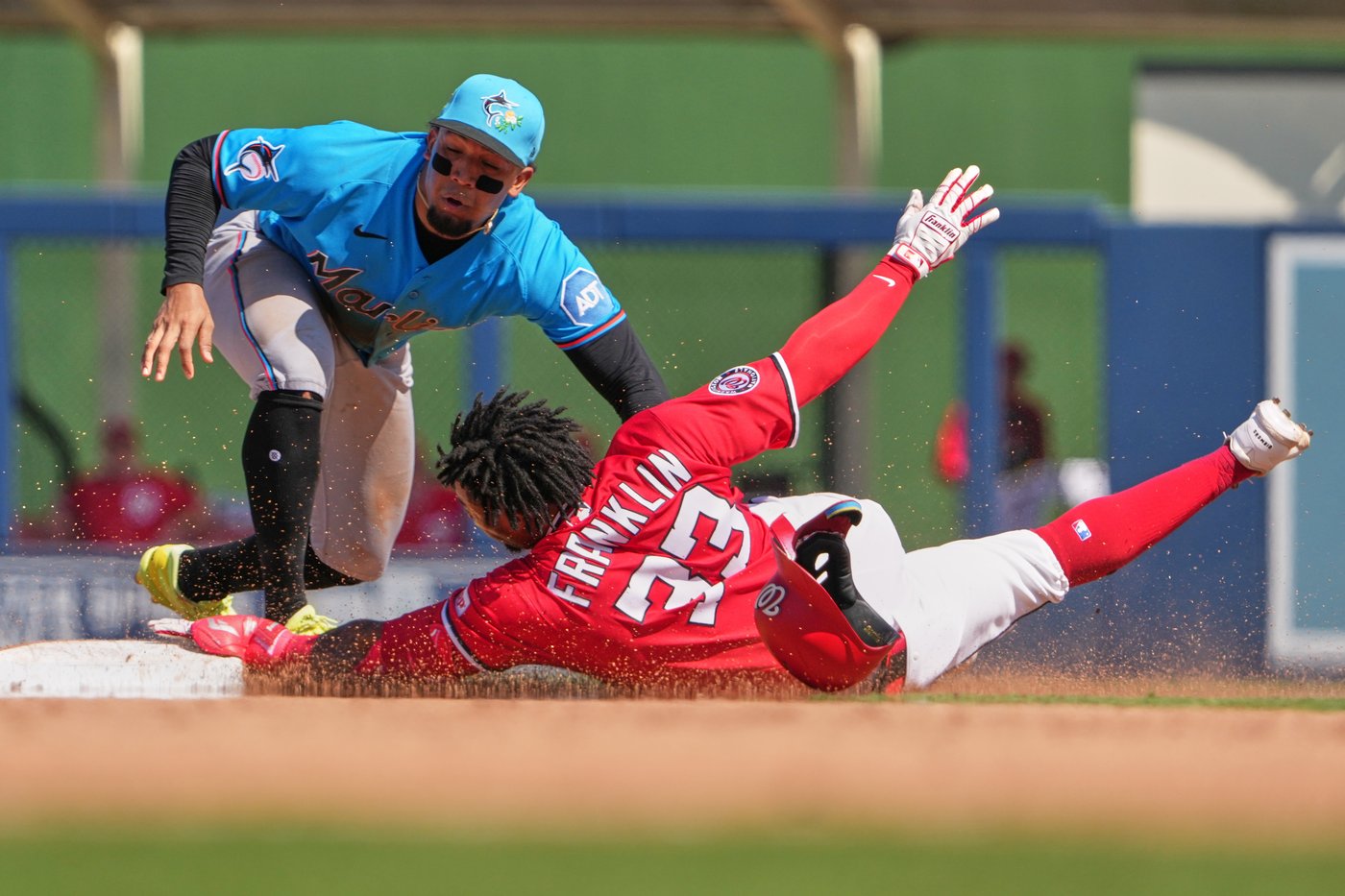
GLENDALE, Ariz. (AP) — All those missing doubles and triples, well, Los Angeles Dodgers manager Dave Roberts thinks he knows where at least some of them went.
Over the fence.
“I think that guys chase exit velocity and launch angle so that doesn’t lend itself to balls in the gap or down the lines,” Roberts said. “So I think that’s the whole crux for me.”
While singles and home runs were up in the majors last year, the number of doubles and triples continued to decline. There were 7,745 doubles, down from 7,771 in 2024 and 8,254 a decade ago in 2016, according to Sportradar. Triples dropped to 628, compared to 697 in 2024 and 873 in 2016.
In an effort to create more action on the basepaths, Major League Baseball made the bases bigger when it changed some of its rules before the 2023 season. There was an increase in doubles, triples and steals that same year before doubles and triples resumed their downward trend.
It likely means less of a particularly exciting moment in a baseball game, when a crowd collectively leans forward and cheers in anticipation as a player runs toward second or third with a throw on the way.
“I guess you could say yeah, it loses something, but I think there’s also a gain in some other things,” Chicago White Sox outfielder Andrew Benintendi said. “People like home runs and more stolen-base opportunities.”
The decline in doubles and triples can be traced to a variety of factors, beginning with defensive positioning.
While the 2023 rules package included limitations on infield shifts, there are no such restrictions on outfielders. And they are often playing deeper to guard against extra-base hits, helped by cards they keep in their back pockets that detail a hitter’s tendencies.
“When I was playing, it was kind of, you want to play shallow to take away the singles,” said Roberts, a former major league outfielder, “but nowadays you’re playing for damage, and so outfields play considerably deeper than they used to.”
Nolan Arenado remembers it like it was yesterday. The eight-time All-Star was playing for St. Louis on May 23, 2022, when he recorded the highest exit velocity of his career, a 111.4 mph liner on a 1-1 pitch from Toronto right-hander José Berríos in the bottom of the second inning. The ball went over the head of shortstop Bo Bichette before it was cut off by center fielder Bradley Zimmer.
“Yeah. Single,” said Arenado, who was traded to Arizona in January. “And you know a few years back that probably would have been just an automatic double. … So that was the first time I really noticed it. The defense alignment, it changes everything. You know you really got to hit a ball in the gap or you got to hit it down the line to get doubles.”
Texas Rangers president of baseball operations Chris Young also pointed to the evolution of defensive alignment.
“Every team has their own model and I think does a really good job of positioning,” said Young, a former major league pitcher.
Ballpark dimensions also have played a role. The New York Mets have made multiple changes to Citi Field since it opened in 2009, bringing in the fences to make the ballpark more hitter friendly. The Detroit Tigers altered the outfield at Comerica Park before the 2023 season, lowering the walls and moving in some areas. The Kansas City Royals made some adjustments to Kauffman Stadium this year.
Citi Field and Yankee Stadium, which also hosted its first game in 2009, are two of the majors’ least friendly ballparks when it comes to doubles and triples, according to Statcast’s park factors leaderboard. Globe Life Field, which opened in 2020, also ranks in the bottom 10 in each category over the previous three years combined.
“Pitching is pretty good. I think maybe some of the outfields, they’re bringing fences in,” Cincinnati Reds manager Terry Francona said. “You don’t hear anybody moving the fences back. So there’s a few ballparks, like Detroit, right-center. Kansas City was a big one. Now they moved them in. You’re not going to see a ton in our ballpark, just the way we’re configured. Right field’s not very big.”
It’s 325 feet down the line in right in Cincinnati’s Great American Ball Park. The short porch in right field at Yankee Stadium is 314 feet from home plate. Tampa Bay’s Tropicana Field, which reopens this season, is 315 feet on the left-field line and 322 to right.
Major league outfielders also are more athletic than before, cutting down on the balls that used to roll all the way to the wall — leading to extra bases.
“Now, if you are a negative defensively, you have to hit at such a ridiculously high level in order to be even a starting player,” Chicago Cubs second baseman Nico Hoerner said. “So there just aren’t many players out there that are negatives defensively at this point.”
___
AP MLB: https://apnews.com/hub/mlb


News from © The Associated Press, . All rights reserved.
This material may not be published, broadcast, rewritten or redistributed.

This site is protected by reCAPTCHA and the Google Privacy Policy and Terms of Service apply.
Want to share your thoughts, add context, or connect with others in your community?
You must be logged in to post a comment.